





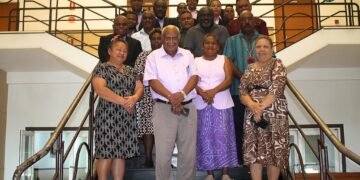

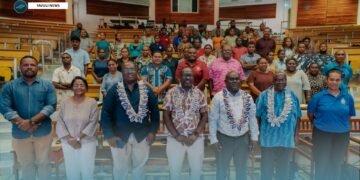
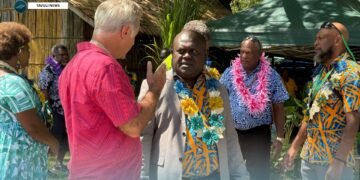


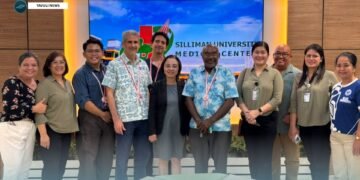
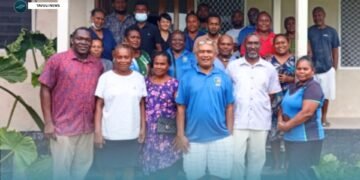
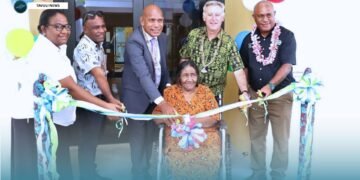
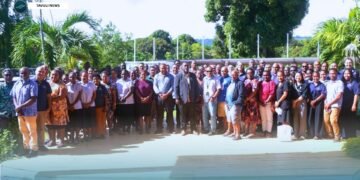
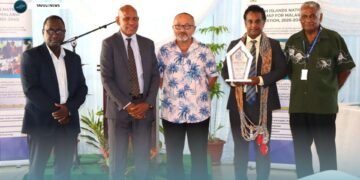
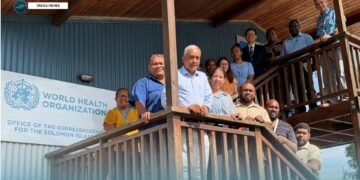
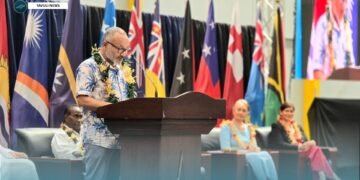

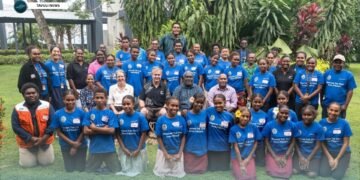
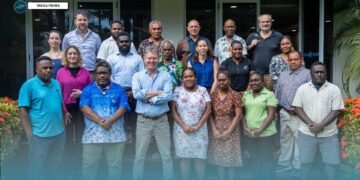
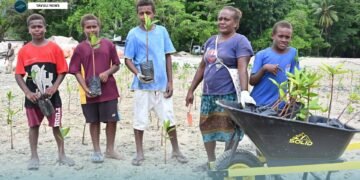
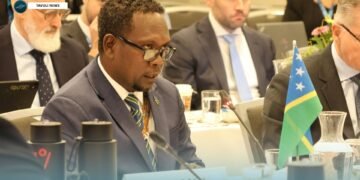
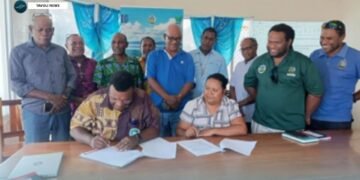
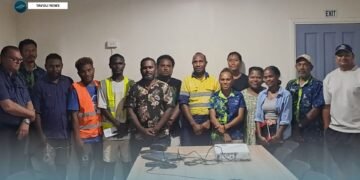




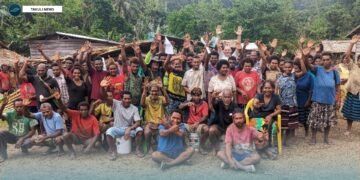


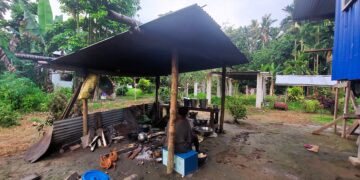
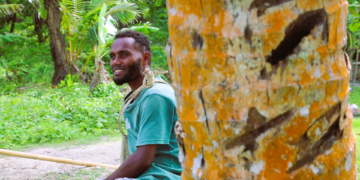
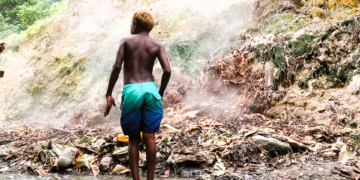






Representatives from four communities joined a learning exchange to strengthen resilience and share development ideas.
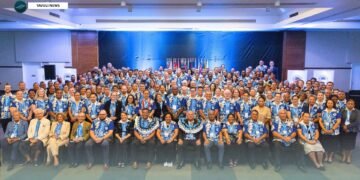
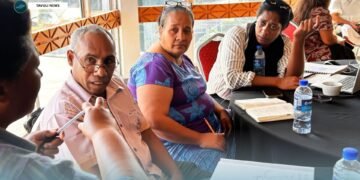
A two-day learning exchange aimed at strengthening community resilience and promoting sustainable development brought together representatives from four WWF Netherlands project site communities—Pienuna, Esorolado, Tovoko, and Nusa Mahiri.
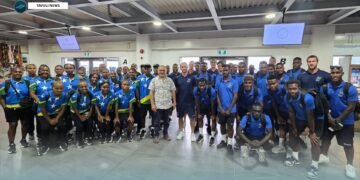
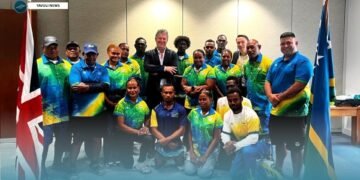
The Look and Learn Team, comprising 16 participants (six women and 10 men), travelled from Gizo on May 27, 2026, and returned the following day after participating in an intensive program of knowledge sharing and community engagement.
Following earlier discussions under the Beiporo program, participants developed the theme for the exchange: “Empowering Communities Through Learning and Sharing of Information.” The visit began in Beiporo Community and concluded with site visits to Uriaupo and Valapata Communities, where participants observed a range of locally driven development initiatives.
The primary objective of the exchange was to strengthen knowledge, leadership, and the capacity of community representatives to transfer lessons learned back to their respective communities.
The exchange provided a platform for participants to reflect on the current status of their communities and identify areas for improvement, particularly in enhancing resilience to climate change. Participants also observed practical initiatives implemented by host communities, gaining insights into approaches that could be adapted in their own settings.
At the conclusion of the visit, a reflection session was held in Valapata Community, where participants shared their experiences and observations.
Chris Samson, Chairman of Pienuna Community, said the exchange focused on empowering communities to become more climate resilient. He highlighted the successful implementation of the CAPSI Tool in Pienuna, which identified the construction of a community hall as a key development priority.
“Every community has its own unique priorities. This exchange allowed us to learn from each other while sharing our own experiences,” Samson said.
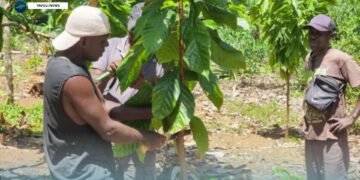
The Chairman of Animeko Community said the community had identified cocoa production as its priority climate-resilient livelihood through the CAPSI pathway and had developed long-term strategies to sustain the initiative.
“This learning exchange helped us identify gaps and opportunities through collective reflection,” Chief Adova said.
For Bryn Simata of Nusa Mahiri Community, the exchange provided an opportunity to better understand how the CAPSI process can support communities in identifying priorities and solutions.
“Although CAPSI has not yet been introduced in our community, this experience has given me a clearer vision of what is possible,” he said.
Zima Herick of Nusa Mahiri Community highlighted the value of the exchange in creating opportunities for women to share experiences, challenges, and successes, particularly in relation to community decision-making.
“This has increased my confidence and motivation to share what I’ve learned when I return home,” she said.
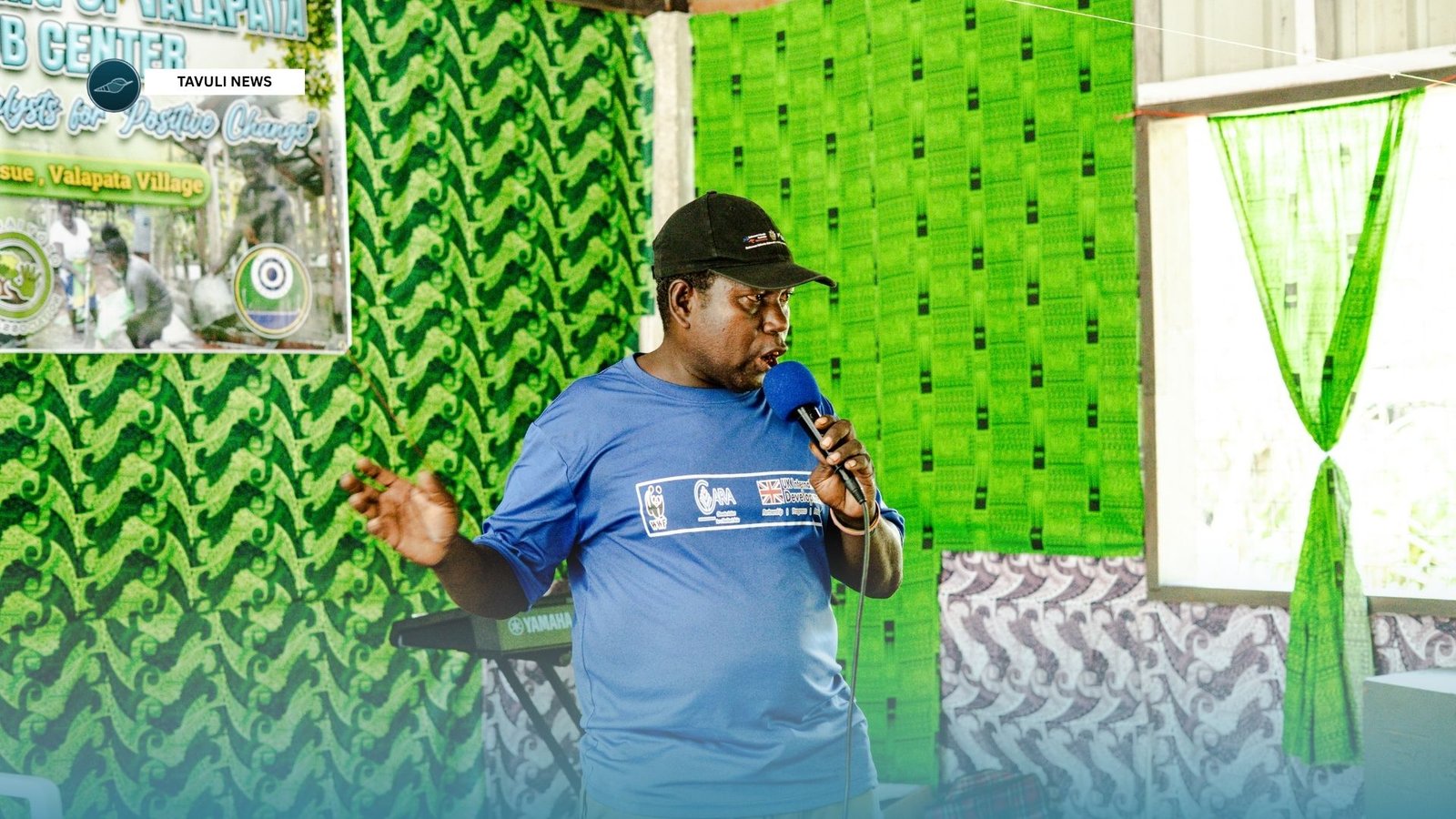
Participants also visited the Youth Hub initiative in Valapata Community. Varina Toribule of Pienuna Community said the initiative provides a safe and constructive environment for young people and supports youth development through activities such as music.
She suggested that similar initiatives could benefit other communities by promoting both formal and informal learning opportunities.
Jesse Lelokana, Youth Hub Project Coordinator, welcomed the visiting team and said the facility serves not only Valapata Community but the wider Vella region.
Source: By Kent Sotutu