











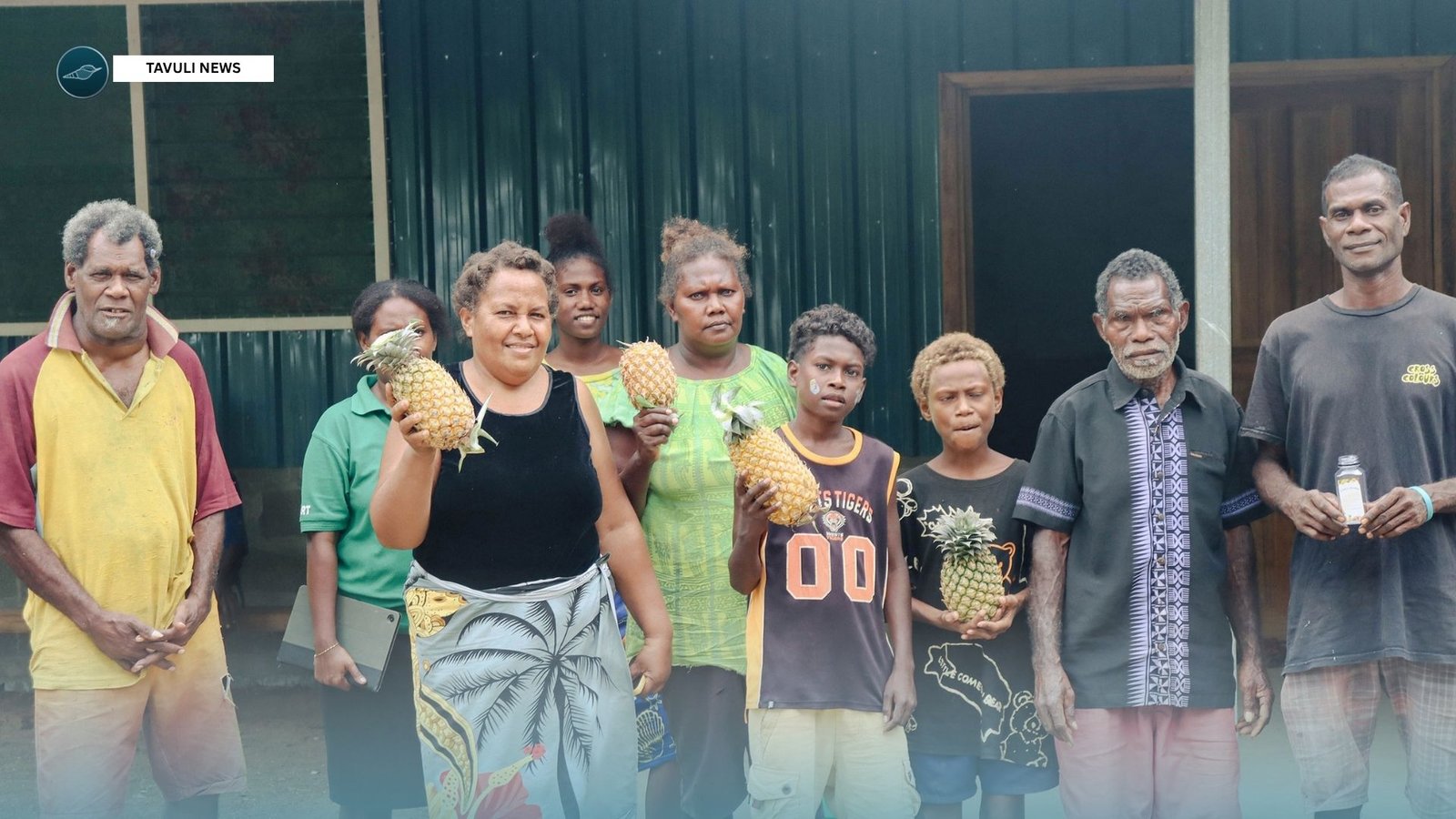
SIART support helps Guadalcanal pineapple farmers process juice locally, improving incomes and reducing market hardships
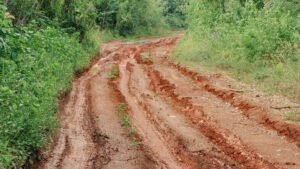
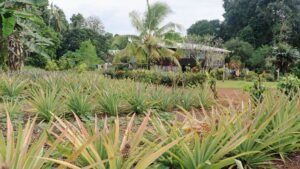
Wednesday 15 July, Honiara – For a group of village farmers in the highlands of East Central Guadalcanal, their remoteness coupled with bad road conditions means accessing Honiara’s main markets with their produces is always a challenge.
And when they do reach the capital, farmers, including women and children, are often faced with the harsh reality of sleeping overnight at the Central Market in Honiara. For a night or sometimes more to sell their produces before returning home.
It is because of these challenges that they decided to work together as a group and form the Atunoda Family Farmers Association to seek support with the aim of improving livelihoods in the community through their pineapple farms.
They are now beneficiaries of funding support from the Solomon Islands Agricultural Rural Transformation (SIART) Project.
SIART is a World Bank-funded initiative implemented by the Ministry of Agriculture and Livestock (MAL).
The project’s core objective is to increase agricultural production, improve market access, and enhance economic resilience in three Provinces, Guadalcanal, Malaita, and Makira/Ulawa.
With support from the Project, local farmers under the Atunoda Family Farmers Association have recently completed their Pineapple Processing shed worth SBD196,106 in Gheghede village.
The Project also funded a pineapple processing machine for the Association worth SBD24,500.
The Association is made up of thirty (30) smallholder farmers in Gheghede village, situated in Aola Ward in East Central Guadalcanal.
The village is known for producing large number of pineapples. And they are one of the main suppliers of sweet pineapples for Honiara.
With the new shed and processing machine, the farmers will not necessarily endure the hardship of waiting for transport after harvest and make that long trip away from home to Honiara.
Instead, they will produce pineapple juice in the village and sell to nearby communities and schools while looking to find potential markets for their products in Honiara.
“By venturing into this form of agribusiness, we are working together to improve our livelihoods in the village,” Chairman of the farmers’ association in Gheghede, Mr. Gideon Kilua said.
First bottles of pineapple juice
The Atunoda Family Farmers Association celebrated the historic production of their first bottles on pineapple juice in June 2026.
This was during a SIART organized Pineapple Processing and Food Safety Training facilitated by a Food Technician from the Research Department at the Ministry of Agriculture and Livestock (MAL).
Chairman Gideon says women and children were also very interested in attending the training and the end product brought smiles to their faces.
“The first production from our processing facility is a greenlight for us. Assurance that we can earn a profit from producing pineapple juice in our village,” he said.
From 20 fruits of pineapples used as samples during the training, they were able to produce more than 60 bottles in less than an hour.
“In Honiara, we get around $200 for 20 pineapple fruits. But then we have to pay for transport and market fees,” Gideon said.
“We can earn more if we sell $5 per bottle of pineapple juice in the surrounding communities and nearby schools. And we are also looking for clients with shops in Honiara,” he added.
Sustaining their agribusiness
The Atunoda Family Farmers Association is one of the 32 Agribusiness Producer Organizations (ABPOs) in Guadalcanal Province who have grant funding support from the SIART Project.
Apart from the shed and processing machine provided to them, SIART has also supported them with financial capital which allows them to purchase pineapples from locals to produce juice and to operate their agribusiness.
“Instead of travelling to Honiara, farmers will just bring their pineapples to us and we pay from them saving them the expenses. We pay pineapples from our members farmer and also other from the surrounding communities,” Gideon said.
This is also very helpful to the elderly people in the community who are not able to make the trip to Honiara as well as women and children.
For Gheghede village, their pineapple farms are their main source of income.
“One farmer produces almost 2000 pineapples here. With this support from the SIART Project, it has boosted pineapple farming. Our women and children are very happy and they are helping to produce more pineapples and farms,” Gideon said.
“Selling pineapples helps us to pay school fees for our children. It helps us with money to take the sick to the Hospital.
To sustain the association in the long run, they plan to purchase another processing machine to continue supporting families going into the future.
Not only are they benefitting farmers by purchasing pineapples, but they are also providing some sort of paid labour for villagers working and helping out at the processing shed to produce pineapple juice.
Project to ease challenges faced by women
Women in Gheghede are very happy to see this project in their village and are very supportive of their farmers’ association.
“It will benefit us a lot,” said Heslyn Tarimana, a member of the Atunoda Family Farmers Association and local pineapple farmer in Gheghede village.
“This project will help us overcome the challenges we always face when taking our pineapples to Honiara,” she added.
She reiterated the difficulties and expense of transportation.
“Most times we sleep at the Central Market in Honiara when we still have pineapples to sell or when finding transport back to the village is difficult,” Heslyn said.
“Now that this project has come to us, we plant here in the village, harvest and at the same time sell our pineapples in the village,” Heslyn said.
Heslyn acknowledges the partnership between MAL and the World Bank through the SIART Project for choosing the pineapple farmers of Gheghede village as one of the recipients of funding support.
“It is our long-time cry for such a project to reach our village, that help us with economic activities in the village.
“To support us in terms of education and meeting small needs for the household. Now that we can earn money in the village, it will also enable us to save money other family and community commitments,” she said.
With their recently completed shed and pineapple processing machine and now equipped with relevant training, the pineapple farmers in Gheghede village have a bright future in sight.
PRESS RELEASE