







PM Wale says Solomon Islands expects a strong treaty with Australia to boost trust, security and economic growth.
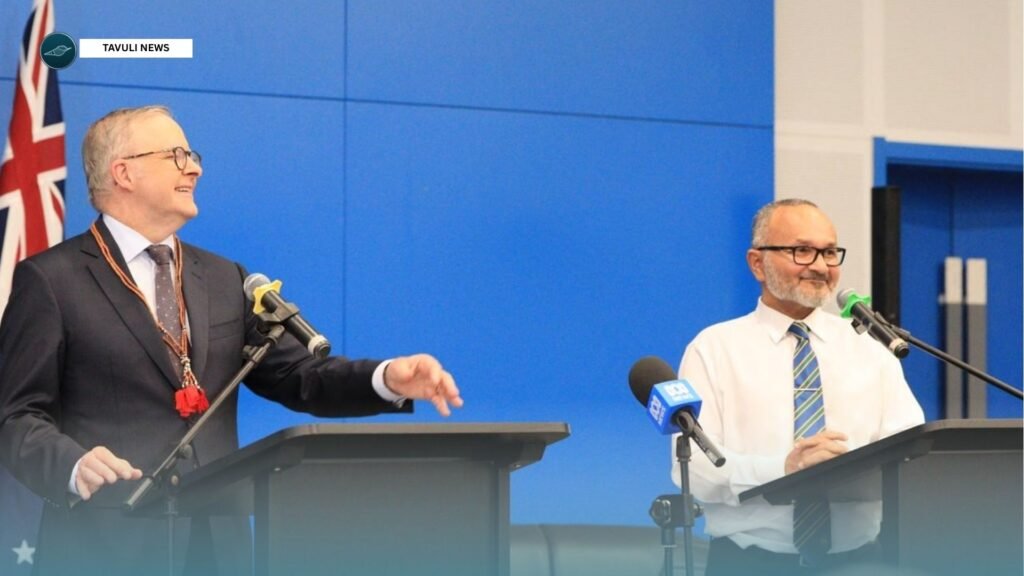
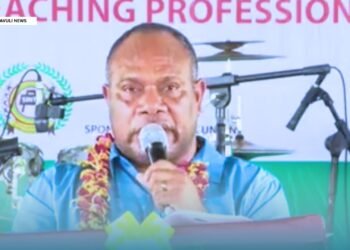
Prime Minister Mathew Cooper Wale says Solomon Islands expects a strong outcome from negotiations on a new comprehensive treaty with Australia, as both countries move to strengthen their long-standing relationship.
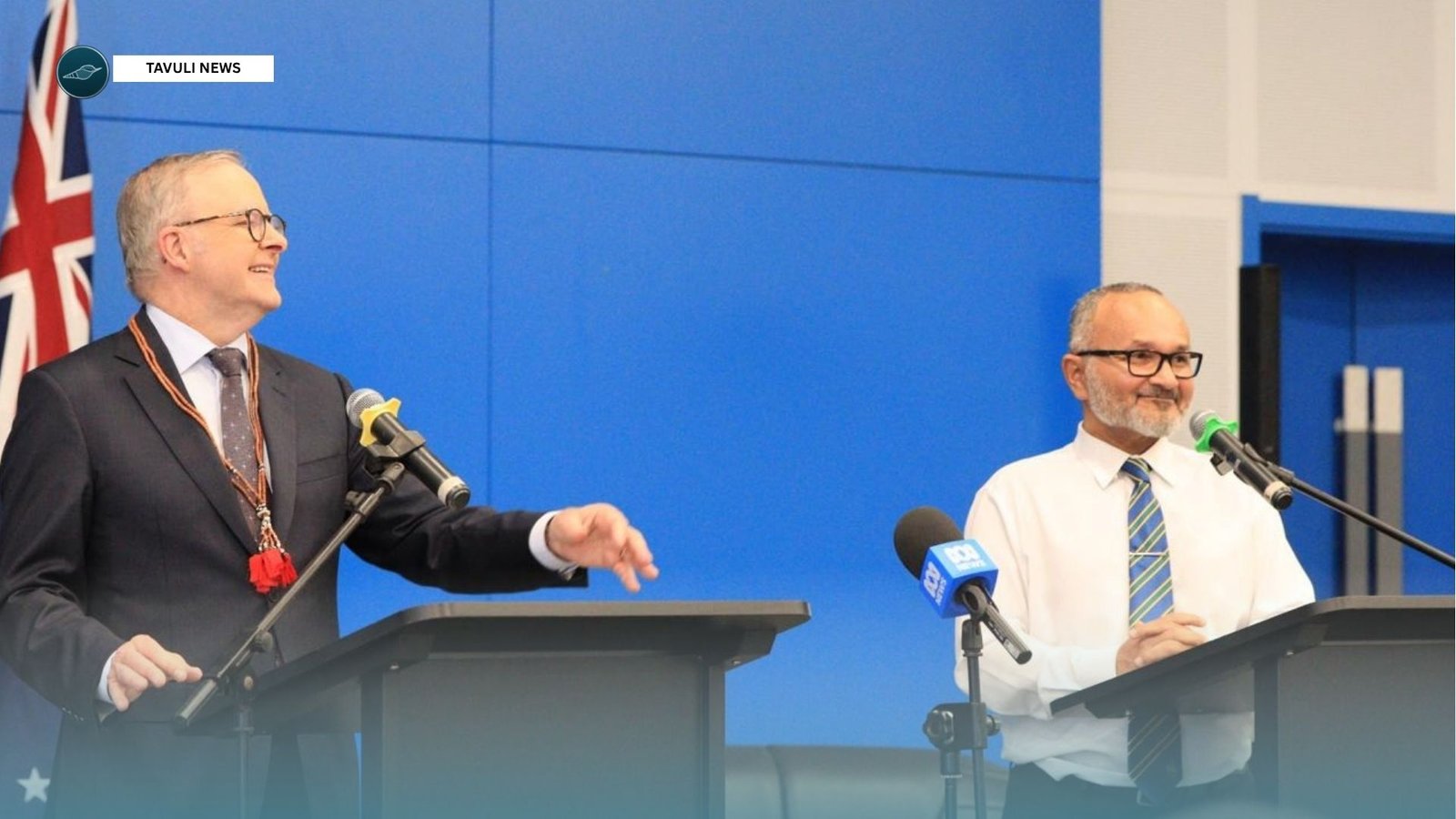
Speaking alongside Australian Prime Minister Anthony Albanese during a press conference in Honiara, Mr Wale said Solomon Islands had observed similar agreements reached between Australia and other Pacific nations.
“They always say the best wine comes last. So, the fact that Nakamal, PNG, Falepili and Fiji have all done these agreements, we certainly would be the last of the Melanesian countries. So, we expect the best wine,” he said.
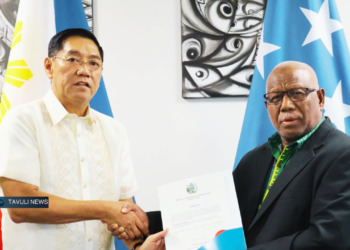
The proposed treaty was a key outcome of Prime Minister Wale’s recent visit to Australia, where he met with Mr Albanese and senior Australian government officials.
Mr Albanese said both governments had agreed to begin discussions on a comprehensive treaty aimed at strengthening cooperation between the two countries.
“Today we’re bringing forward important discussions on the next steps of our relationship,” Mr Albanese said.
“I welcome the vision and energy that Prime Minister Wale is bringing to our relationship, including our agreement on his visit to Australia to negotiate a new comprehensive treaty between our two nations.”
The Australian Prime Minister said the agreement would be built on mutual trust, respect and open dialogue, with both countries working towards concluding negotiations as soon as possible.
He said Australia has prioritised strengthening its relationships across the Pacific since 2022 and reaffirmed that regional peace and security is best led by Pacific nations.
During a day visit last week, Australia and Solomon Islands also concluded a Memorandum of Understanding to support the development of the Royal Solomon Islands Police Force Academy.
The agreement will support the construction of the academy, as well as provide opportunities for advanced police training and institutional development.
But following his return from Australia and New Zealand, Prime Minister Wale said at a press conference at Henderson International Airport that the purpose of his visit was to rebuild confidence in the relationship between Solomon Islands and Australia.
“The purpose of the trip is simply to reset our key traditional relationship,” Mr Wale said.
He said the relationship had experienced uncertainty in recent years and that his government’s priority was to restore trust and strengthen cooperation.
Mr Wale said trust was important not only for Solomon Islands but also for the wider Pacific region.
He said the proposed treaty would establish clear obligations between the two countries, with a major focus on economic development and creating greater certainty for future cooperation.
“The biggest part of it is the economic development partnership to ensure there is certainty. This partnership will address the development challenges that we have,” he said.
Mr Wale also reaffirmed Solomon Islands’ approach of maintaining relationships with all partners.
“When we say friends to all we must mean it, not like before when we say friends to all but in reality we only friends with few,” he said.
Meanwhile, Adjunct Professor Tess Newton Cain of the Griffith Asia Institute said the proposed treaty reflects Australia’s broader approach of strengthening bilateral partnerships across the Pacific.
She noted that Australia has already established similar arrangements with Fiji, Vanuatu, Papua New Guinea, Nauru and Tuvalu.
“This is part of what my colleague Anna Powles describes as Australia’s ‘hub-and-spoke’ approach to security, with a strong focus on building bilateral relationships,” Professor Newton Cain said.
She said the change in leadership in Solomon Islands, together with Prime Minister Wale’s intention to reset relations with Australia, makes the treaty negotiations a priority for both governments.
Professor Newton Cain said the details of the agreement remain unclear until negotiations are completed, but previous Pacific agreements indicate Solomon Islands may seek specific benefits from the arrangement.
“Countries have seen how similar agreements have unfolded elsewhere. Papua New Guinea secured a rugby league team, while Tuvalu reached a migration agreement,” she said.
“There will likely be an expectation that Solomon Islands will also seek to gain something through these negotiations.”
She described Australia’s recent engagement with Pacific countries as involving a degree of transactional negotiation, with governments seeking outcomes that deliver benefits for their people.
Negotiations on the proposed Solomon Islands-Australia comprehensive treaty are expected to continue in the coming months.