


































































Government advances Judicial Autonomy reforms to strengthen an independent and accountable Judiciary in Solomon Islands
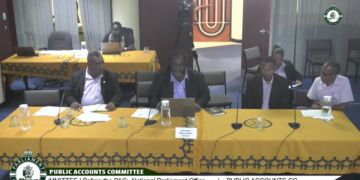
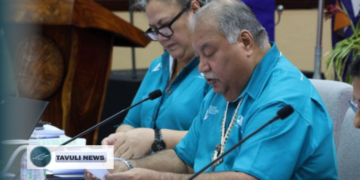
Honiara, 17 June 2026: The Office of the Prime Minister and Cabinet (OPMC), through the Policy Implementation, Monitoring and Evaluation Unit (PIMEU), today convened a high-level meeting with the Ministry of Justice and Legal Affairs (MJLA), the National Judiciary, and the Ministry of Finance and Treasury (MoFT).
The meeting reviewed progress on Judicial Autonomy reforms and agreed on the next steps to implement one of the GREAT Coalition Government’s key governance priorities.
Discussions focused on aligning the policy, legal, financial, and institutional work already completed with the Government’s commitment to establish an independent Judiciary. The goal is a Judiciary that can administer justice independently while remaining accountable under the Constitution and laws of the Solomon Islands.
This reform is anchored in the GREAT Coalition Government Policy Statement, which commits to:
“Empower the Judiciary by ensuring the allocation of autonomous budgetary and financial resources that guarantee the independent administration of justice nationwide.”
Permanent Secretary of the Ministry of Justice and Legal Affairs, Ms Pauline McNeil, reaffirmed the Ministry’s commitment to deliver the reform.
She said Judicial Autonomy is a flagship initiative of the GREAT Government aimed at strengthening the rule of law, improving institutional effectiveness, and upholding the separation of powers.
Ms McNeil said significant groundwork has already been completed, including policy papers, technical reports, legislative drafting, and institutional assessments. This provides a strong foundation for the next phase.
“Today’s meeting was not about starting again,” Ms McNeil said. “It was about examining the work already done, identifying any gaps, and agreeing on a coordinated pathway to implementation.”
The meeting considered the policy framework, legislative proposals, institutional arrangements, financial implications, governance structures, and requirements to transition the Judiciary from current administrative arrangements to a model with greater budgetary, financial, and administrative autonomy.
Participants agreed that successful implementation will require close collaboration between the Judiciary, MJLA, MoFT, OPMC, and other key stakeholders. This is to ensure the reform is coordinated, fiscally responsible, and constitutionally sound.
The meeting concluded with agreement to:
Refine the implementation roadmap
Consolidate existing work
Identify the legislative, financial, administrative, and institutional measures needed for a smooth transition to Judicial Autonomy
OPMC will continue to work closely with all relevant institutions to ensure this important GREAT Coalition commitment is delivered effectively and in the national interest.
PRESS RELEASE