



























































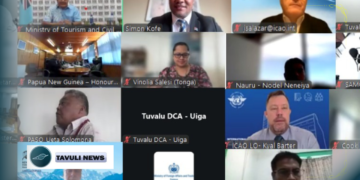






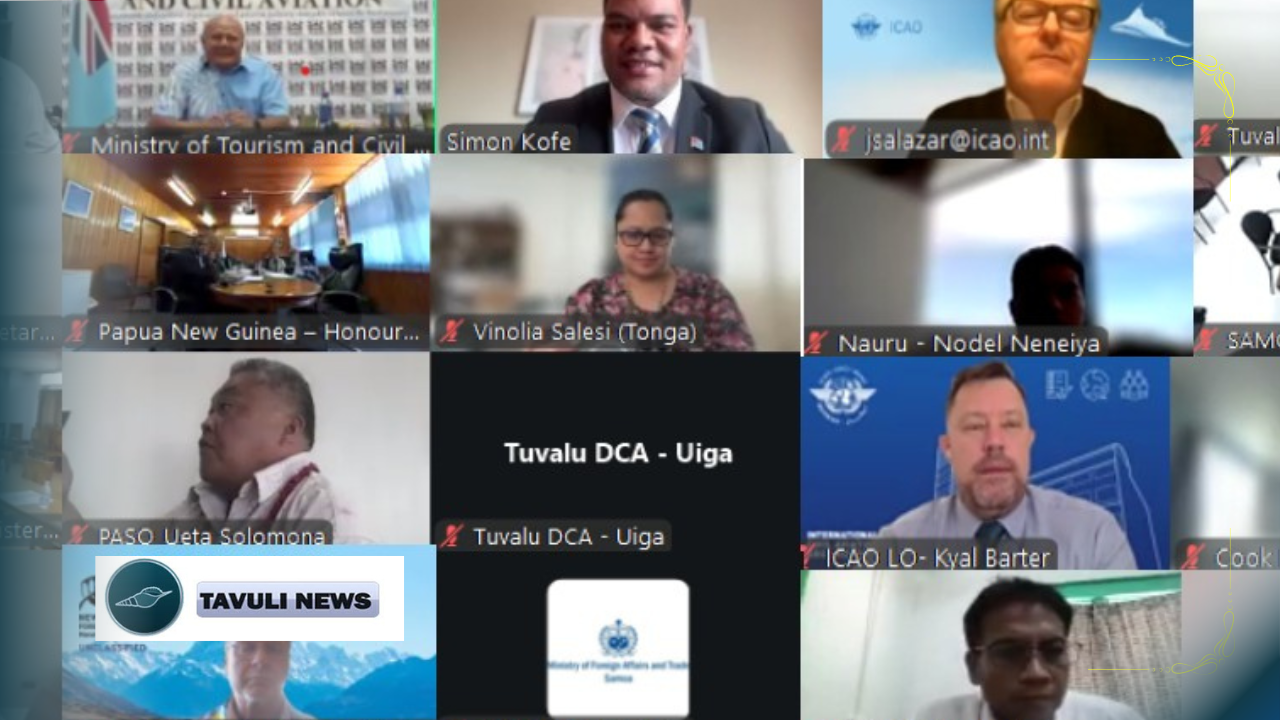
Pacific leaders from 13 island nations agreed this week during a virtual aviation meeting to pursue safer, cheaper and better-connected regional air travel.
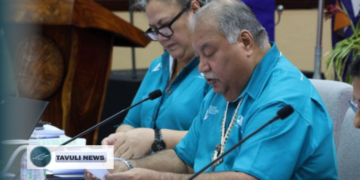
The agreement was reached during the Fourth Regional Aviation Ministers Meeting (RAMM4), chaired by Tuvalu’s Minister for Transport, Energy, Communication and Innovation, Hon. Simon Kofe.
The meeting focused on regional efforts to address challenges facing the aviation sector, including safety oversight, connectivity, rising operational costs and capacity building.
Opening the meeting, Pacific Islands Forum Secretary General Baron Waqa highlighted the critical role aviation plays in Pacific island countries, where air transport often provides the fastest means of accessing essential services, moving supplies and maintaining family and social connections.
Ministers endorsed a shared regional framework intended to guide future aviation development while preserving the ability of individual countries to determine their own national policies and priorities.
A key area of discussion was the International Civil Aviation Organization (ICAO) Implementation Support Roadmap, developed by ICAO’s Asia-Pacific Regional Office and Pacific Liaison Office. The roadmap seeks to strengthen aviation safety systems across Pacific Small Island Developing States through a coordinated regional approach.
Ministers agreed that national civil aviation authorities and the Pacific Aviation Safety Office (PASO) should work alongside ICAO to adopt and implement the roadmap to improve safety outcomes and build institutional capacity.
ICAO Secretary General Juan Carlos Salazar said successful implementation of the roadmap would require cooperation among Pacific states, assistance partners and continued support for PASO.
Although not formally included on the meeting agenda, the impact of rising fuel costs on the aviation sector was also discussed.
PASO General Manager Ueta Solomona Jnr said the organisation had provided an assessment of the safety and security implications associated with increasing fuel costs to the Council of Regional Organisations of the Pacific (CROP) Taskforce, which is led by the Pacific Islands Forum Secretariat.
According to PASO, prolonged cost pressures could affect airline operations, maintenance activities, pilot proficiency and aviation security readiness if flight frequencies decline or operators face difficulties sourcing fuel and other supplies.
Solomona described the fuel crisis as an increasingly significant concern for Pacific states because of its broad impact on aviation operations and economic conditions.
Ministers were informed that a paper from the CROP Taskforce is expected following further consultations, with updates to be provided at a later stage.
To address the high cost of air travel, ministers agreed to establish an Air Connectivity Working Group that will focus on improving links between Pacific island countries and identifying measures to reduce airfare costs.
Solomona welcomed the initiative, saying it would help ensure regional connectivity efforts deliver practical benefits to Pacific communities, including more affordable travel options.
Ministers also endorsed the establishment of a regional regulatory working group under the Pacific Regional Aviation Action Plan to advance legal harmonisation, which is regarded as an important step towards achieving both safety and connectivity objectives.
Outcomes from RAMM4 are expected to be presented at the Pacific Leaders’ Meeting in Palau in September, where aviation is anticipated to feature prominently on the regional agenda. Tuvalu is scheduled to host the next Regional Aviation Ministers Meeting in person in 2027.