








Women in the Solomon Islands use traditional arts to protect reefs, support livelihoods, and preserve Coral Triangle heritage
Reefs in Solomon Islands face mounting threats, but women are using traditional crafts like kuza bags and pandanus mats to turn cultural heritage into a tool for protecting the Coral Triangle and supporting local livelihoods.
Coral reefs play a vital role in food security, with the Coral Triangle providing a critical source of protein for millions. Women often serve as custodians of their families, managing how food is gathered from reefs. These ecosystems also support key economic sectors such as tourism and fisheries, generating income and employment while helping mitigate climate change.

complementing cultural conservation efforts led by communities throughout the Solomon Islands.
Women frequently act as primary caregivers and community leaders, shaping decision-making and promoting sustainable practices. They are central stakeholders in resource-dependent industries such as fisheries and agriculture.
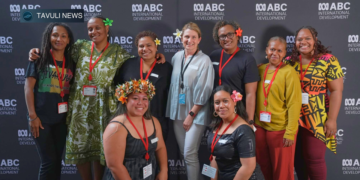
Though represented by only three small communities, these women have already made a significant impact in protecting land and marine ecosystems. They break down the complexity of the “Coral Triangle” through theatre and storytelling, sharing their experiences not only locally but with the world.
In the Solomon Islands, the story of the Coral Triangle is expressed through art kuza string bags, pandanus mats, carved paddles, and wooden canoes. Each piece carries ancestral knowledge: gathering food from sea and land, safeguarding reefs through tabu practices, and preparing villages to welcome guests.
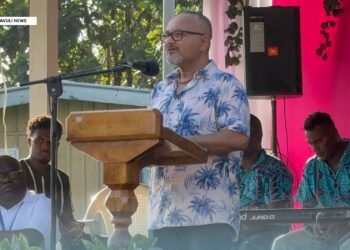
“I think it’s a good catalyst because it expresses the nature of our livelihood and the importance of the environment,” says Dilly Nadariko, a Kawaki member of Kawaki Women’s Network.

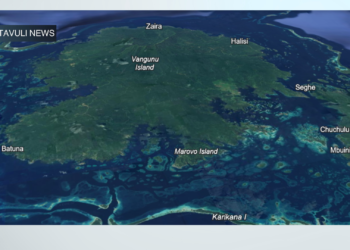
The Solomon Islands, part of the Coral Triangle alongside Papua New Guinea and four other countries, is home to exceptional marine biodiversity. Across its nine provinces, at least 485 coral species from 76 genera support more than 1,000 fish species across 82 families. Mangroves cover about 65,000 hectares, while seagrass beds span roughly 10,000. Beyond these numbers, the real story lies in the communities whose survival depends on these ecosystems.
While the Coral Reef Health Index exists globally, the Solomon Islands does not yet have a national scoring system to assess reef health. Site-based data is available in some places, but not for all reefs. Determining health requires multiple measurements and considerations.

These ecosystems face mounting threats from climate change and coral bleaching to dynamite fishing and deforestation. Amid these challenges, Kawaki women are using art as a powerful tool for change.
Kawaki’s name reflects collaboration: “Ka” for Katupika in Choiseul Province, “Wa” for the Kiribati community of Wagina, and “Ki” for Kia under the Arnavon Community Marine Conservation group. Through dance, theatre, chants, and exhibitions, the network connects communities, raises awareness, and amplifies the voices of those who depend on the ocean.

KAWAKI was established to strengthen women’s leadership in environmental protection, ensuring they guide initiatives across land and marine areas. The group works to conserve ecosystems threatened by mining, logging, and illegal fishing.
Dilly Nadariko emphasizes, “Art is about plants, animals, and people connecting to nature. Traditional conservation practices sustained our ancestors for generations. They are the way forward for the Coral Triangle.”
Lavinia Pupuru, chairlady of Kawaki Women’s Network, notes that conservation efforts face persistent challenges: limited funding, personnel, and equipment can slow progress, and balancing livelihoods with environmental protection is often challenging.
“We believe that art can play a significant role in conservation,” Pupuru says. “It raises awareness by showing the importance of coral reefs and the impact of human activity on the ecosystem.”

Women also face structural barriers. Patrilineal systems often give men control over land and resources, limiting women’s influence in conservation decisions. Proposed mining in Katupika has intensified debate, with concerns about soil erosion, pollution, acid mine drainage, deforestation, and biodiversity loss.
“Art also provides a platform for local voices to be heard, allowing communities to share their stories and perspectives on conservation,” Pupuru adds.
Projects like GAGOMA (Queensland Art Gallery | Gallery of Modern Art) reveal the power of art to amplify these voices. Ruha Fifita, Cultural Assistant for Pacific Art, praised Kawaki and Dreamcast Theatre Solomon Islands for their performances in the 11th Asia Pacific Triennial.

“The role young people have taken to listen to their elders and emerge as community leaders is remarkable,” Fifita said. “Their care for the environment has become a unifying force. Having conversations through songs feeling the emotion that connects people with their land was a gift to witness.”
Neil Nuia, Creative Director of Dreamcast Theatre Solomon Islands, echoes this: “Our lives depend on the ocean. The Coral Triangle Initiative talks about protecting reefs, but art helps people feel it. It gives voice to communities who live and survive from the corals every day.”

For Kawaki, art is more than awareness; it is a bridge between culture, conservation, and society. Small steps today build understanding, resilience, and hope for the future.
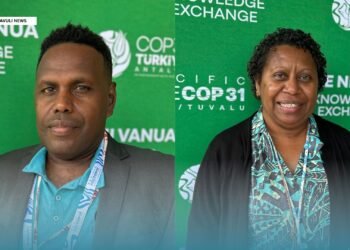
“Managing and protecting coral reefs and coastal areas is not easy,” says Agnetha Vave-Karamui, Deputy Secretary Technical at the Ministry of Environment, Climate Change, Disaster Management & Meteorology. “We face multiple challenges, including pollution, plastic waste, sedimentation, overfishing, lime production, reclamation, and coral destruction. Climate change worsens these threats with rising temperatures and extreme weather.”
She notes that communities are both owners and users of reefs, making their consent and participation essential for successful management. Conflicting needs can hinder efforts, especially in outer atolls where people rely heavily on reefs for food, livelihood, and income. Locally developed rules are crucial for compliance and long-term success.

“Coral reef management requires technical capacity and financial support,” she adds, “and these resources are not always accessible. Many communities cannot sustain projects without guidance from government or partners.”
National efforts are strengthening. In April 2025, the Ministry of Environment, the Ministry of Fisheries, and the Wildlife Conservation Society convened the first Coral Triangle Initiative National Coordinating Committee meeting in the Solomon Islands.
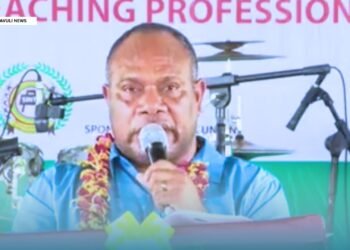
A key outcome was the creation of the Coral Reef Rescue National Hub, aimed at advancing conservation through collaboration and knowledge-sharing, with support from the Global Environment Fund and WWF’s Coral Reef Rescue Initiative. Karl Kuper, Deputy Secretary of Environment, called it a vital step for the National Plan of Action for Coral Reef Conservation and the National Ocean Policy.

“The Knowledge Hub is a space for me to learn, share experiences, and connect with others,” he said. “It helps me and other stakeholders protect climate-resilient coral reefs and support sustainable development in coastal communities.”
In September 2025, another regional Coral Triangle Initiative meeting in Honiara addressed shared challenges. Dr. Frank Keith Griffin, Executive Director of the Regional Secretariat, said, “We will take it back, and through the reports and initiatives we develop, support will return to the Solomon Islands. Sharing meetings across countries ensures local issues are heard and addressed.”

Women in the Coral Triangle remain central to conservation efforts ensuring food security, leading their communities, and supporting reef-dependent industries. Their economic contributions and stewardship help build climate resilience.
Kawaki women extend these roles through traditional art forms. Their kuza bags, pandanus mats, carved paddles, and wooden canoes preserve cultural heritage while carrying ancestral stories that link people, culture, and the environment.

From art to policy, the Coral Triangle story in the Solomon Islands is evolving. It is a story of creativity, resilience, and conservation where local voices, traditional knowledge, and modern strategies come together to protect one of the world’s richest marine regions.
As Dilly Nadariko puts it, “Art expresses the natural part of our livelihood and highlights the importance of the environment. Through our culture, our stories, and our hands, we can make a difference for the Coral Triangle and for generations to come.”
This report was produced with the support of Earth Journalism Network