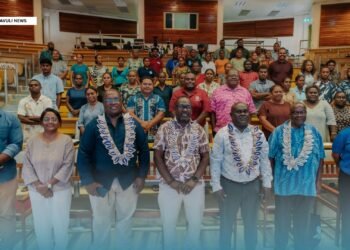

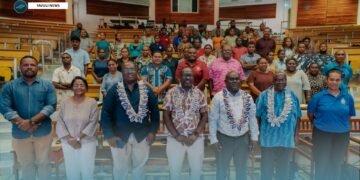




































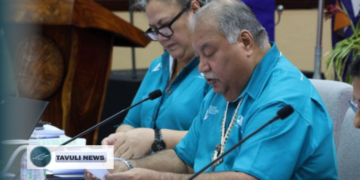






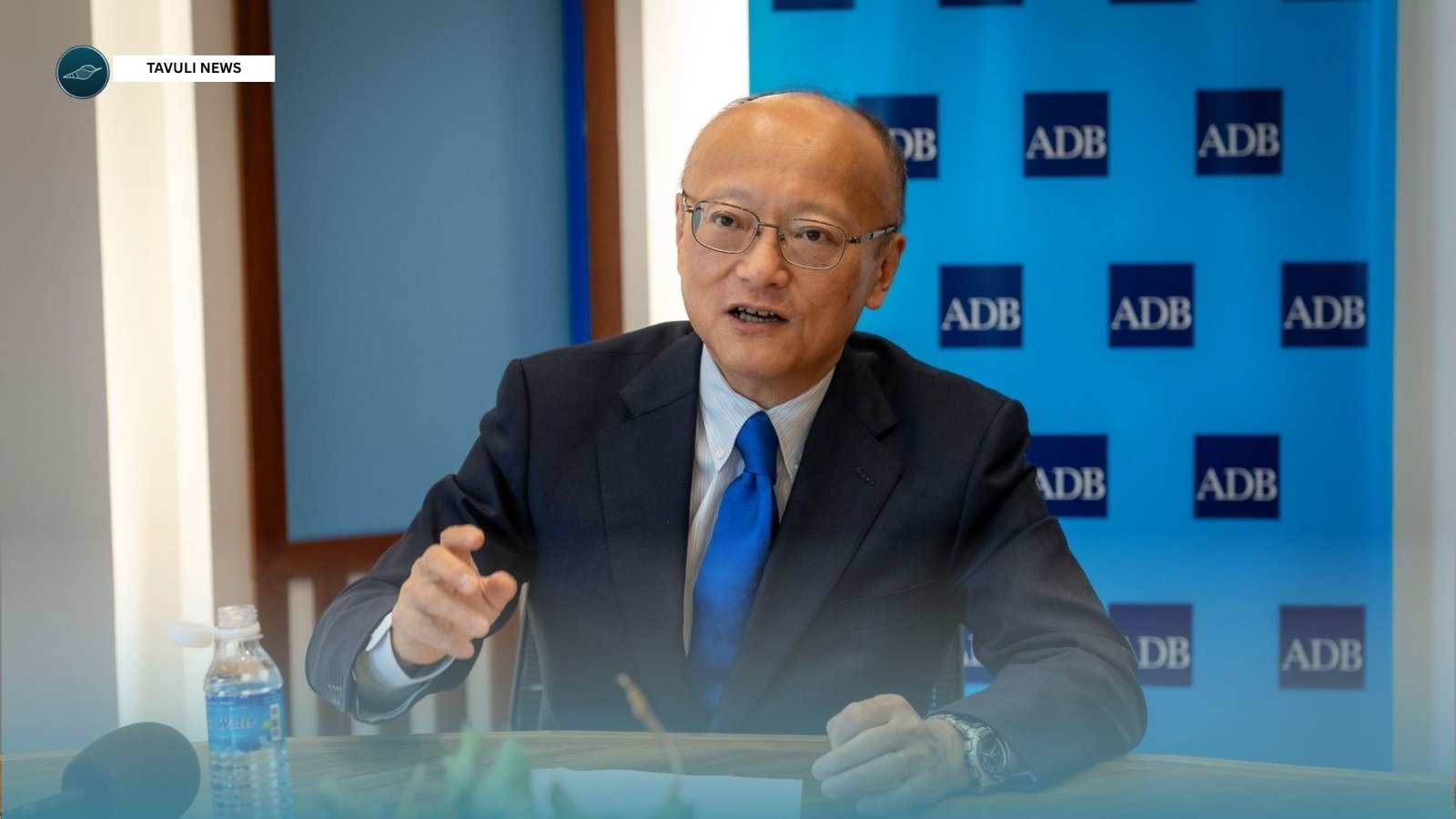
ADB President Masato Kanda says development projects should be judged by tangible economic and social benefits for communities.
By Jeremy Gwao
The Asian Development Bank says the success of development projects should be measured by the tangible economic and social benefits they deliver to communities, rather than simply by the amount of financing committed.
Speaking to regional media during a roundtable event in Koror, Palau, on the sidelines of the 55th Pacific Islands Forum Leaders Meeting, ADB President Masato Kanda was responding to a Tavuli News question about how the bank assesses whether investments in countries such as Solomon Islands are producing sufficient returns to justify their costs.
Kanda said ADB establishes the expected objectives of projects during their preparation in consultation with governments, including identifying who is expected to benefit and how.
“My objective is not the commitment or how much we win, but tangible results on the ground, particularly how we can improve the lives of the people on the ground, is our objective,” he said.
He said projects are assessed against ADB’s performance criteria as well as government expectations.
The assessment also considers broader economic benefits, social and gender impacts and how potential social risks will be managed.
Kanda cited the Senior Secondary Education Improvement Project in Solomon Islands as an example.
He said the project is expected to help more students improve their prospects of pursuing further education and earning higher wages.
He said ADB’s assessment also considers wider benefits to society, including the potential contribution of a better-educated population to public health and civic engagement.
However, Kanda acknowledged that not all projects achieve their intended objectives or meet performance standards.
“Unfortunately, sometimes projects don’t always deliver all the objectives or meet the performance standards, and we are open about that,” he said.
“This is a reality. To be honest, many projects are not going as expected.”
Kanda said there can be several reasons for projects falling short of expectations, including changes in personnel, changes in project scope, construction delays and changes in government or government priorities.
He also cited external events, including the COVID-19 pandemic and conflicts in the Middle East, as factors that can affect project implementation.
He said ADB works closely with governments to anticipate such changes and adjust projects where necessary.
“The important thing for us is to be vigilant, flexible, and agile in addressing these changes,” Kanda said.
According to ADB information published in February 2026, the bank’s sovereign portfolio in Solomon Islands comprised 10 loans and 20 grants worth about US$362.3 million. The bank has supported projects in areas including transport, energy, health, water and sanitation, and economic development.
The bank opened its first full Resident Mission in Solomon Islands in February 2026, expanding its in-country presence and engagement with the Solomon Islands Government.
For Solomon Islands, the question of project performance is significant as the country continues to use development financing for infrastructure and other national priorities.
Kanda’s comments indicate that ADB’s assessment extends beyond the size of individual investments to whether projects achieve their intended economic and social outcomes.