







Australia and Solomon Islands expand policing and border efforts to address regional narcotics challenges
What more can we do to protect our local communities, especially our children, from the widening scourge of narcotics and their importation into Solomon Islands?
Illicit drugs and transnational organised crime have become such a significant regional threat that on 19 May, the first-ever Pacific Police Ministers’ Meeting will be convened in Fiji. The challenge for Ministers is clear but daunting: how to combat highly-organised, transnational criminal groups whose crimes do real harm — not just at sea or at borders, but in villages, schools and homes.
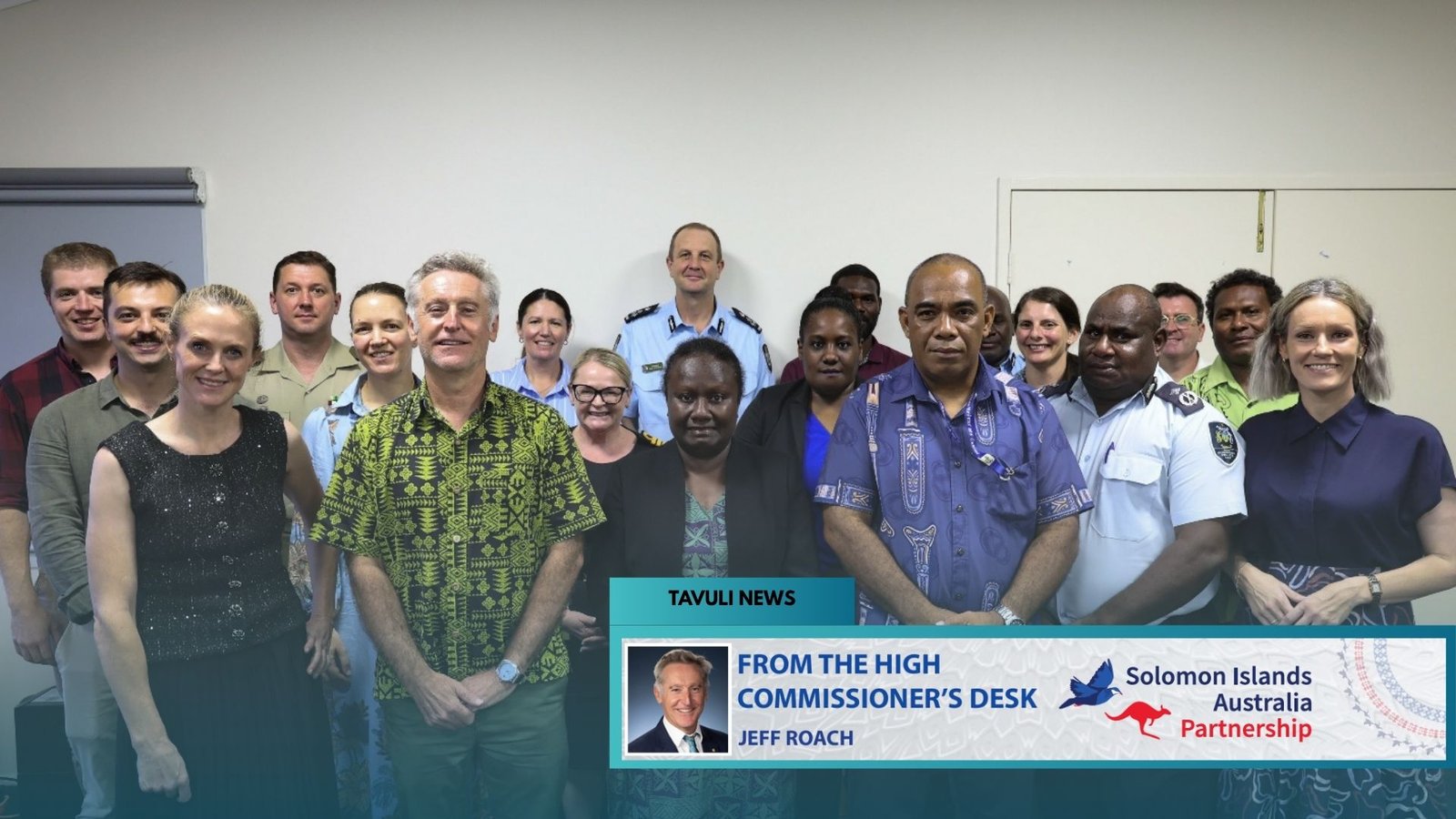
The AFP-RSIPF Policing Partnership Program (RAPPP) is at the heart of Australia’s efforts here in Solomon Islands. This partnership focuses on practical policing skills, including drug detection and investigations, so local officers are supported to tackle\ drugrelated offending.
The program also strengthens regional cooperation by connecting Solomon Islands police with lawenforcement partners across the region. Better information sharing is vital in helping police stay ahead of crossborder drug risks that no country can tackle alone.
Importantly, this work is helping RSIPF build a dedicated investigative capability for serious and organised crime. Foundational support is underway to establish a Transnational Crime Investigations Unit, giving Solomon Islands a specialist team focused on complex drug and crossborder cases.
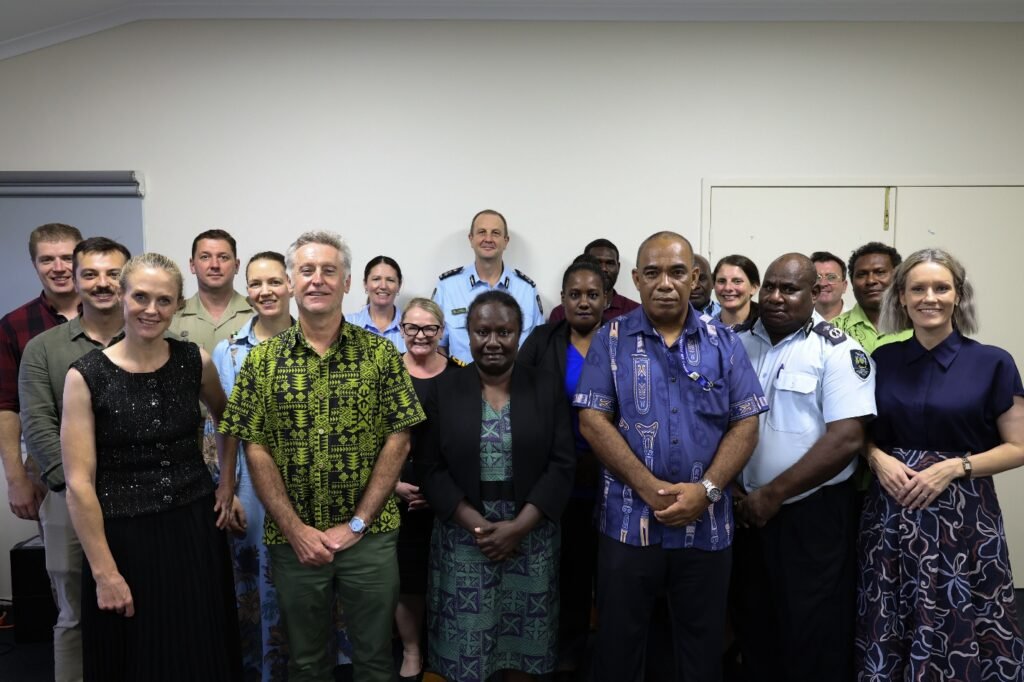
Another good example is Exercise Coastwatchers, which Australia delivers in direct response to requests from Solomon Islands authorities. Through this exercise, the Australian Defence Force trains side by side with the Royal Solomon Islands Police Force, building skills that are immediately useful in Solomon Islands’ unique maritime environment.
The most recent phase of Exercise Coastwatchers saw ADF and RSIPF officers working together to develop practical skills in border surveillance and intelligence collection. Officers collaborated on gathering information, analysing what they were seeing, and planning patrols to respond to suspected criminal activity.
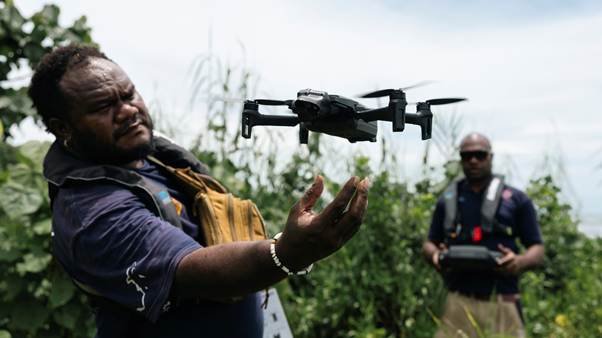
These skills were then brought together with small boat and drone training. In realistic scenarios, officers used surveillance and drones to locate simulated criminal activity at sea, shared that information quickly, and deployed to intercept and arrest suspects. Training like this strengthens Solomon Islands’ ability to protect its own waters and borders.
We’re also working in partnership with Solomon Islands behind the scenes on border security systems. The launch of the new Border Management System (BMS) in November last year will strengthen the integrity of Solomon Islands immigration system and improve compliance across border entry and exit points, making it harder for criminals to travel on false documents to ply their trade.
The BMS was supported by both Australia and Papua New Guinea – illustrating that the Pacific’s regional security challenges can best be met by Pacific countries working together.
Our challenge here is not just to harden national borders and strengthen law enforcement, but to also deal with the tragic health impact of narcotics. Drug abuse and addiction are stressing our region’s health systems – adding to the strain already placed
on our communities’ doctors and nurses. It’s producing violence inside our homes, placing new demands on vital services like Seif Ples.
On all parts of this problem, Australia is working with other development partners – the Pacific Islands Forum, the Forum Fisheries Agency as well as New Zealand, the United Kingdom, Japan and the United States – to support Solomon Islands.
For its part, Australia is keen to do more. One idea is to work on new legal arrangements so more narcotic shipment information can be shared between the two countries, thereby improving detection. Another is to ensure that the lessons across the region can be properly harnessed to improve all aspects of policy responses – policing, customs, health and social policy.
We look forward to working with Solomon Islands on this vital task to support safer communities and families across Solomon Islands.
Lukim iu neks taem!