










UNDP launches SENBIOSIS consultations to promote biogas energy in Solomon Islands, targeting clean energy and emissions reduction
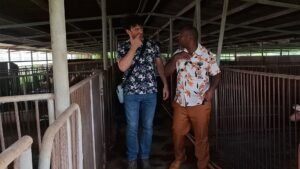
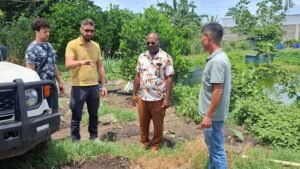
Technical officers from the United Nations Development Programme (UNDP) contracted under the Sustainable Energy from Biogas for Solomon Islands (SENBIOSIS) project are currently in the country conducting consultations with key stakeholders.
Funded by the Ministry of Environment and Energy Security (MASE) through support from the Government of Italy, the project will be implemented by UNDP in partnership with the Solomon Islands Government. It will operate in Guadalcanal and Malaita Provinces.
Scheduled to run from January 2026 to July 2028, the project has a total budget of USD 1.58 million.
SENBIOSIS aims to improve access to clean and affordable energy in off-grid rural areas by promoting biogas technology. The project seeks to reduce organic waste and reliance on firewood through the installation of biogas digesters at commercial livestock farms, rural households, and waste management facilities.
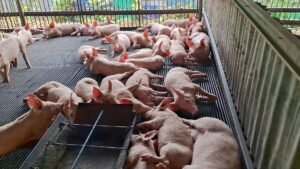
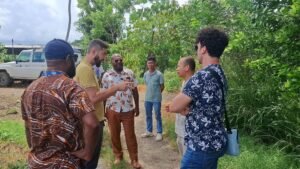
During their visit, UNDP technical officers held initial consultations with the Ministry of Mines, Energy and Rural Electrification (MMERE) and, together with officials from the Ministry of Agriculture and Livestock (MAL), toured several piggery farms outside Honiara to assess their suitability for piloting the project.
MAL Permanent Secretary Dr Samson Viulu said the project plans to establish a minimum of 10 biogas plants.
“Currently the project is looking to establish 10 biogas digesters. The plants will use pig waste as raw material, so we are targeting commercial farms with 100 to 300 pigs,” Dr Viulu said.
The biogas plants will be tailored to the size of each piggery, producing gas for cooking and, where feasible, electricity generation. This renewable energy source is expected to reduce firewood consumption.
The 10 targeted commercial pig farms could collectively reduce at least 1,590 tonnes of carbon dioxide equivalent (CO₂eq) per year through avoided methane emissions. Additional emissions reductions could be achieved by replacing fossil fuel use, such as a 5-kilowatt generator operating eight hours daily, which emits approximately 13 tonnes of CO₂eq annually.
Combined, the SENBIOSIS project could prevent an estimated 2,890 tonnes of CO₂eq emissions per year, contributing to Solomon Islands’ climate mitigation efforts.
Pigs are the most common livestock in rural Solomon Islands, with an average of 5.8 pigs per person. This equates to an estimated 3.5 million pigs for a rural population of around 600,000. These animals generate approximately 2 million tonnes of slurry annually, of which only 20 to 25 percent is used as fertilizer, with the remainder often contributing to land and water pollution.
Commercial pig farms are largely concentrated near Honiara, with an estimated 45 to 50 active farms, while urban areas also generate significant volumes of organic municipal waste.
The project is co-led by MAL and MMERE, with UNDP implementing the initiative under a Direct Implementation Modality. MAL will support agricultural development, livestock activities, and rural livelihoods, while MMERE’s Energy Division will provide technical support for biogas systems, including quality control, training, and the establishment of biogas cooperatives or enterprises to support long-term sustainability.
Biogas technology converts manure and organic waste into energy for cooking and electricity generation. A previous UNDP and FAO study conducted under the SCALA Project confirmed the technical, environmental, and financial viability of biogas production from pig farm waste and municipal solid waste. However, limited technical capacity, financing constraints, and inadequate infrastructure continue to hinder sector growth, underscoring the need for external support.
SENBIOSIS aligns with Solomon Islands’ climate commitments under its Nationally Determined Contribution (NDC) and National Adaptation Plan (NAP).
SOURCE : MINISTRY OF AGRICULTURE & LIVESTOCK