



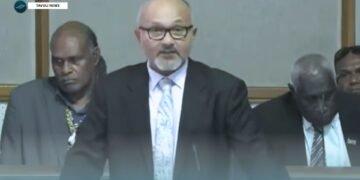
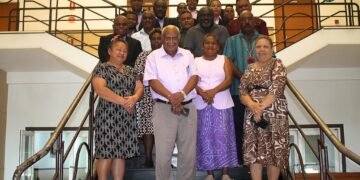

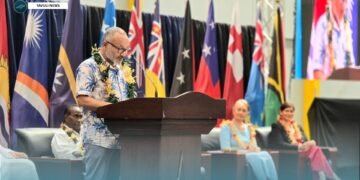

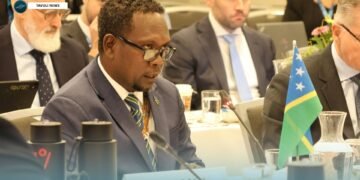













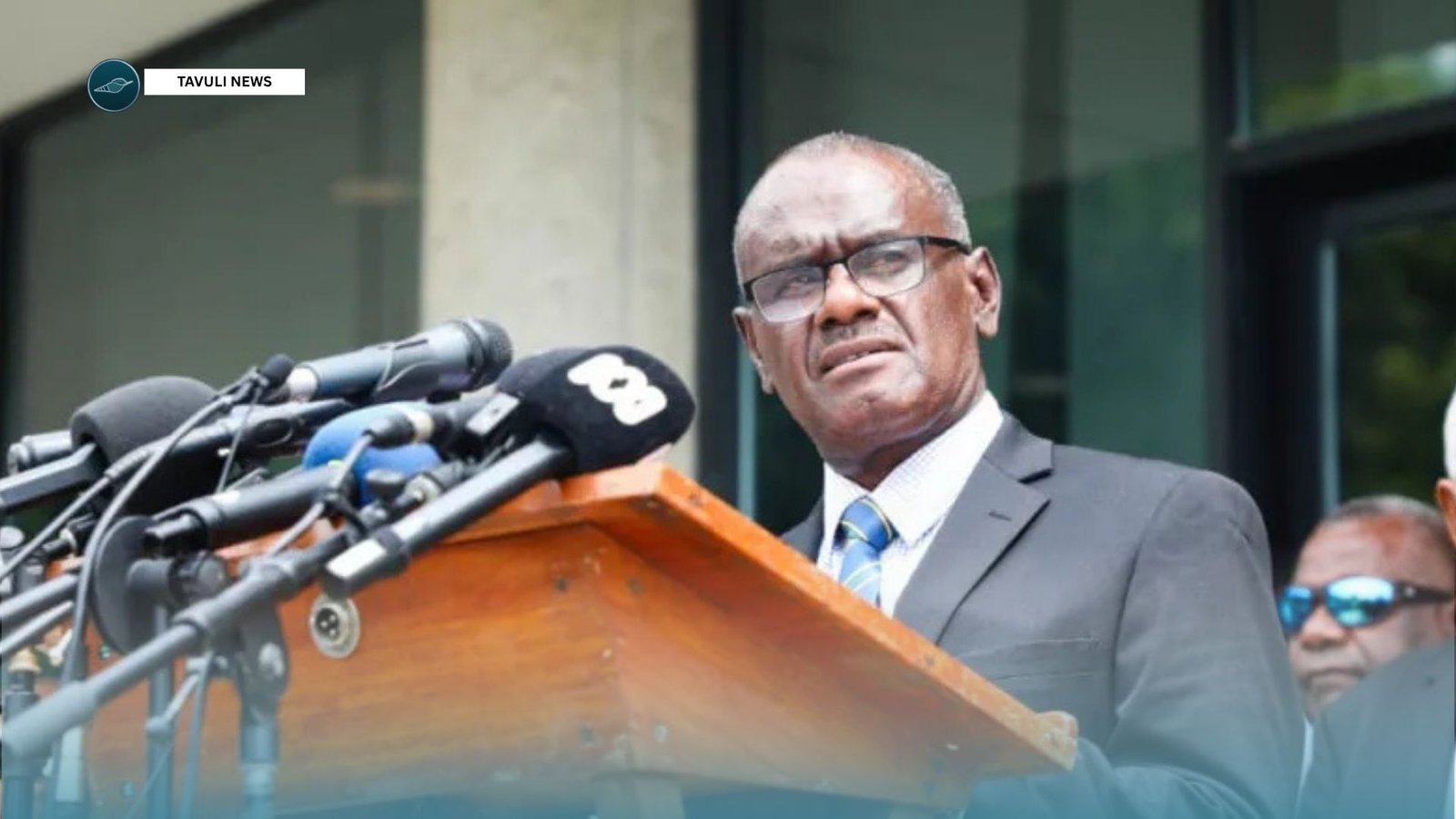
PM Jeremiah Manele marks World Press Freedom Day 2026, stressing media’s role in peace, truth, and democracy
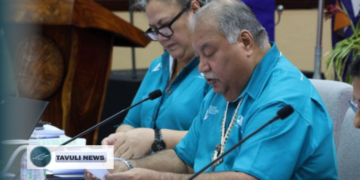
PRIME MINISTER HON. JEREMIAH MANELE, MP KEYNOTE ADDRESS FOR THE
WORLD PRESS FREEDOM DAY 2026
Monday 4th May 2026, Heritage Park Hotel
Theme: “Shaping a Future at Peace: Promoting Press Freedom for Human Rights, Development and Security”
SALUTATIONS;
● President of the Media Association of Solomon Islands, Mr Ofani Eremae
● Ms Dorothy Wickham, President of the Solomon Islands Women in News Media,
● Mr. Robert Iroga, Chairman of the Pacific Freedom Forum and Vice President of the Pacific Islands News Association
● Chief Executive Officer of the Solomon Islands Broadcasting Corporation, Mr Johnson Honimae ● Publishers, media owners, members of the media fraternity,
● Distinguished guests,
● Ladies and gentlemen
Good morning, and Happy World Press Freedom Day.
I acknowledge the Media Association of Solomon Islands for convening this important occasion and for its continued role in bringing together our media fraternity on this global day of reflection.
World Press Freedom Day reminds us of the importance of journalism and the role of media in our democracy, providing a moment to reflect on that work and the environment in which it is carried out.
This year’s theme, ‘Shaping a Future at Peace, Promoting Press Freedom for Human Rights, Development and Security’, speaks directly to the role of the media in our democracy and across the world.
From Honiara to our rural communities and outer islands, and across the wider world, journalists help connect citizens to information that shapes understanding, participation, and trust in public life.
It reminds us that press freedom is not only about the right to report, but about its deeper connection to peace, human rights, development, and national security.
Because when people are properly informed, they begin to understand each other and the decisions around them, and from that understanding, trust begins to grow between citizens, institutions, and communities.
In this regard, Journalism not only informs the public, it also holds power to account.
And it is this core responsibility, one of the most important duties of the profession, that has led journalists in many parts of the world to face intimidation, danger, and even death. Globally, journalists today continue to face serious risks, conflict, intimidation, and restrictions on their freedom, simply for doing their work.
The theme for this year carries a heavy meaning for many around the world. The pursuit of truth continues to come at great personal cost. Recent international reporting from organisations such as UNESCO and the
Committee to Protect Journalists has recorded that journalists continue to lose their lives in conflict zones, and in the course of their duties across several regions of the world.
The reality is clear: In too many places, journalism is still practiced under risk when reporting on crime, governance, and security. These realities remind us of something important today. We are fortunate to be gathered in a peaceful nation.
In this context, we see the media as the vital bridge between the Government and the people. In a democratic country, your role is to ensure that information flows both ways—translating policy into public understanding, and bringing the voices of the people into the halls of decision-making.
But we must also speak with a sense of history. As a people with lived experience of conflict, we understand that peace is not guaranteed. It is fragile, and it is something we must actively protect every single day. The media carries a unique burden in this protection; for
while words can build a nation, they can also tear it apart.
The Government for National Unity and Transformation recognizes the media as an independent institution essential to this stability. Since 2024, we have worked to strengthen our engagement through regular press conferences and improved access. Through the Government’s national connectivity program, more than 60 telecommunications towers have already been completed, expanding access to information and strengthening participation in public life.
But greater access also brings greater responsibility. In a connected society, misinformation can travel quickly, and its impact can be far reaching. In some cases, it can deepen division.
In this environment, journalism is no longer defined by being first, it is defined by being right. Because while anyone can share information, not everyone applies the discipline of verification, and while many voices contribute to public discussion, it is professional journalism that provides the context, clarity, and balance that the public depends on.
Technology may change how stories are told, but it does not define trust, ethics do. A well-produced story may attract attention, but a well-researched story earns confidence.
Strengthening media literacy and public awareness requires partnership between Government, media, communities, and development partners.
As we reflect on this World Press Freedom Day, we also consider how our nation is perceived by the international community. While we take note of recent international indices, we recognize that these rankings though presented as current assessments often reflect events from earlier reporting cycles.
It is essential that these assessments align with our present realities. We do not only welcome favorable views; a government that only listens to praise is a government that stops growing. We hear the criticisms and we take them seriously but we also believe in balance.
We believe that direct, ongoing engagement ensures the narrative about our country is anchored in real-time dialogue and ground-level facts, rather than perceptions formed from a distance or through a filtered lens.
We welcome a fair and balanced assessment that looks at where we stand today, rather than where we stood in the past. After all, it is critical that global reports remain accurate and up to date. They do more than just rank us. They also shape how our international development partners perceive us. Accuracy, therefore, is not merely a matter of national reputation; it directly impacts our development and the strategic partnerships that support it.
In this spirit of accountability, I wish to speak directly to the status of our National Broadcaster, the Solomon Islands Broadcasting Corporation.
We are all aware of the discussions, and the international reports, that suggest the SIBC has fallen under the direct control of the Prime Minister’s Office. I want to address this head-on.
In our archipelago, the SIBC is a lifeline. Our country is 98 percent ocean, and our scattered communities are divided by vast waters but they are united by the airwaves. For more than 70 years, the National Broadcaster has been the unifying force that binds our islands together.
Because of its vital role in national safety and unity, our government’s priority is simple: to ensure that this lifeline remains funded, strong, and accessible to every citizen. But let me be absolutely clear: supporting the national broadcaster financially does not mean controlling its voice.
While the long-term work of legal and strategic reform continues, our commitment remains practical and unwavering. We guarantee the financial subvention that keeps the national signal on the air, especially for the sake of our remote communities and we protect the editorial firewall that allows SIBC’s journalists to report without interference.
A public subvention is not a purchase of loyalty; it is a commitment to public service. True press freedom
is not measured by the absence of government support, but by the presence of editorial independence. We respect that independence, just as we respect the vibrant digital and online media spaces that continue to grow alongside our traditional airwaves.
We believe that actions speak louder than the ink on a page. Our action is to fund the service, protect the journalists, and let the SIBC do its job for the people of the Solomon Islands.”
With this, we recognise that many journalists face resource constraints and the pressures of a rapidly changing digital environment. In a small economy, we know the media often relies on government advertising. Our support through public notices is a service to the public, not a leash on your reporting.
We also recognize that women in media continue to face additional challenges, including harassment and barriers to advancement that extend beyond the workplace into family and social life. These realities require continued attention and shared responsibility.
This is where the role of MASI is critical. We see MASI as the essential bridge between the Government and the media fraternity. My message to the media is that the avenues for professional engagement are already in place. We have established formal channels for dialogue and the verification of facts.
We encourage MASI as your collective voice to engage through these established avenues to address industry challenges.
As we approach 50 years of independence, we reflect on our journey since 1978. Over five decades, our institutions have strengthened, our society has evolved, and our national identity has taken shape. Throughout this journey, the media has played a vital role, recording our history and contributing to national understanding. As we look toward the next fifty years, the pen and the lens remain in your hands. It is your work that will define how future generations remember our progress, and it is through your professional dedication that our national story will continue to be told with the depth and clarity it deserves.
On this World Press Freedom Day, we are reminded that press freedom is not only about the ability to speak but also the responsibility to inform, to protect truth in an age of noise, strengthen trust in an age of uncertainty, and preserve unity in an age of division.
To you, the journalists and media professionals of our country:
Every day, you are the ones who tell the stories of others. You are the ones who give voice to communities, institutions, and events across our nation. But in doing so, you rarely place yourselves in the story or have your stories told. So today, it is only right that we pause to acknowledge you.
We recognise you, your discipline, your responsibility, and your commitment to truth, peace, nation building and the security of our country.
Happy World Press Freedom Day.
Thank you, and may God bless Solomon Islands.
PRESS RELEASE