












Juncao Technology boosts Pacific agriculture with sustainable feed, mushroom production, and climate resilience
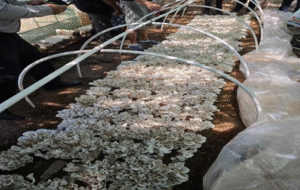
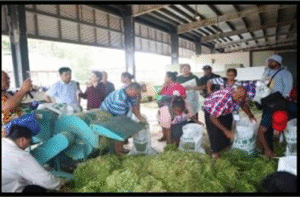
The Pacific Regional Seminar on Juncao Industry Development, held in Nadi, Fiji from 19–21 November 2025, reaffirmed the growing importance of Juncao Technology in supporting poverty alleviation, climate resilience, and sustainable agricultural development across the region. The event brought together government officials, scientists, and technical officers from across the Pacific to share progress updates, research findings, and emerging opportunities for Juncao adoption.
The seminar was organized by the Ministry of Agriculture and Waterways of Fiji, Fujian Agriculture and Forestry University (FAFU), the China National Research Centre of Juncao Technology, the China-Pacific Juncao Technology Demonstration Centre, and Fujian Zhengyuang Juncao International Cooperation Co., Ltd.
Solomon Islands was represented by Mr Barnabas Henson (Office of the Leader of Opposition), Ms Mary Afuna (MAL Research), and Mr Joseph Wotomaru (MAL Extension).
Juncao (“Jun” meaning fungi, “Cao” meaning grass) is a sustainable technology used for mushroom cultivation, animal feed, and soil protection. The seminar highlighted how this grass-based innovation has already achieved notable success in Fiji, Papua New Guinea, Vanuatu, and Tonga, contributing to livestock production improvements, reduced feed costs, and environmentally friendly farming practices.
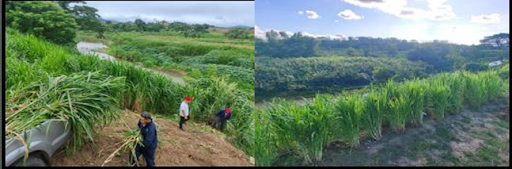
In Fiji, more than 25 acres of Juncao have been established across research stations, including Legalega, Fiji’s National Juncao Centre. Trials have recorded high biomass yields, improved drought tolerance, and rapid regrowth. Feeding demonstrations have shown increased livestock weight gain, higher milk yields, and reduced feed expenses for smallholder farmers. Juncao is also being used successfully for commercial mushroom production, which is emerging as a promising MSME opportunity in both Fiji and PNG.
The seminar underscored Juncao’s potential to address key challenges faced by Solomon Islands livestock farmers, including dry-season feed shortages, declining pasture quality, and increasing commercial feed prices. The technology has the capacity to replace up to 40% of poultry feed and supplement feed for cattle, goats, and pigs.
Juncao also presents opportunities for new value chains such as mushroom production, supporting Micro Small Medium Enterprise (MSME) development, improved household nutrition, and broader agribusiness diversification. Environmentally, Juncao can contribute to soil stabilisation, degraded land rehabilitation, and climate resilience, aligning with national sustainable land management priorities.
MAL noted that Juncao Technology offers a practical opportunity to strengthen the livestock sector, reduce dependence on feed imports, and support rural livelihoods. The Ministry expressed interest in collaborating with regional partners to explore how this innovation can be adapted for Solomon Islands farmers.
The Pacific Regional Seminar confirmed that Juncao Technology provides a high-yield, climate-resilient fodder option that supports livestock productivity, rural incomes, and environmental restoration. With demonstrated success in neighbouring Pacific countries, Juncao presents a viable pathway for Solomon Islands to improve feed security, promote sustainable agriculture, and enhance resilience to climate impacts.
SOURCE : Ministry of Agriculture & Livestock