







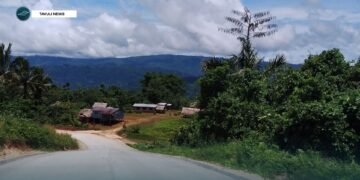
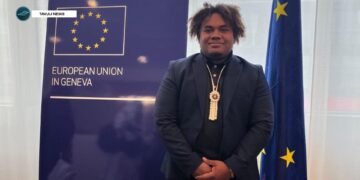










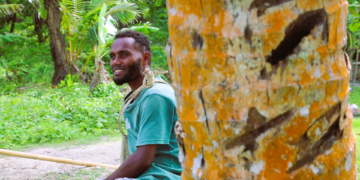







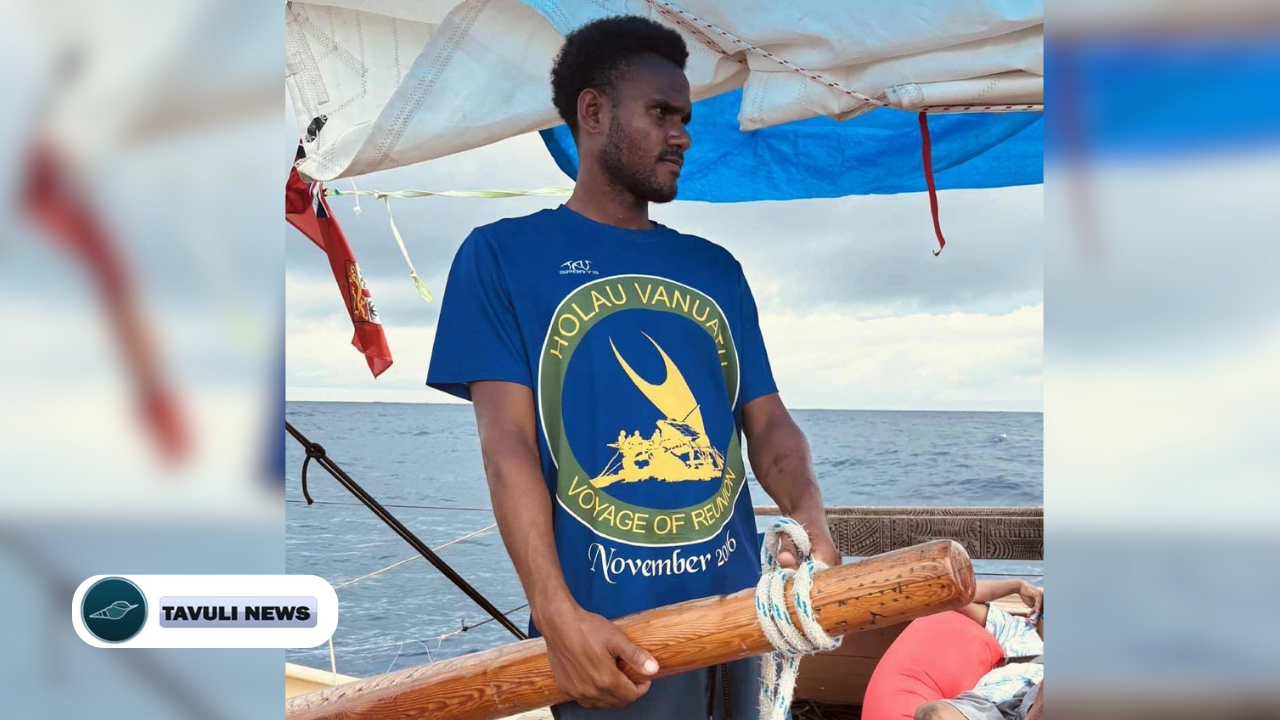
Raised on Duff Islands in Temotu Province, Brandonly’s relationship with the ocean began long before he could name it. As a small boy in Taumako, he learned to sail the way many children there do by watching, listening, and following elders out to sea. What began as childhood curiosity has grown into a deep commitment to traditional voyaging, now taking him on long-distance journeys across the Pacific.
As the only boy among five sisters, Brandonly was groomed from an early age with local knowledge about life at sea and the responsibilities that come with being a navigator and sailor.
“For me, sailing is one of the biggest experiences in life,” he says. “It is challenging, but also rewarding and it’s something I’m always keen to experience again.”
His journey began under the guidance of his grandfather, Jonas Holland Kolanu, a respected knowledge holder in traditional navigation.
“I started sailing with my grandpa back in the days, not knowing that one day his legacy would live on through me,” Brandonly reflects. “I believe I’ve made him proud by keeping his knowledge and skills alive. That’s something I’ll always be proud of.”
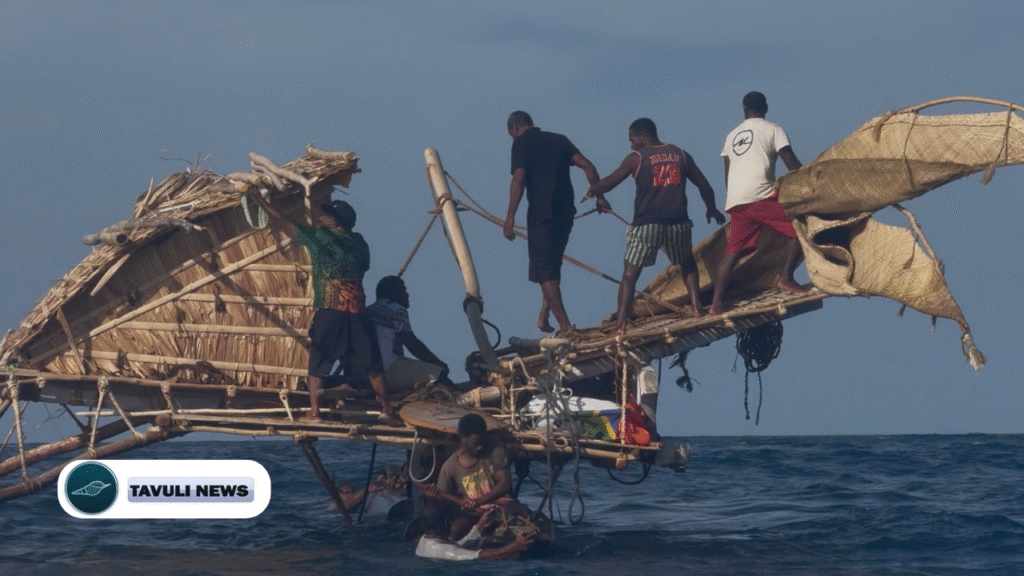
One of his most memorable achievements came when he sailed aboard the Tepuke, a traditional voyaging canoe on its maiden voyage from Taumako to Honiara for the 54th Pacific Islands Forum Leaders’ Meeting. The journey was not only historic, but deeply personal.
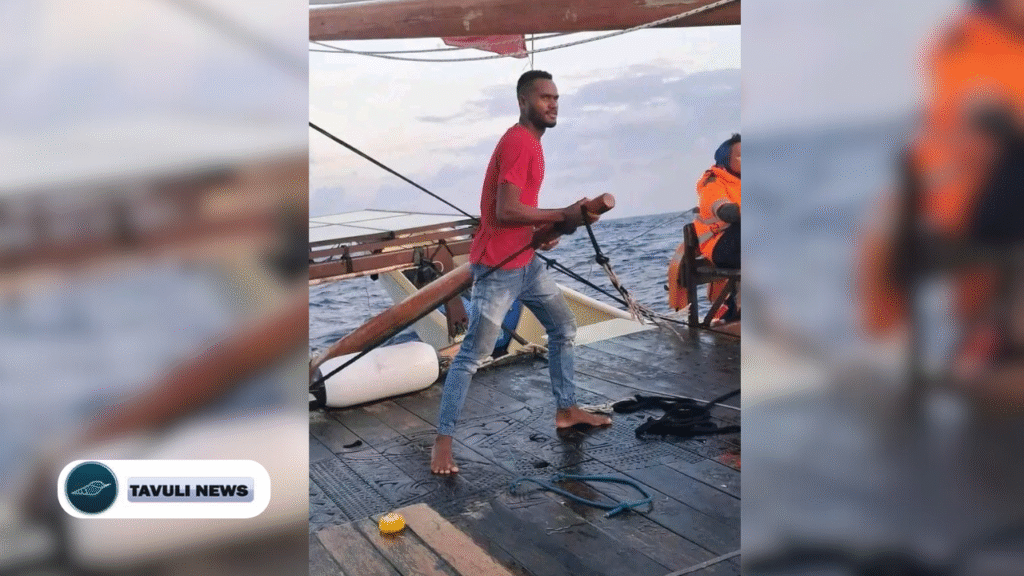
Sailing a Tepuke is no simple task. It demands endurance, discipline, and constant awareness. Crew members must multitask, navigating, reading the weather, managing the sails, steering, and bailing while braving open seas and unpredictable conditions.
“Life on the Tepuke is more fun when the wind is strong and coming from the right direction,” Brandonly says. “But you must always be active and on standby every single minute.”
For him, voyaging is about more than reaching a destination.
“Even though we spend many days at sea, it’s a rewarding feeling. It creates memories that stay with you,” he says. “I started as a beginner scared at first but over time I gained confidence, and now here I am.”
He says one of the most important skills is active listening and the ability to respond quickly, especially during rough seas or high swells. While his duties vary, Brandonly particularly enjoys steering.
“I love steering during light winds. Sitting at the back and guiding the canoe that’s when it’s most fun.”
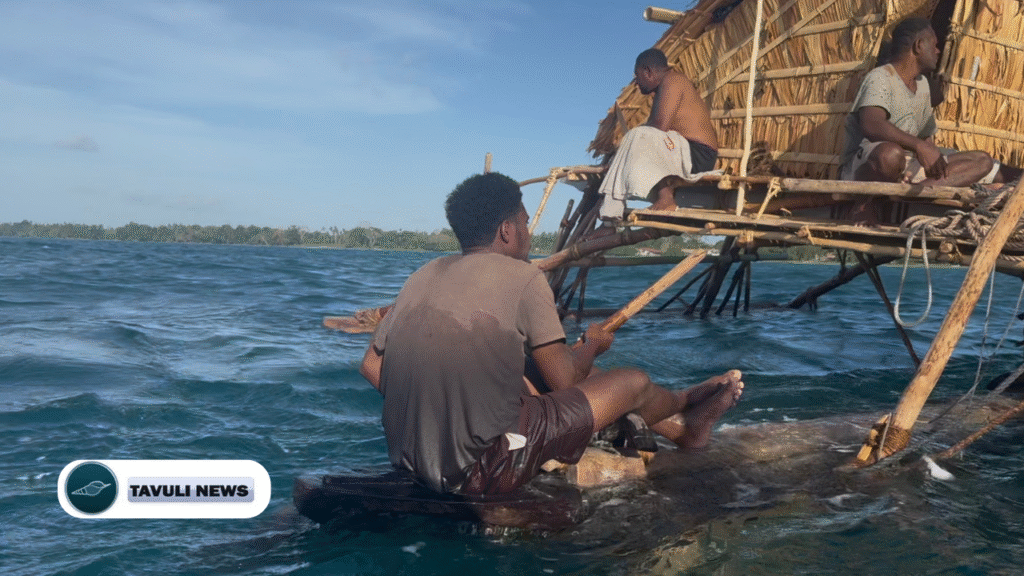
Brandonly grew up surrounded by master canoe builders and navigators in Taumako, where stories of long-distance voyaging are part of everyday life. The Duff Islands remain one of the few places in the Pacific where traditional ocean-going canoe knowledge has been continuously practiced.
But that knowledge is under threat.
“Many of our elders are aging, and if we don’t act now, we risk losing these skills,” he says.
That concern has driven efforts by local groups such as the Vaka Valo Association and Tepuke initiative to explore partnerships and collaborations aimed at preserving and safeguarding this cultural heritage ensuring future generations can continue to sail, navigate, and carry forward ancestral knowledge.
“Unless people are willing to learn, the knowledge won’t survive,” Brandonly says. “From cutting the trees, carving the canoe, to sailing these are key processes that need attention now.”
He believes young people in Taumako must take hold of this knowledge before it disappears.
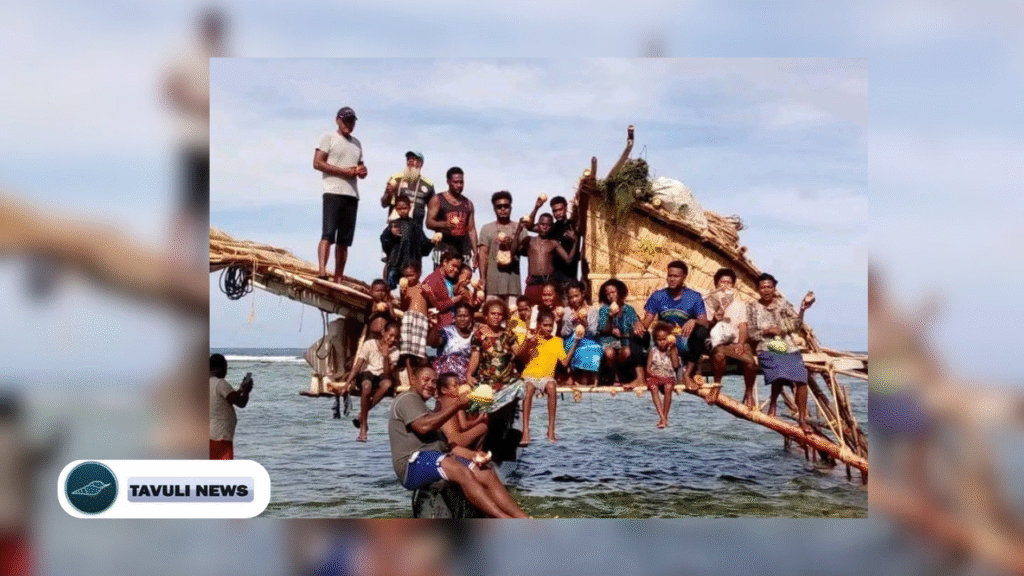
Recently, Brandonly joined Pacific Island voyagers from Uto Ni Yalo on a major voyage from Honiara to Vanuatu and onward to Suva, Fiji. He describes it as an incredible experience, sharing the journey with fellow Pacific Islanders who share the same passion for voyaging.
“It was overwhelming, something I’ll always record in my voyaging history book,” he says.
Seeing many young Pacific Islanders showing interest in traditional voyaging gives him hope.
“I want to see young people engage in traditional knowledge practices,” Brandonly says. “That’s where our roots and our identity come from.”
Looking ahead, he hopes to continue sailing and, more importantly, to pass on what he has learned to other young people in the Duff Islands.
For Brandonly Kolstar, sailing is more than a skill. It is identity, responsibility, and a living link between past and future carried forward on the wind and waves of the Pacific.