
























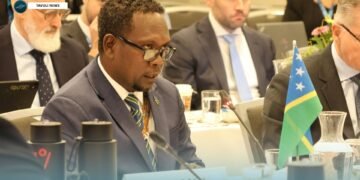





























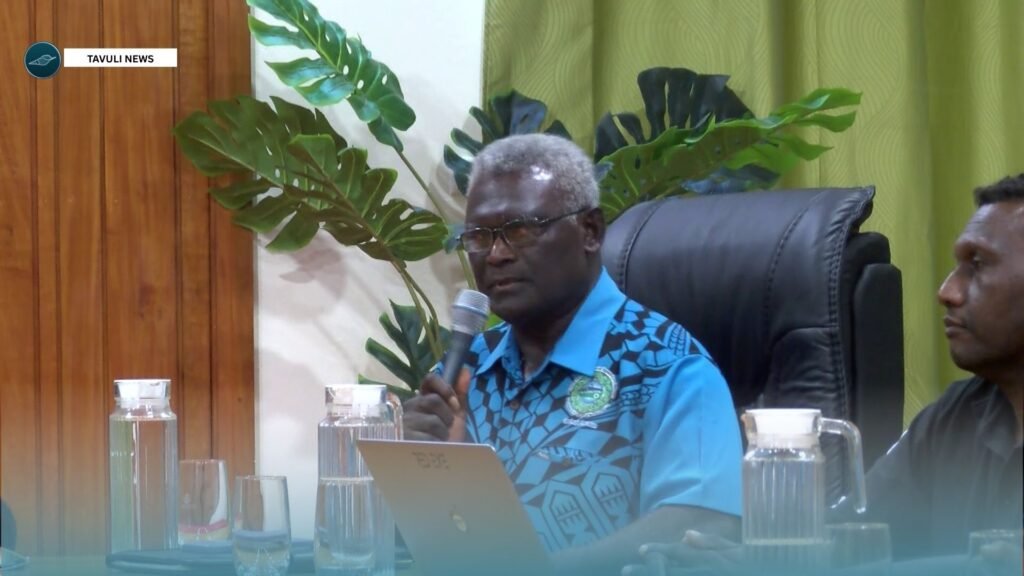
Acting Minister Manasseh Sogavare flags talks over CEMA copra fee amid concerns for farmers’ income in Solomon Islands.
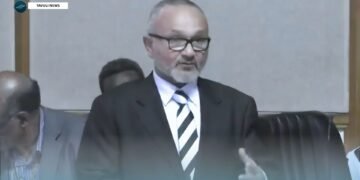
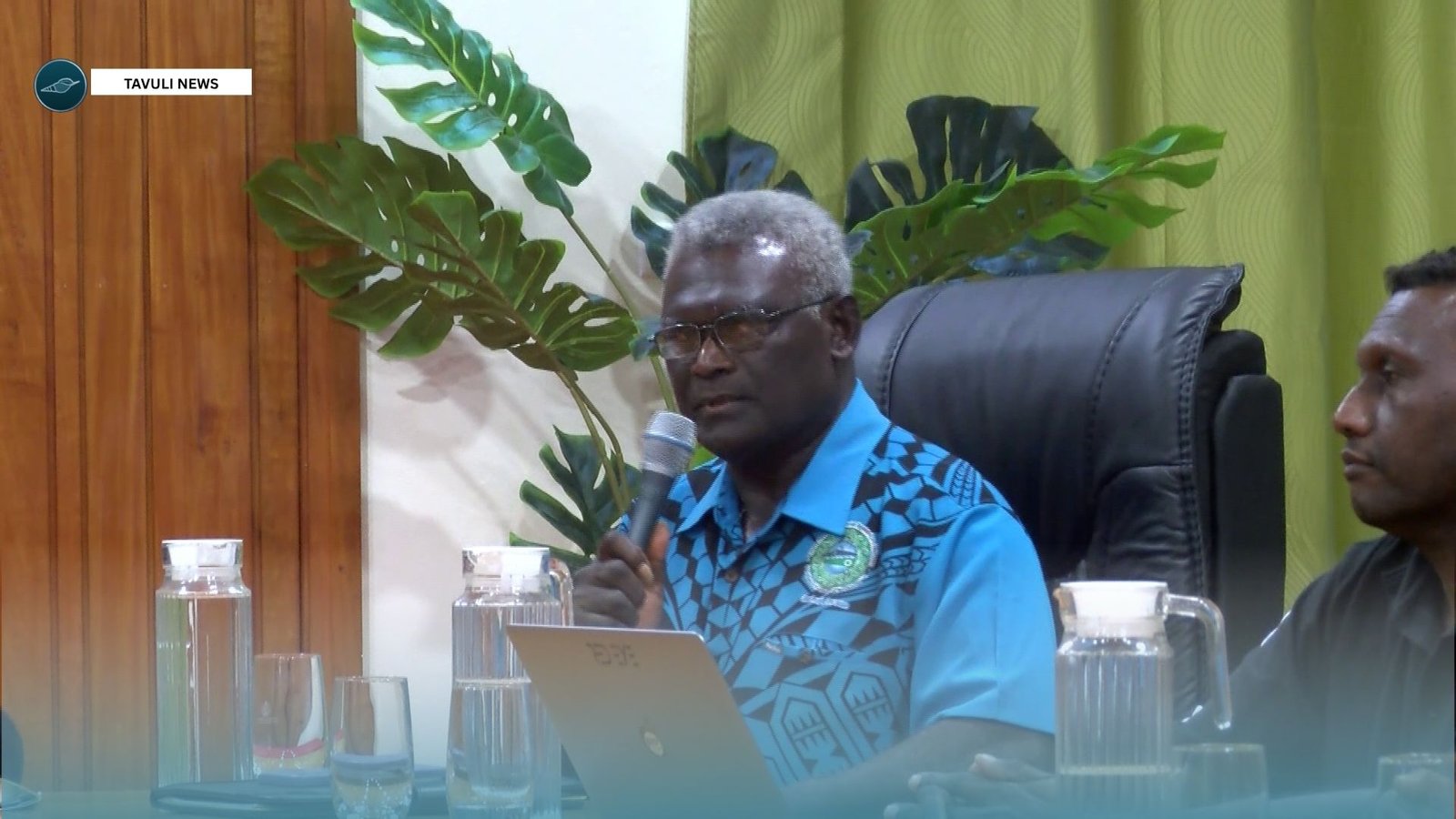
Acting Minister for Commerce, Manasseh Sogavare, has confirmed that discussions will be held with relevant authorities on Monday, 22 March 2026, amid growing concern over copra pricing, while also questioning the process behind a newly introduced management fee.
In a recent press conference, Sogavare responded to media questions about the fairness of the fee, reflecting wider unease among stakeholders over its impact on copra farmers and rural livelihoods.
Sogavare said his initial review of the documents suggested issues that require further clarification.
“I had a first glance of the document. It does not look right, but the thinking behind it is what I will raise with the permanent secretary,” he said.
He warned that decisions of this nature could have broader implications for government finances.
“This kind of decision will put a threat to the government budget because eventually the government will foot this at the end of the day,” he said.
The concerns follow the introduction of a management fee by the Commodities Export Marketing Authority (CEMA), which has significantly reduced the amount paid to copra producers.
According to a public notice issued by CEMA, the market price for copra is $6.00 per kilogram. A management fee of $3.05 per kilogram is now being applied, leaving farmers with a net return of $2.95 per kilogram.
The fee falls under the Coconut and Coconut Product Management Fees Regulations 2026, gazetted on 17 March, which outlines charges on copra exports to support industry management and services.
Sogavare said the rationale behind the fee structure must be clearly explained, noting that CEMA operates within the government framework.
“The thinking behind the numbers needs to be explained and this has to be clear,” he said. “CEMA is an extension initiative that is part of the government body.”
He also stressed the importance of proper government process and cabinet oversight.
“We must not forget that ministers do not operate independently. We run a cabinet system of government, and decisions like this must be cleared and discussed by the cabinet before any formalities are issued,” he said.
“Browsing through the documents, I can tell that some of these processes may not have been followed. That is why I will deal with this as a priority.”
Matthew Wale, Leader of the Opposition, has called on CEMA to immediately withdraw the fees, describing the measure as harmful to farmers.
He said the charge of $3,051 per tonne — equivalent to $3.05 per kilogram — removes more than half of the market value from producers.
“At the current copra price of $6.00 per kilogram, this fee takes $3.05 per kilogram, or 50.85% of the market value. That leaves the farmer with only $2.95 per kilogram,” Wale said.
He argued the reduction in earnings could discourage production, place pressure on rural households, and called for greater consultation with farmers, exporters, and industry stakeholders.
Copra remains a key source of income for many communities across Solomon Islands, particularly in rural areas where livelihoods are closely tied to commodity prices.
Further clarification from authorities is expected following the planned discussions.