






















































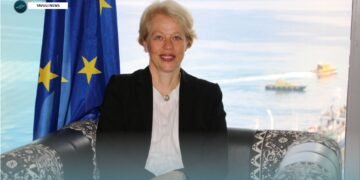










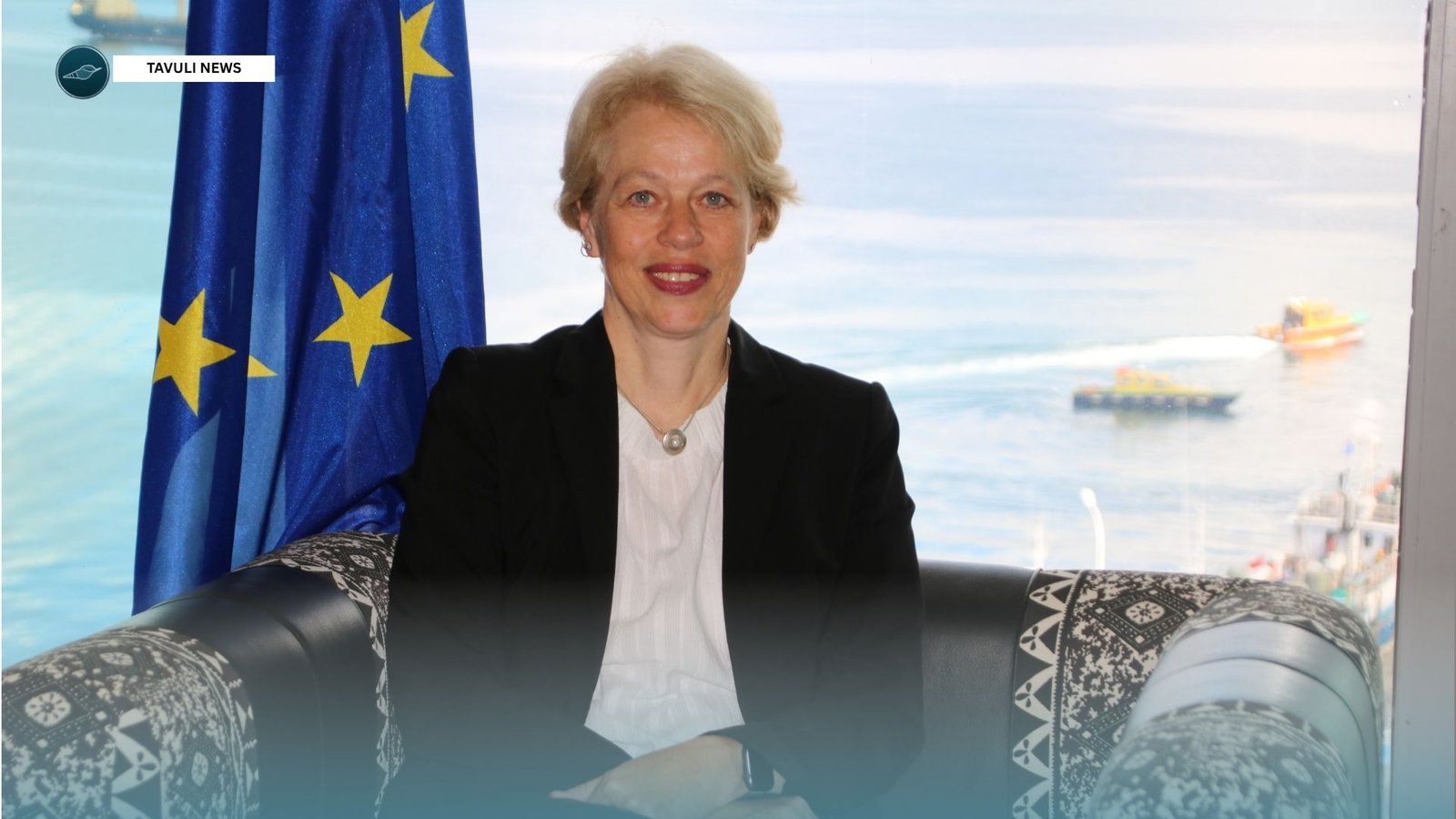
EU Ambassador Barbara Plinkert warns that disruptions to Ukrainian food exports could threaten global and Pacific food security.
When nearly 80% of the world faces hunger, blocking one of the world’s major breadbaskets is neither an accident nor merely a military tactic – it is a direct assault on global stability.
Russia is systematically strangling Ukraine’s agricultural exports across the Black Sea, the Danube River, and overland corridors. By targeting shipping, ports, and warehouses, Moscow is weaponising food against millions of vulnerable people across Africa, Asia, the Middle East, Latin America, and, indirectly, the Pacific.
This crisis is engineered for maximum damage. As Ukraine moves through its harvest season, missile and drone strikes have trapped grain inside the country, cutting exports in half. Over 9 million tonnes could rot by November due to destroyed storage, triggering agricultural shortages and driving up global prices well into 2027.
The shockwaves reverberate far beyond Europe. Today, an estimated 645 million people face hunger globally, and vulnerable communities are the least able to absorb another artificial supply shock.
Before the invasion, Ukraine supplied 15% of global corn exports, 10% of wheat, and 50% of sunflower oil, making it a vital supplier to regions such as North Africa and the Middle East.
These disruptions also ripple across the ocean to the Pacific Islands. Due to their physical remoteness, Pacific communities rely heavily on imported essential goods, including food and fuel, making Pacific households uniquely exposed to the effects of global flashpoints – particularly the supply shocks that drive up global prices.
Rising prices quickly filter down into grocery bills, transport costs, and household budgets, straining food security, nutrition, health, and wellbeing. Compounded by climate change and intensifying natural disasters, these pressures further erode Pacific resilience. This invasion must not be allowed to become a force multiplier for instability, draining the resources Pacific nations need to confront their own existential challenges.
Geographically, Ukraine and the Pacific are oceans apart, but the geopolitical stakes are identical. Universal principles of peace, sovereignty, and territorial integrity are core to the Pacific way of life and guided the historic Blue Pacific Ocean of Peace Declaration.
Pacific leaders have long made it clear: global disputes must be resolved through dialogue, in pursuit of long-lasting peace and security.
The European Union (EU) is working to mitigate the impact. Through its “Solidarity Lanes,” the EU has opened alternative land routes to move Ukrainian grain to global markets. However, land routes are a temporary band-aid. They cannot replace safe navigation in the Black Sea, which handles 90% of Ukraine’s agricultural trade.
An immediate arrangement is required to allow the safe passage of vessels. The international community cannot accept a situation where millions far from the battlefield pay the price.
Ukraine has consistently demonstrated its readiness for peace, calling for an unconditional ceasefire since the early days of the invasion, yet Russia continues to escalate its aggression.
The EU greatly values the Pacific countries that stand up for international law and consistently voice their support for Ukraine’s sovereignty on the global stage. Distance does not diminish solidarity: their moral leadership sends a powerful message that regional security and global stability are inseparable.
The EU will stand shoulder-to-shoulder with Ukraine for as long as it takes. But an unconditional ceasefire leading to just and lasting peace requires collective pressure.
The EU calls on its Pacific partners to keep standing with it. Ending this war protects Ukrainian lives – and helps preserve the predictable global trading conditions that underpin economic resilience across the Pacific.
SOURCE// EUROPEAN UNION DELEGATION TO THE PACIFIC PRESS RELEASE