








• About Us
  • Contact Us
  • Our Services
Monday, November 23, 2026
Tavuli News (Solomon Islands)
No Result
View All Result
  • Home
  • News
    • Solomon Islands – Australia Partnership
    • Environment
      • Climate Change
    • Regional & World
  • Politics
    • Parliament
  • Economy
    • Agriculture
  • Society
    • Women & Health
    • Health
    • Education
    • Religion & Culture
  • Sports
    Solomon Kings to play three home matches in March OFC Pro League series

    Solomon Kings to play three home matches in March OFC Pro League series

    Image by Oceania Football Center

    Solomon Islands and Christchurch to share OFC Pro League round in March

    GABRIEL INI MAKES HISTORY, REACHES 800M FINAL

    GABRIEL INI MAKES HISTORY, REACHES 800M FINAL

    THREE ATHLETICS ATHLETES TO REPRESENT SOLOMON ISLANDS

    THREE ATHLETICS ATHLETES TO REPRESENT SOLOMON ISLANDS

    Solomon Islands Reach OFC Beach Soccer Men’s Nations Cup Final

    Solomon Islands Reach OFC Beach Soccer Men’s Nations Cup Final

    Solomon Islands’ Emma Komasi joins Pacific women in Sydney for training in rugby commentary, mobile journalism and digital storytelling.

    Emma Komasi joins Pacific women at rugby media training in Sydney

    Solomon Islands to Host 2027 OFC Pro League Final

    Solomon Islands to Host 2027 OFC Pro League Final

    Dart Fever Hits Honiara! Canoe Lager Honiara City Dart League gets underway

    Dart Fever Hits Honiara! Canoe Lager Honiara City Dart League gets underway

    GO WITH COURAGE, PLAY WITH PRIDE: PM WALE TO NATIONAL TEAMS

    GO WITH COURAGE, PLAY WITH PRIDE: PM WALE TO NATIONAL TEAMS

  • More
    • Perspectives
    • Paid Features
    • Sponsored Content
Tavuli News (Solomon Islands)
No Result
View All Result
Home Perspectives

UNDERSTANDING CHINA THROUGH IT’S POLITICAL HISTORY

News Desk by News Desk
13/10/2026
in Perspectives
0 0
0
UNDERSTANDING CHINA THROUGH IT’S POLITICAL HISTORY
0
SHARES
80
VIEWS
Share on FacebookShare on Twitter

By Georgina Kekea in Beijing

Disclaimer: This article reflects the author’s personal observations and views and does not represent the position of any organisation with which the author is professionally associated. 

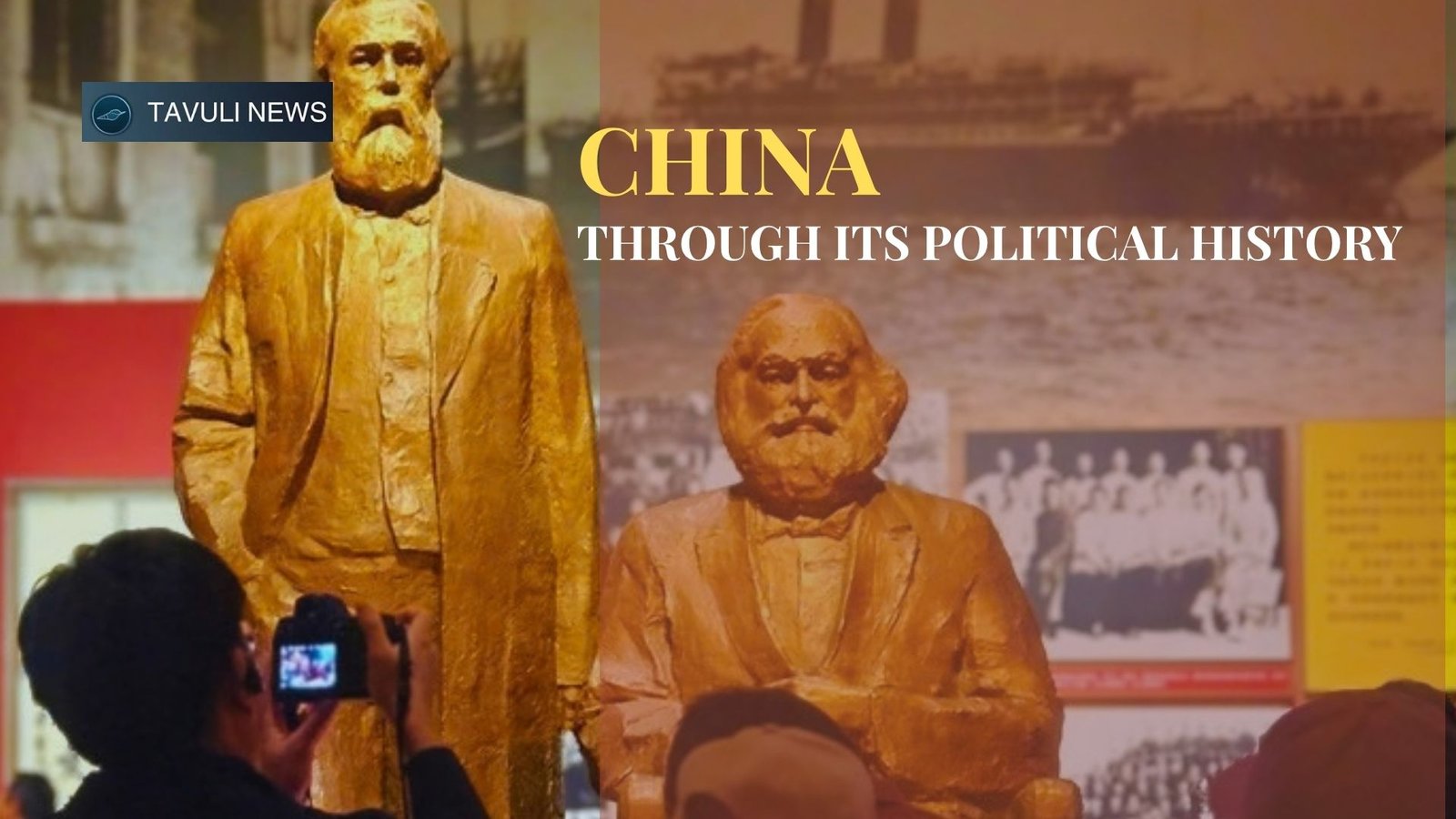
Inside the Museum of the Communist Party of China in Beijing, sculptures of Karl Marx and Friedrich Engels take visitors back to the ideological roots of the political party that has governed China since 1949.

For many Solomon Islanders, the word Marxism may simply be associated with communism and China.

But understanding China’s political history requires looking beyond those familiar labels.

What exactly is Marxism? And how did an idea developed in 19th-century Europe become part of the political foundation of modern China?

A visit to the museum provides part of that story.

Opened to the public in 2021 during the centenary year of the Communist Party of China, the museum traces the Party’s journey from its founding in 1921, through revolution and the establishment of the People’s Republic of China in 1949, to reform, opening up and modern China.

Its exhibitions include more than 2,600 photographs and more than 3,500 pieces or sets of historical exhibits, including material associated with Karl Marx. 

Our visit was part of the China International Press Communication Center programme, bringing together journalists and media and communication personnel from countries across Asia and the Pacific, many with very different histories and systems of government.
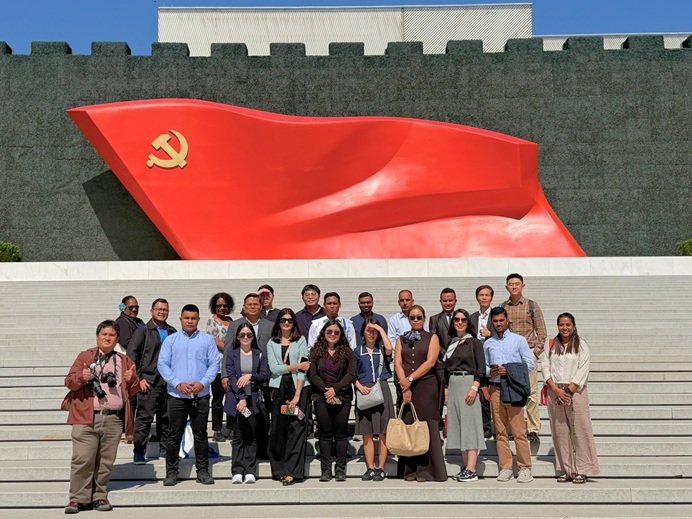
Journalists participating in the China International Press Communication Center programme outside the
Museum of the Communist Party of China in Beijing following a tour of its historical exhibitions. 

That diversity made the visit particularly interesting.

It raised a broader question: how much do we understand another country’s political system before judging it through the lens of our own?

So what is Marxism?

In simple terms, Marxism began as a critique of the economic and social inequalities of 19th-century capitalism. Karl Marx and Friedrich Engels argued that societies were shaped partly by struggles between economic classes, particularly between those who owned productive resources and those who worked for them.

Their writings examined labour, ownership, wealth, inequality and the distribution of economic power. But Marx died in 1883, decades before the Communist Party of China was founded.

Marxism later influenced socialist and communist movements in many parts of the world, although those movements did not develop in exactly the same way. When Marxism reached China, it entered a country with its own history, culture and political conditions.

The Communist Party of China was founded in 1921.

Over time, its leaders argued that Marxist ideas could not simply be copied from Europe but had to be interpreted according to China’s own circumstances. That remains central to how the CPC explains its political philosophy today.
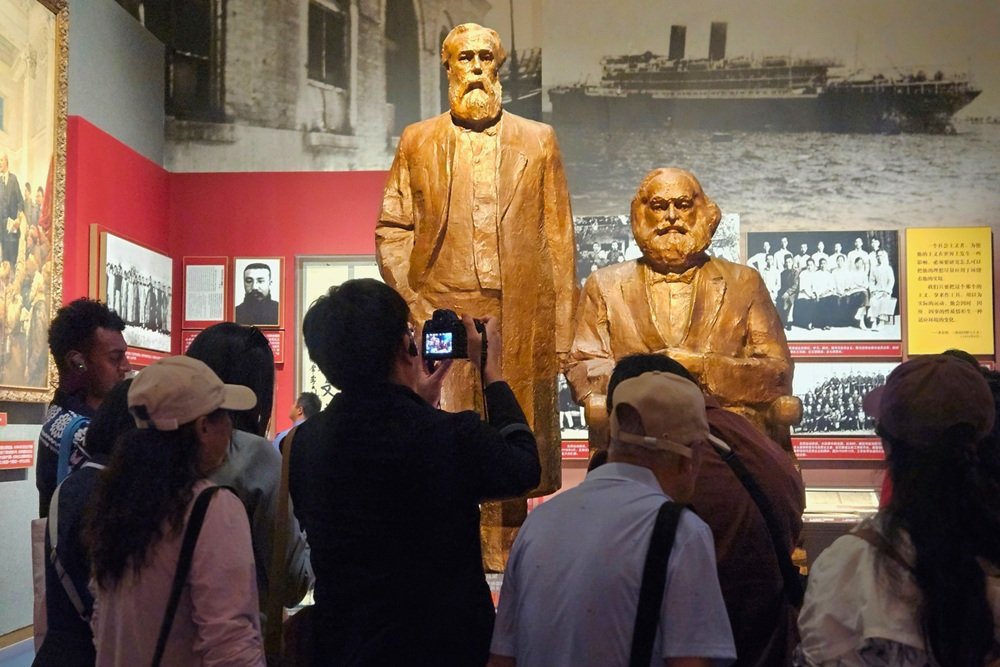
Visitors view sculptures of Karl Marx and Friedrich Engels, whose writings helped shape Marxist thought and later influenced the political ideology of the
Communist Party of China. 

Official Party documents describe this as integrating the basic principles of Marxism with China’s “specific realities” and with traditional Chinese culture. This is important because it helps explain why China today does not look exactly like the communist system many people may imagine when they first hear the word.

From Mao to economic reform

China under Mao Zedong operated under very different economic conditions from the China that emerged after reform and opening-up policies associated with Deng Xiaoping began in 1978.

Greater emphasis was placed on economic development. Markets expanded. Private businesses grew. Foreign investment entered the country. China became increasingly connected to the global economy. Yet the Communist Party remained at the centre of political power. This can sometimes be confusing to outsiders.

How can a country governed by a Communist Party also have private businesses, entrepreneurs, markets and foreign investors?

China describes its economic system as a socialist market economy. Its Constitution states that the country practises a socialist market economy while also recognising private and other non-public sectors as important components of that economy. It also permits foreign enterprises and individuals to invest in China under Chinese law. 

So modern China combines extensive market activity and private enterprise with a political system in which the Communist Party retains overall leadership.

That is why simply describing China as “communist” does not tell the whole story.
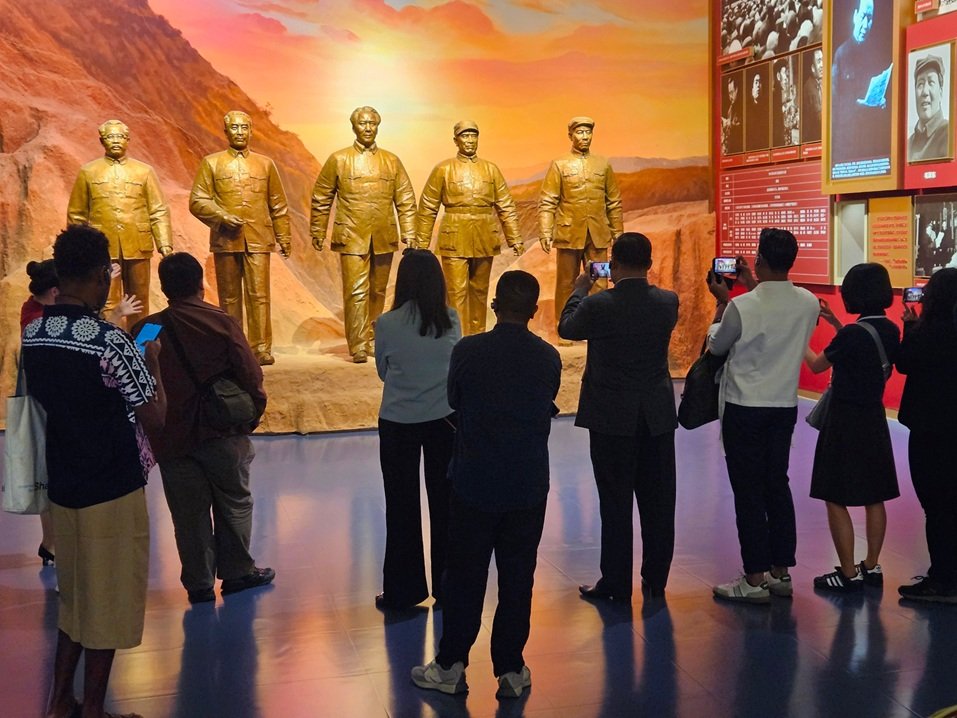
Visitors photograph sculptures of Ren Bishi, Zhou Enlai, Mao Zedong, Liu Shaoqi and Zhu De, senior Communist Party leaders commonly known as
the “Five Secretaries”, at the Museum of the Communist Party of China in Beijing.

The Party and the State

Another distinction is also useful.

The Communist Party of China is the governing political party. The People’s Republic of China is the state. China has state institutions, including the government and the National People’s Congress, while the CPC occupies the central leadership role within the political system.

For someone unfamiliar with China’s system, that distinction matters. The Party is not simply another organisation operating alongside the state. It plays a central role in setting political direction and leadership.

At the same time, China’s political philosophy has continued to develop over different periods. The CPC’s ideological framework today includes Marxism-Leninism, Mao Zedong Thought, Deng Xiaoping Theory and Xi Jinping Thought on Socialism with Chinese Characteristics for a New Era.

What stood out from the museum visit, therefore, was not simply Marxism itself.

It was adaptation.

The Party’s own account of its history places strong emphasis on adapting political ideas to China’s particular circumstances rather than treating them as fixed formulas.

What does this mean for Solomon Islands?

Understanding another country’s political system does not mean supporting it or wanting to copy it. It simply means taking the time to understand how that system developed and why it functions differently from our own.

Solomon Islands has a very different history.

Our Constitution establishes Solomon Islands as a sovereign democratic state and protects fundamental rights and freedoms. Our cultures, geography, political traditions and historical experiences are different from China’s.

The same is true of the other countries represented in our programme. Political systems emerge from particular histories and societies. What develops in one country cannot automatically be assumed to suit another.

But understanding those differences is important.
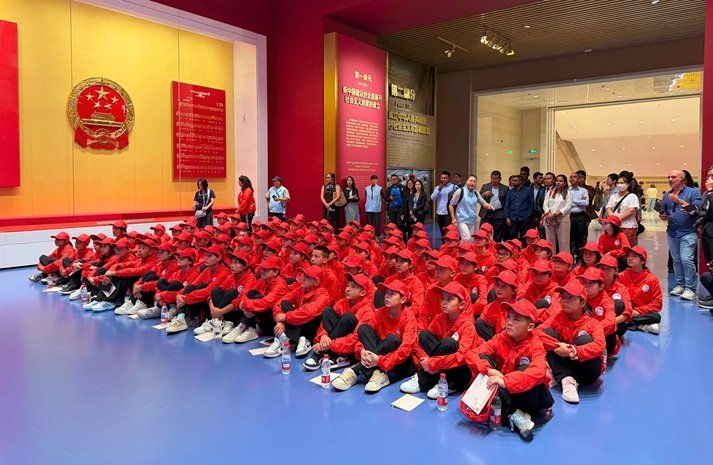
Chinese school students visiting the Museum of the Communist Party of China, taking the time to learn
about their history. 

For Solomon Islands, that matters particularly because our relationship with China has grown significantly in recent years.

If we want to understand China, it is difficult to do so without understanding the Communist Party.

And if we want to understand the Communist Party, we need at least some understanding of Marxism, China’s revolutionary history and the way Chinese leaders say those ideas have been adapted over more than a century.

There may also be a question for us closer to home.

China’s political and economic journey has changed considerably since 1949, including major shifts in development strategy and economic policy. Throughout those changes, Chinese leaders have continued debating what kind of country China should become and how it should get there.

Perhaps every country needs to keep asking that question.

What kind of Solomon Islands do we want to build? What parts of our own political system work well? What should change? And what lessons can we learn from other countries without assuming that their solutions automatically belong in ours?
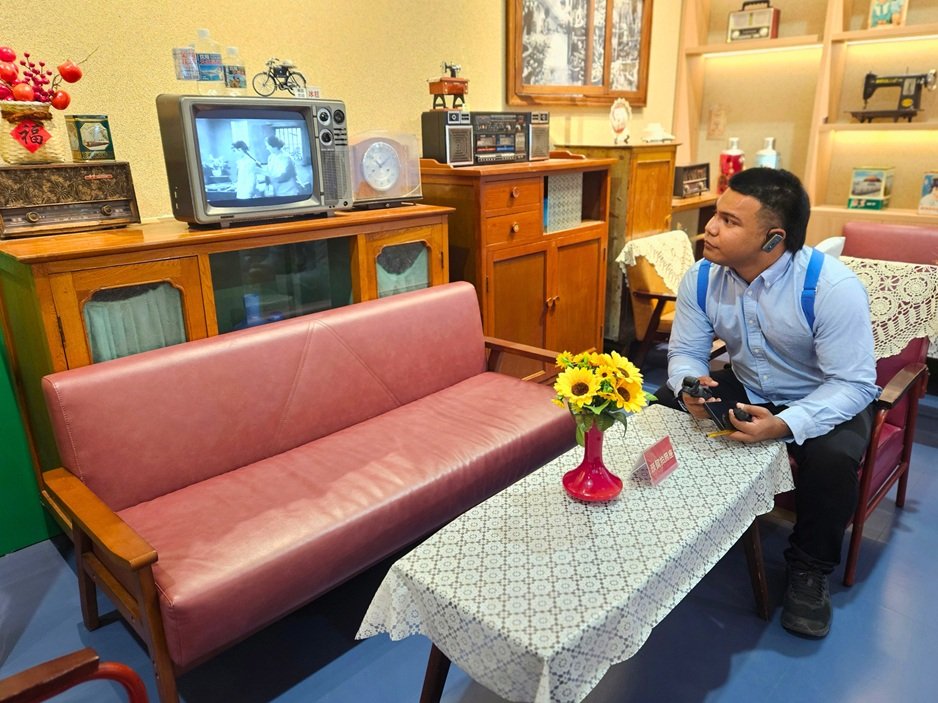
A reconstructed Chinese living room at the Museum of the Communist Party of China shows household items from an earlier period, offering
visitors a glimpse of everyday life during China’s social and economic transformation. 

Walking through the Museum of the Communist Party of China does not provide those answers. But it does underline something easily lost when international politics is reduced to labels.

Understanding another country’s system does not require agreeing with it. Sometimes the first step is simply understanding how history shaped it.
News Desk

News Desk

The Newsdesk at Tavuli News is dedicated to delivering timely and accurate news. Our team strives to provide high-quality coverage of both local and international stories, keeping our audience well-informed and engaged with our reports.

Related Posts

Beyond free education, what awaits our children in the classroom?
Perspectives

Beyond free education, what awaits our children in the classroom?

18/11/2026
An AI-generated illustration inspired by The Rise of the Lycan Queen and the possibilities for Solomon Islands kastom storytelling.
Perspectives

From Werewolves to Kastom Stories: How AI Could Transform Filmmaking in Solomon Islands

05/11/2026
COME FOR TENNIS, STAY FOR THE CARNIVAL
Perspectives

COME FOR TENNIS, STAY FOR THE CARNIVAL

17/10/2026
Next Post
IMMIGRATION BRIEFS DIPLOMATS ON NEW BORDER MANAGEMENT AND E-VISA SYSTEM

IMMIGRATION BRIEFS DIPLOMATS ON NEW BORDER MANAGEMENT AND E-VISA SYSTEM

PM WALE TO MAJOR EMITTERS: “WE ARE PAYING TO FUEL THE OVERSHOOT”

PM WALE TO MAJOR EMITTERS: "WE ARE PAYING TO FUEL THE OVERSHOOT"

Pacific Community Carbon Representatives Attend Pre-COP31 in Fiji

Pacific Community Carbon Representatives Attend Pre-COP31 in Fiji

Leave a Reply Cancel reply

Your email address will not be published. Required fields are marked *

Popular News · Last 30 Days

  • SOGAVARE, MURIA JR AND McNEIL MUST EXPLAIN $140M ORBIS CLAIM AND ALLEGED $9M COMMISSION

    SOGAVARE, MURIA JR AND McNEIL MUST EXPLAIN $140M ORBIS CLAIM AND ALLEGED $9M COMMISSION

    0 shares
    Share 0 Tweet 0
  • A TRIBUTE TO THE LATE RANJIT HEWAGAMA

    0 shares
    Share 0 Tweet 0
  • Until mama comes home

    0 shares
    Share 0 Tweet 0
  • SAME LAWYER, BOTH SIDES: OPPOSITION DEMANDS ANSWERS ON ATTORNEY-GENERAL’S ROLE IN SBD64.68 MILLION LEVER SOLOMONS SETTLEMENT

    0 shares
    Share 0 Tweet 0
  • SBD 64.68 Million Hells Point Deal Contradicts Free Education Funding Claims and Sets the Standard for Future Land Acquisitions

    0 shares
    Share 0 Tweet 0

Recommended

Gov’t Engages Local Media on Constitutional Reform Plans

Government Must Explain the Legal Basis for the Prime Minister’s Discretionary Grant

𝐌𝐀𝐋𝐃 𝐒𝐮𝐩𝐩𝐨𝐫𝐭𝐬 𝟑𝟓𝟑 𝐂𝐲𝐜𝐥𝐨𝐧𝐞 𝐌𝐚𝐢𝐥𝐚-𝐀𝐟𝐟𝐞𝐜𝐭𝐞𝐝 𝐇𝐨𝐮𝐬𝐞𝐡𝐨𝐥𝐝𝐬 𝐰𝐢𝐭𝐡 𝐆𝐚𝐫𝐝𝐞𝐧 𝐓𝐨𝐨𝐥𝐬 𝐚𝐧𝐝 𝐕𝐞𝐠𝐞𝐭𝐚𝐛𝐥𝐞 𝐒𝐞𝐞𝐝𝐬 𝐢𝐧 𝐒𝐨𝐮𝐭𝐡 𝐂𝐡𝐨𝐢𝐬𝐞𝐮𝐥

New Guardrails Enhance Road Safety at Foxwood Culvert

SIPA ADVANCES GREEN PORT COMMITMENT WITH NEW  SUSTAINABILITY FRAMEWORK 

To lead the way to raise the standard of quality journalism in Solomon Islands at a time of digital transition by facilitating the dissemination of accurate information by and for all communities.

Learn more >>

Contact & Advertising

For advertising, partnerships and general enquiries, contact Tavuli News.

Email:
sales@tavulinews.com.sb

Phone:
+677 7286000

Explore

  • News
  • Politics
  • Economy
  • Society
  • Sports

Contact Info

  • Location: Point Cruz, Honiara
  • Phone:(+677) 7286000
  • Mobile:(+677) 7286000
  • Email:info@tavulinews.com.sb

For More »

 – Contact Us
 – About Us
 – Our Services

Archives

Copyright © 2026 Tavuli News - Proudly Developed By Umi Solomons.

Welcome Back!

Login to your account below

Forgotten Password?

Retrieve your password

Please enter your username or email address to reset your password.

Log In

Add New Playlist

No Result
View All Result
  • Home
  • News
    • Solomon Islands – Australia Partnership
    • Environment
      • Climate Change
    • Regional & World
  • Politics
    • Parliament
  • Economy
    • Agriculture
  • Society
    • Women & Health
    • Health
    • Education
    • Religion & Culture
  • Sports
  • More
    • Perspectives
    • Paid Features
    • Sponsored Content

Copyright © 2026 Tavuli News - Proudly Developed By Umi Solomons.