










By Georgina Kekea | Beijing, China
Disclaimer: This article reflects the author’s personal observations and views and does not represent the position of any organisation with which the author is professionally associated.
The instructions were clear: watch quietly, do not move around while play is under way and put our phones on silent mode.
There were a few things to remember before watching my first China Open.
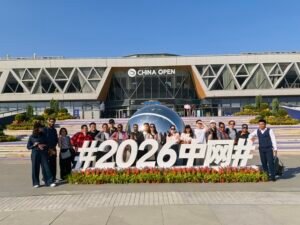
I had come to Beijing’s National Tennis Center with fellow Asia-Pacific participants in the China International Press Communication Center (CIPCC) programme. The annual tournament marked its 20th edition in 2026. For me, it was a first, and learning the etiquette was part of the experience.
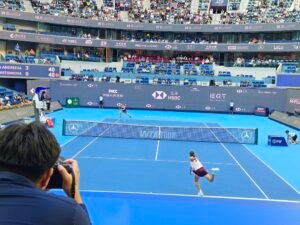
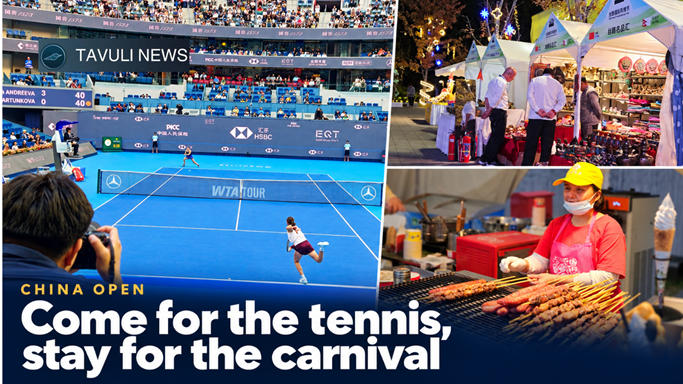
On court were Russia’s Mirra Andreeva and the Czech Republic’s Nikola Bartůňková. A place in the women’s final was at stake.
Andreeva won their semifinal on 10 October in straight sets. She would lose the following day’s final to Zheng Qinwen, who became the tournament’s first Chinese women’s singles champion.
Entry to the grounds required a ticket. Once inside, visitors could explore more than tennis.
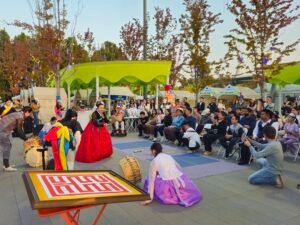
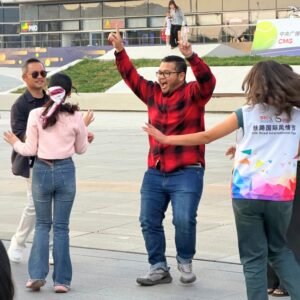
A carnival brought food, cultural displays and performances into the grounds. A visit could take in a match, something to eat and an introduction to traditions from another part of the world.
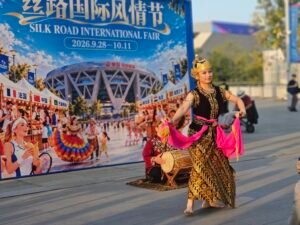
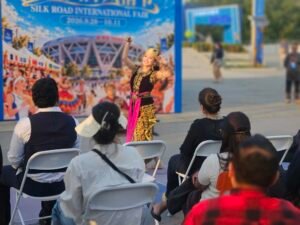
The Silk Road International Cultural Festival was part of that offering. Its name recalled the ancient network of trade routes connecting China with Central Asia, the Middle East and Europe, along which goods, ideas and cultural traditions travelled.
Running alongside the tournament from 28 September to 11 October, the festival featured Chinese, African, European, Latin American and Asian theme days, with food, products and performances from different countries.
For those of us visiting from overseas, there was something fitting about encountering other cultures during a visit to China. The host was making room for others to share their traditions while introducing visitors to its own.
Food had a place in that exchange. It offered an easy starting point for people unfamiliar with a country. Curiosity about a dish could lead to questions about its ingredients, where it came from and how it was prepared.
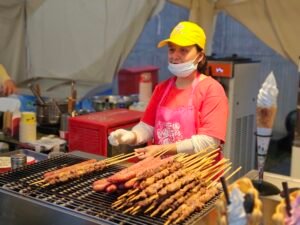
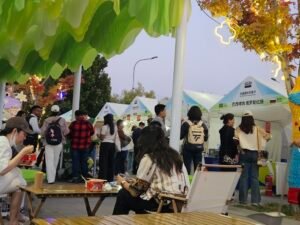
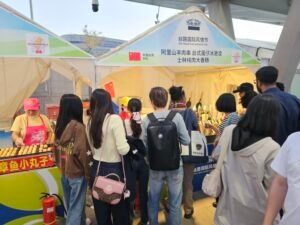
Crafts offered another way to make a connection.
The carnival’s Chaoyang cultural heritage pavilion featured Beijing embroidery, cloisonné enamelwork and rabbit figurines associated with local folk traditions. Its programme included demonstrations by craftspeople and rotating activities such as fan decorating, lantern making and traditional games.
Visitors had opportunities to see how something was made and try a skill themselves. For anyone wanting to explore further, the pavilion also offered travel information and itinerary planning, linking the cultural activities with places beyond the tennis grounds.
Together, these attractions could fill out a day for people with different interests. A tennis enthusiast had the competition. Someone accompanying them could find food, entertainment and displays to explore.
The wider carnival programme included music, technology experiences and an exhibition celebrating the tournament’s history. Organisers reported that spectators stayed longer at the grounds than in previous years.
Those extra hours offered businesses more opportunities to reach customers. They also gave Beijing more time to introduce itself to visitors who had arrived for the sport.
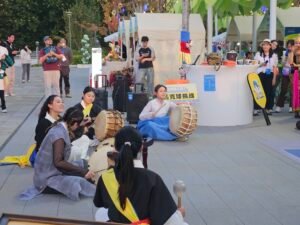
There was, however, a place I would have liked to see more clearly represented among the festival’s regional themes: the Pacific.
As someone attending with an Asia-Pacific cohort, I felt our part of that familiar grouping could have had a more visible presence.
Our food, music, weaving and carving could have added another dimension to the exchange, with Pacific people there to share the stories behind them.
It is an opportunity our region could explore with organisers of gatherings like this. Participation would allow visitors to meet Pacific cooks, artists and craftspeople and hear about their cultures directly.

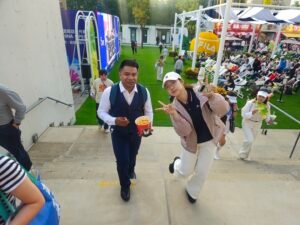
At the China Open, tennis, culture and tourism were brought together within one visit. The competition drew people in; the activities around it gave them reasons to stay and explore.
My first ‘China Open’ visit began with a reminder to watch quietly. Beyond the court, it left me imagining a Pacific stall among the festival’s offerings, with someone stopping to taste our food, hear our music or ask a weaver how her basket was made.
Such a conversation could lead us beyond what we first see, into the histories, cultures and heritage that shape us. In sharing those stories, we might discover just how much we have in common.