





































By Georgina Kekea in Beijing
Disclaimer: This article reflects the author’s personal observations and views and does not represent the position of any organisation with which the author is professionally associated.
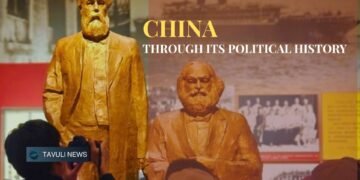
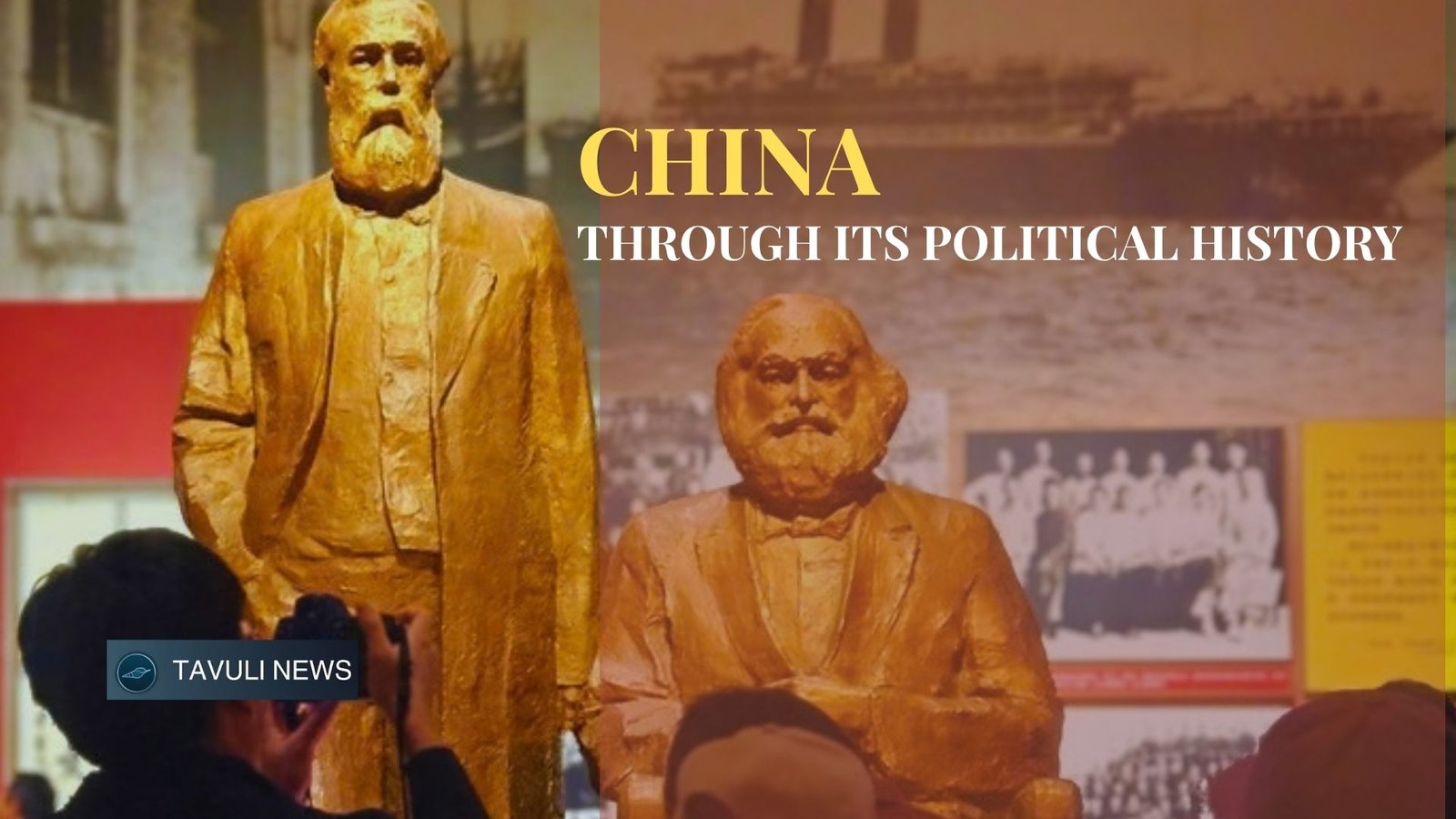
Inside the Museum of the Communist Party of China in Beijing, sculptures of Karl Marx and Friedrich Engels take visitors back to the ideological roots of the political party that has governed China since 1949.
For many Solomon Islanders, the word Marxism may simply be associated with communism and China.
But understanding China’s political history requires looking beyond those familiar labels.
What exactly is Marxism? And how did an idea developed in 19th-century Europe become part of the political foundation of modern China?
A visit to the museum provides part of that story.
Opened to the public in 2021 during the centenary year of the Communist Party of China, the museum traces the Party’s journey from its founding in 1921, through revolution and the establishment of the People’s Republic of China in 1949, to reform, opening up and modern China.
Its exhibitions include more than 2,600 photographs and more than 3,500 pieces or sets of historical exhibits, including material associated with Karl Marx.
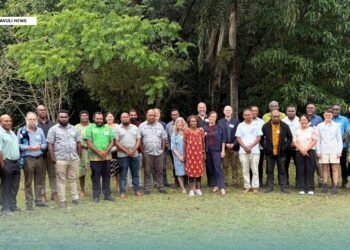
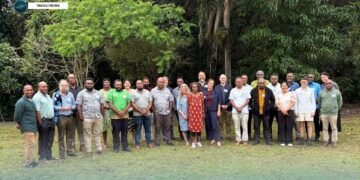
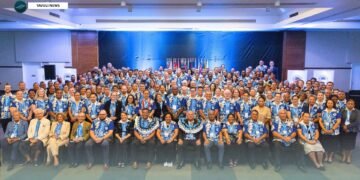
Our visit was part of the China International Press Communication Center programme, bringing together journalists and media and communication personnel from countries across Asia and the Pacific, many with very different histories and systems of government.
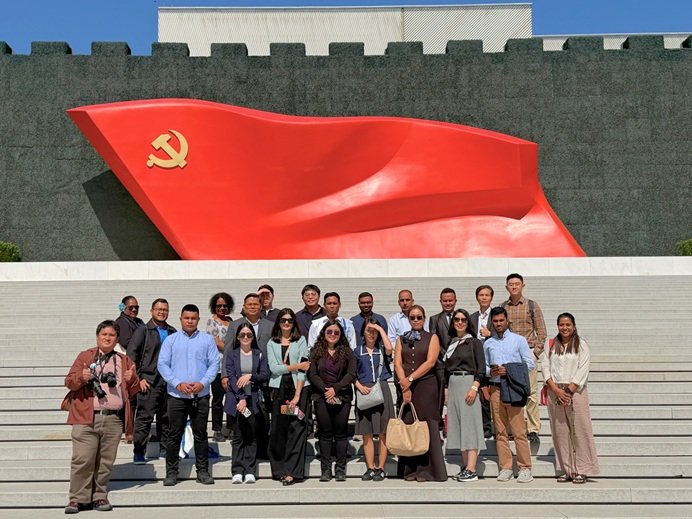
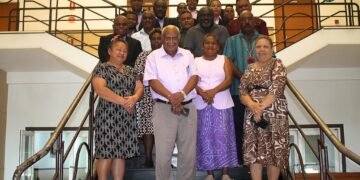
Museum of the Communist Party of China in Beijing following a tour of its historical exhibitions.
That diversity made the visit particularly interesting.
It raised a broader question: how much do we understand another country’s political system before judging it through the lens of our own?
So what is Marxism?
In simple terms, Marxism began as a critique of the economic and social inequalities of 19th-century capitalism. Karl Marx and Friedrich Engels argued that societies were shaped partly by struggles between economic classes, particularly between those who owned productive resources and those who worked for them.
Their writings examined labour, ownership, wealth, inequality and the distribution of economic power. But Marx died in 1883, decades before the Communist Party of China was founded.
Marxism later influenced socialist and communist movements in many parts of the world, although those movements did not develop in exactly the same way. When Marxism reached China, it entered a country with its own history, culture and political conditions.
The Communist Party of China was founded in 1921.
Over time, its leaders argued that Marxist ideas could not simply be copied from Europe but had to be interpreted according to China’s own circumstances. That remains central to how the CPC explains its political philosophy today.
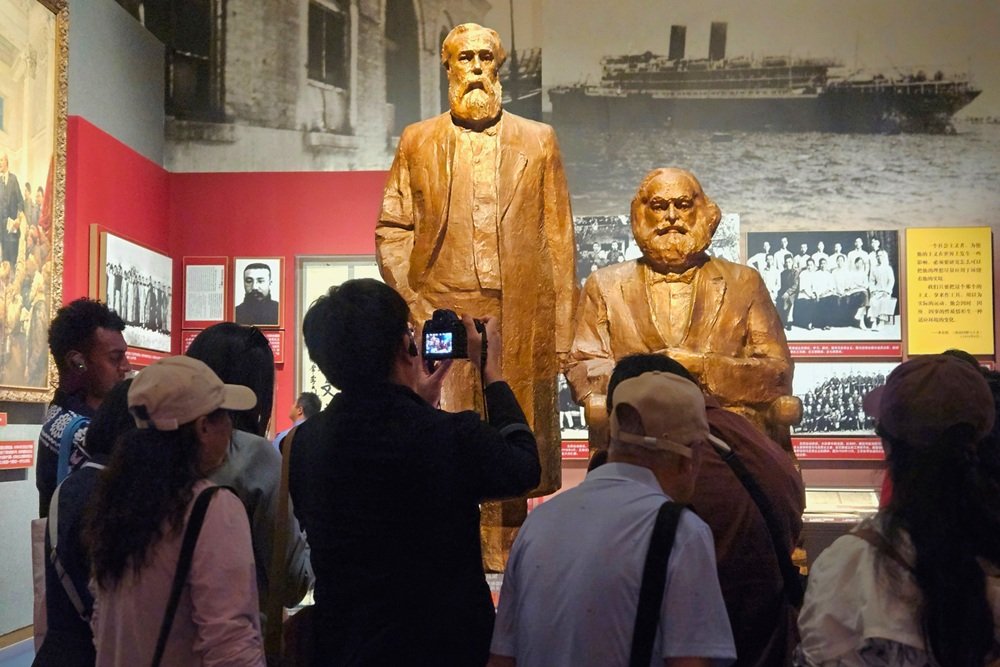
Communist Party of China.
Official Party documents describe this as integrating the basic principles of Marxism with China’s “specific realities” and with traditional Chinese culture. This is important because it helps explain why China today does not look exactly like the communist system many people may imagine when they first hear the word.
From Mao to economic reform
China under Mao Zedong operated under very different economic conditions from the China that emerged after reform and opening-up policies associated with Deng Xiaoping began in 1978.
Greater emphasis was placed on economic development. Markets expanded. Private businesses grew. Foreign investment entered the country. China became increasingly connected to the global economy. Yet the Communist Party remained at the centre of political power. This can sometimes be confusing to outsiders.
How can a country governed by a Communist Party also have private businesses, entrepreneurs, markets and foreign investors?
China describes its economic system as a socialist market economy. Its Constitution states that the country practises a socialist market economy while also recognising private and other non-public sectors as important components of that economy. It also permits foreign enterprises and individuals to invest in China under Chinese law.
So modern China combines extensive market activity and private enterprise with a political system in which the Communist Party retains overall leadership.
That is why simply describing China as “communist” does not tell the whole story.
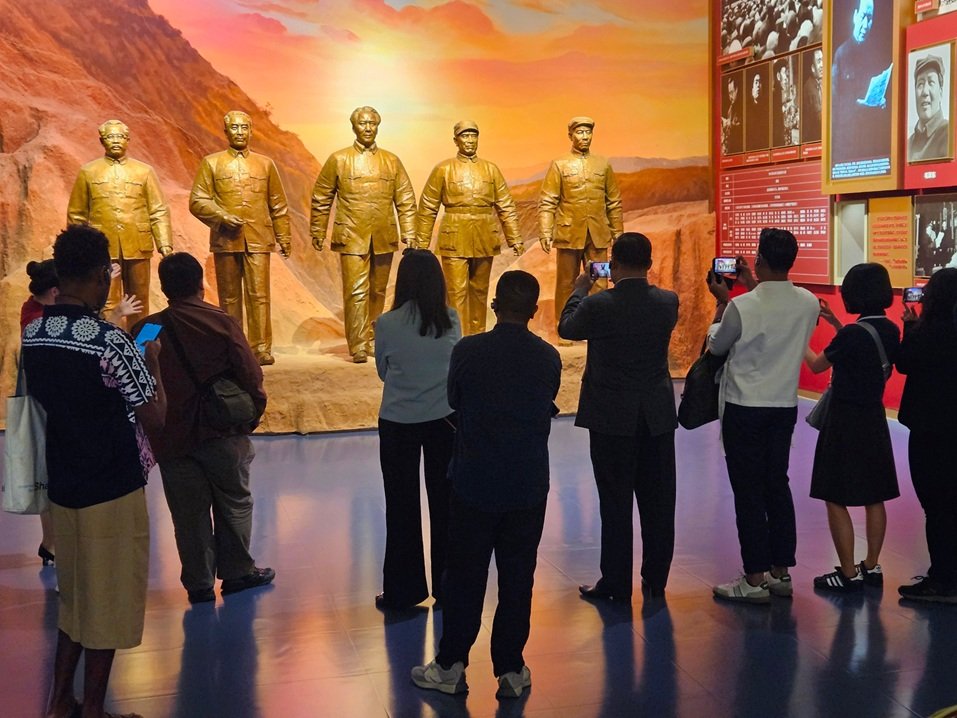
the “Five Secretaries”, at the Museum of the Communist Party of China in Beijing.
The Party and the State
Another distinction is also useful.
The Communist Party of China is the governing political party. The People’s Republic of China is the state. China has state institutions, including the government and the National People’s Congress, while the CPC occupies the central leadership role within the political system.
For someone unfamiliar with China’s system, that distinction matters. The Party is not simply another organisation operating alongside the state. It plays a central role in setting political direction and leadership.
At the same time, China’s political philosophy has continued to develop over different periods. The CPC’s ideological framework today includes Marxism-Leninism, Mao Zedong Thought, Deng Xiaoping Theory and Xi Jinping Thought on Socialism with Chinese Characteristics for a New Era.
What stood out from the museum visit, therefore, was not simply Marxism itself.
It was adaptation.
The Party’s own account of its history places strong emphasis on adapting political ideas to China’s particular circumstances rather than treating them as fixed formulas.
What does this mean for Solomon Islands?
Understanding another country’s political system does not mean supporting it or wanting to copy it. It simply means taking the time to understand how that system developed and why it functions differently from our own.
Solomon Islands has a very different history.
Our Constitution establishes Solomon Islands as a sovereign democratic state and protects fundamental rights and freedoms. Our cultures, geography, political traditions and historical experiences are different from China’s.
The same is true of the other countries represented in our programme. Political systems emerge from particular histories and societies. What develops in one country cannot automatically be assumed to suit another.
But understanding those differences is important.
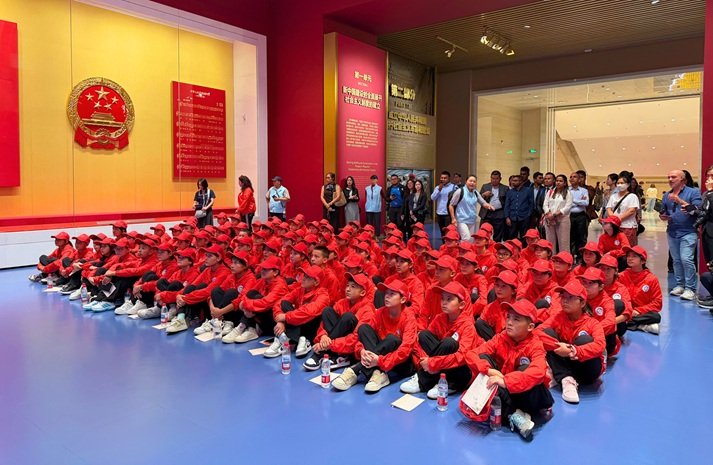
about their history.
For Solomon Islands, that matters particularly because our relationship with China has grown significantly in recent years.
If we want to understand China, it is difficult to do so without understanding the Communist Party.
And if we want to understand the Communist Party, we need at least some understanding of Marxism, China’s revolutionary history and the way Chinese leaders say those ideas have been adapted over more than a century.
There may also be a question for us closer to home.
China’s political and economic journey has changed considerably since 1949, including major shifts in development strategy and economic policy. Throughout those changes, Chinese leaders have continued debating what kind of country China should become and how it should get there.
Perhaps every country needs to keep asking that question.
What kind of Solomon Islands do we want to build? What parts of our own political system work well? What should change? And what lessons can we learn from other countries without assuming that their solutions automatically belong in ours?
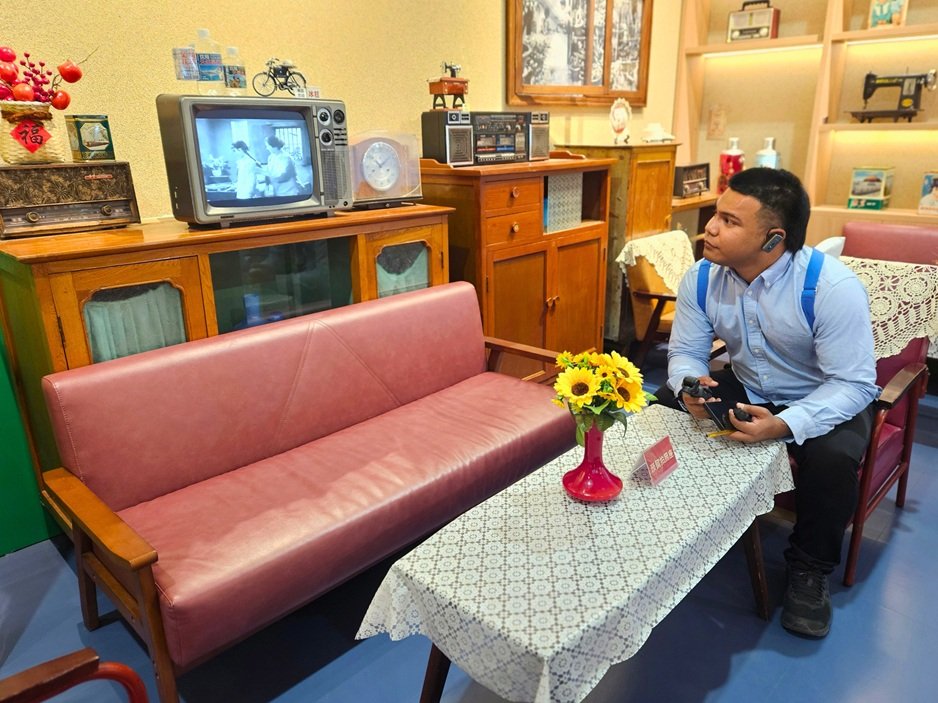
visitors a glimpse of everyday life during China’s social and economic transformation.
Walking through the Museum of the Communist Party of China does not provide those answers. But it does underline something easily lost when international politics is reduced to labels.
Understanding another country’s system does not require agreeing with it. Sometimes the first step is simply understanding how history shaped it.