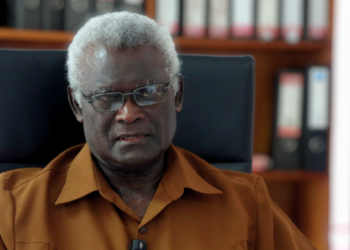








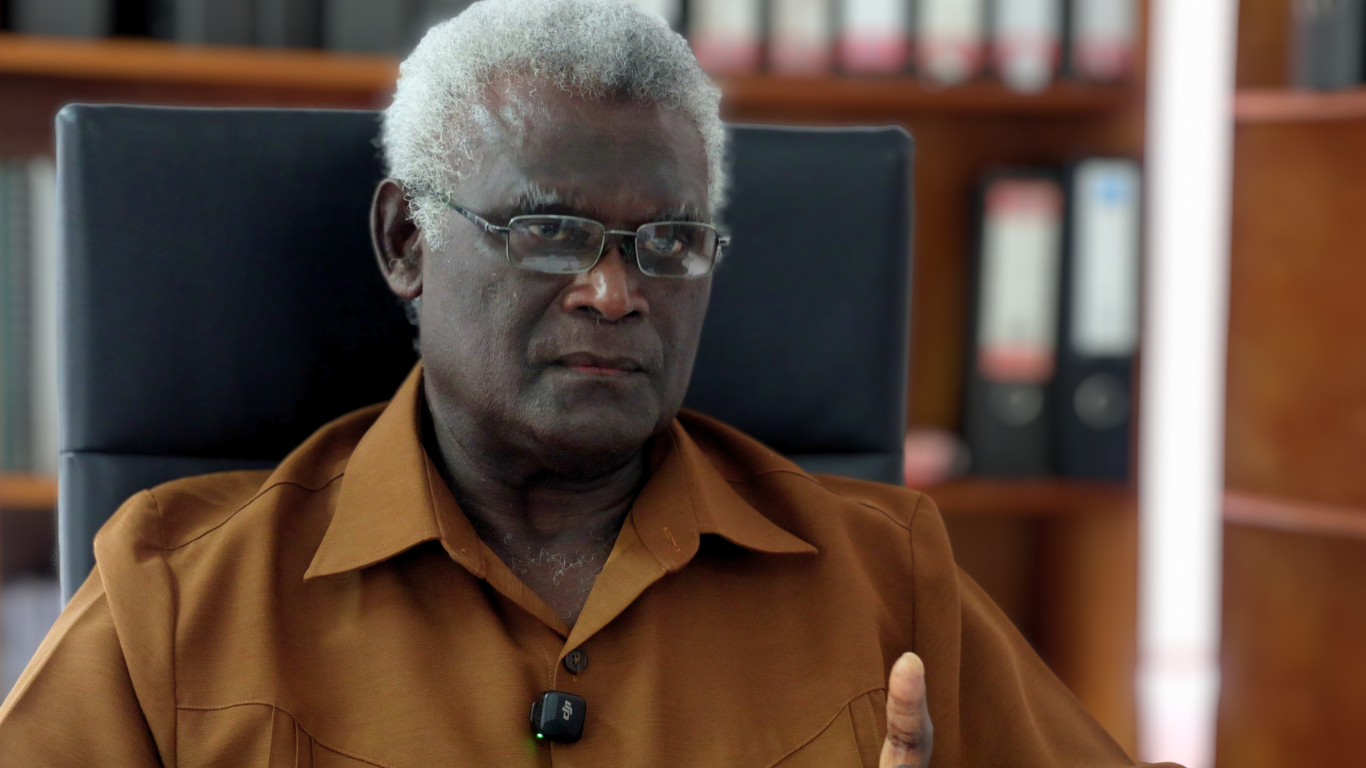
Opposition Leader Manasseh Sogavare has called on Prime Minister Matthew Wale to explain the implications of the new Australia-Solomon Islands Treaty, questioning its security commitments, funding arrangements and impact on the country’s sovereignty.
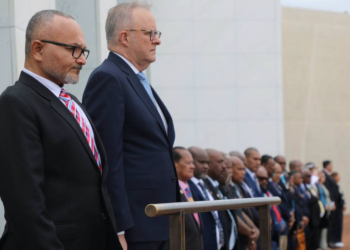
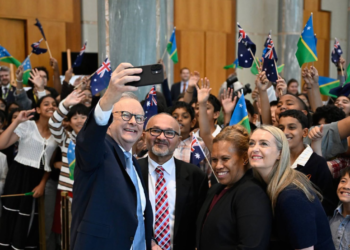
The Treaty was signed by Prime Minister Wale and Australian Prime Minister Anthony Albanese in Canberra on 25 November 2026.
Sogavare said the agreement contains long-term obligations that could affect future governments and questioned whether Cabinet alone should decide on an arrangement of such significance without wider parliamentary and public debate.
He said Solomon Islands valued its longstanding relationship with Australia but needed to understand what the country was committing to under the Treaty.
A major concern raised by Sogavare relates to Article 5, which deals with peace and security.
Under the article, Solomon Islands commits to obtaining security cooperation from Pacific Islands Forum members. It also provides for engagement with countries outside the Forum when regional partners cannot meet particular security needs.
Sogavare questioned how decisions about these arrangements would be made and said the provisions could limit Solomon Islands’ choices when working with other security partners.
Article 5 also requires Solomon Islands to keep sensitive infrastructure, including ports, airports, energy, digital and telecommunications facilities, free from militarisation, foreign interference and unauthorised access.
Sogavare questioned the scope of these provisions and argued that the Treaty did not provide a defence guarantee from Australia in return for the commitments made by Solomon Islands.
The Treaty identifies Australia as Solomon Islands’ primary security partner and commits Australia to supporting the country’s security needs where agreed by both parties.
Funding and dispute arrangements
Sogavare also questioned the financial arrangements, saying the Treaty does not specify a dollar amount for Australia’s funding commitments.
Under Article 10, the two governments will jointly develop a financing and implementation plan outlining priorities for short-term support and long-term budget allocations.
He said the public needed to know how much funding would be provided, over what period and how much would represent new assistance rather than existing aid.
The Opposition Leader also raised concerns about Article 7, which requires disputes to be resolved through consultation or negotiation rather than through courts, tribunals or other third parties.
If the parties cannot agree on a resolution within six months, either side may suspend compliance with one or more obligations under the Treaty.
Sogavare said this arrangement raised questions about the security commitments made by Solomon Islands and the continuation of Australia’s promised support.
Opposition calls for parliamentary scrutiny
The Opposition has called on the Government to table the full Treaty in Parliament, together with a national interest statement, and allow a full debate before exchanging diplomatic notes to bring the agreement into force.
It has also called for publication of the financing and implementation plan, including funding amounts, timeframes and details of new assistance.
Other requests include a guarantee that budget support will not be channelled into Constituency Development Funds without proper oversight, an Auditor-General’s report on its use, and a list of existing security and infrastructure arrangements affected by Article 5.
The Opposition has also called for annual reports to Parliament on the Treaty’s implementation and the work of the Iumi Committee, which will oversee the agreement.
Sogavare further questioned the Government’s decision not to renew the 2022 security cooperation arrangement with China.
He said the Government had yet to explain to Parliament the assessment behind that decision or what arrangements would replace the training, equipment and support provided to the Royal Solomon Islands Police Force.
The two governments describe the new Treaty as a framework for a broader partnership covering security, infrastructure, economic development and people-to-people relations.
The Treaty will enter into force after both governments complete their domestic requirements and exchange diplomatic notes. It will remain in force unless terminated under its provisions.
Sogavare said the Opposition would examine the agreement in detail, arguing that Solomon Islands must maintain relationships with all partners while protecting its ability to make independent decisions about its future.