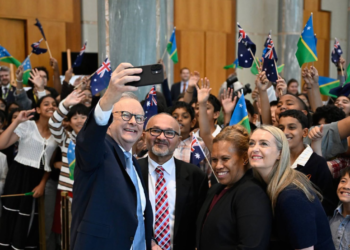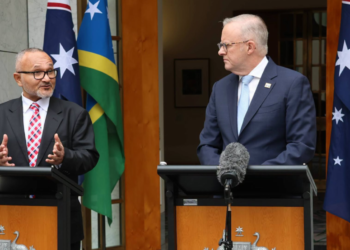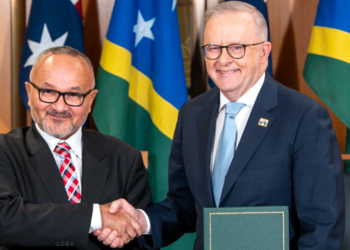










The new Australia treaty includes commitments on education, budget support and the proposed Solomon Islands sovereign wealth fund. However, the published agreement does not state how much money Australia will provide under the new partnership.
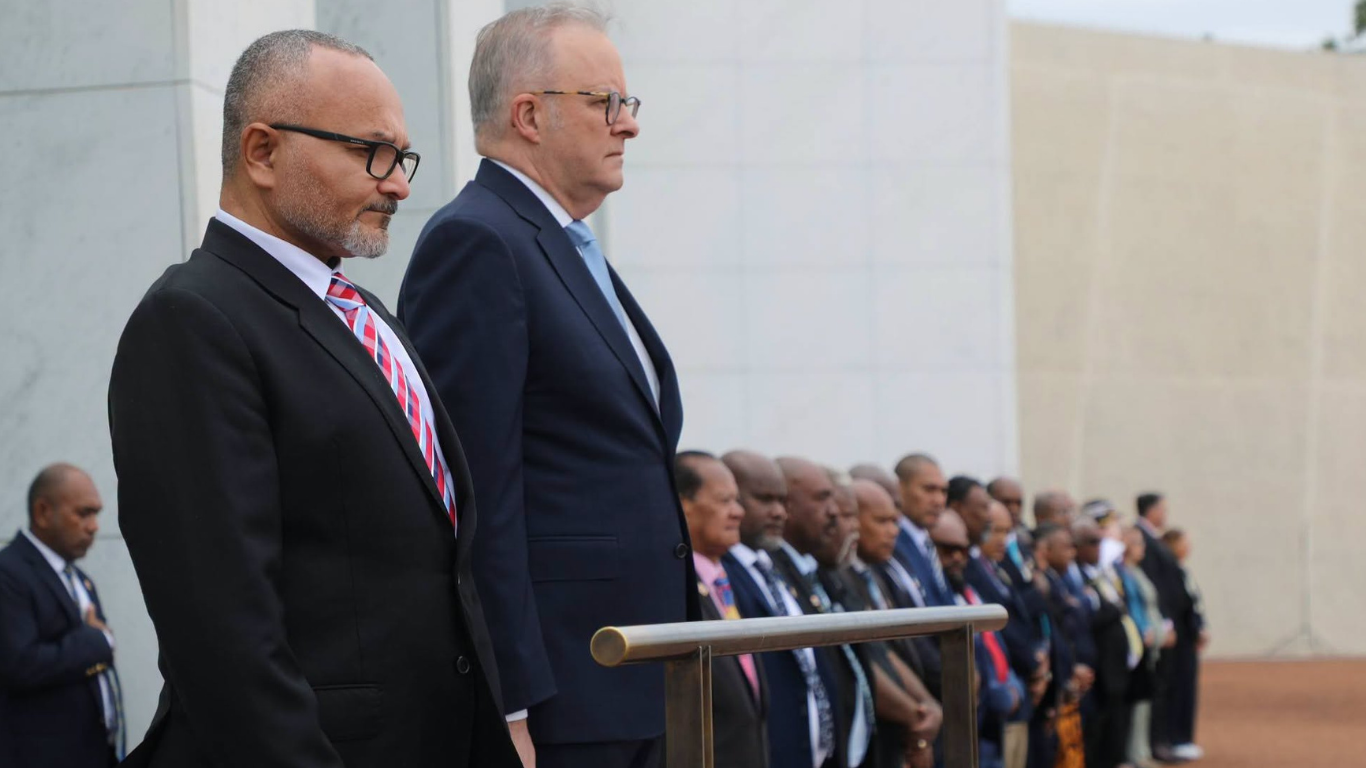
Australian Prime Minister Anthony Albanese said in Canberra on 25 November that Australia would increase support for Solomon Islands Government priorities, including its fee-free education policy.
The treaty also provides for Australian support to help establish and contribute to the capitalisation of a Solomon Islands sovereign wealth fund.
These are significant commitments. But the documents released with the signing do not set out the funding amounts, payment schedules or detailed conditions.
Support for fee-free education
Albanese specifically named fee-free education as one of the Solomon Islands Government priorities Australia would support.
The announcement is important as the Government works towards its education policy. However, the treaty and joint statement do not explain which school costs the support will cover.
They also do not state how much Australia will contribute or how long the assistance will continue.
Families will need further information from the Solomon Islands Government about what fee-free education will mean in practice, including which costs parents may still have to meet.
A sovereign wealth fund and budget support
Article 4 of the treaty commits Australia to support Solomon Islands in establishing a sovereign wealth fund and contributing to its capitalisation.
The same article also provides for budget support.
A sovereign wealth fund is intended to provide a way for a country to manage and invest public wealth over time. However, the treaty does not set out the fund’s proposed structure, governance arrangements, investment rules or the amount Australia will contribute.
Those details will matter as the two governments move from the broad commitment to practical arrangements.
A funding plan still to come
Article 10 provides for a joint financing and implementation plan. This plan will cover agreed priorities, including enhanced support in the short term and financial allocations over several years.
The treaty also allows the governments to use separate funding arrangements where needed.
This means the treaty establishes a framework for future financial cooperation. It does not, by itself, provide a complete breakdown of the money allocated to each priority.
The next important information will be the financing plan. It should help show how much support is available, which projects and programmes will receive it, and how the two governments will track spending and results.
Until those details are released, the full financial value of the treaty remains unclear.