








MEHRD consults development partners on Solomon Islands’ National Education Action Plan 2027–2031 to align priorities and investment.
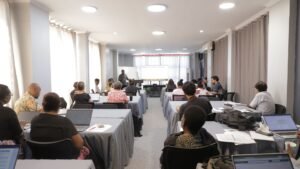
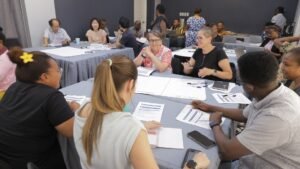
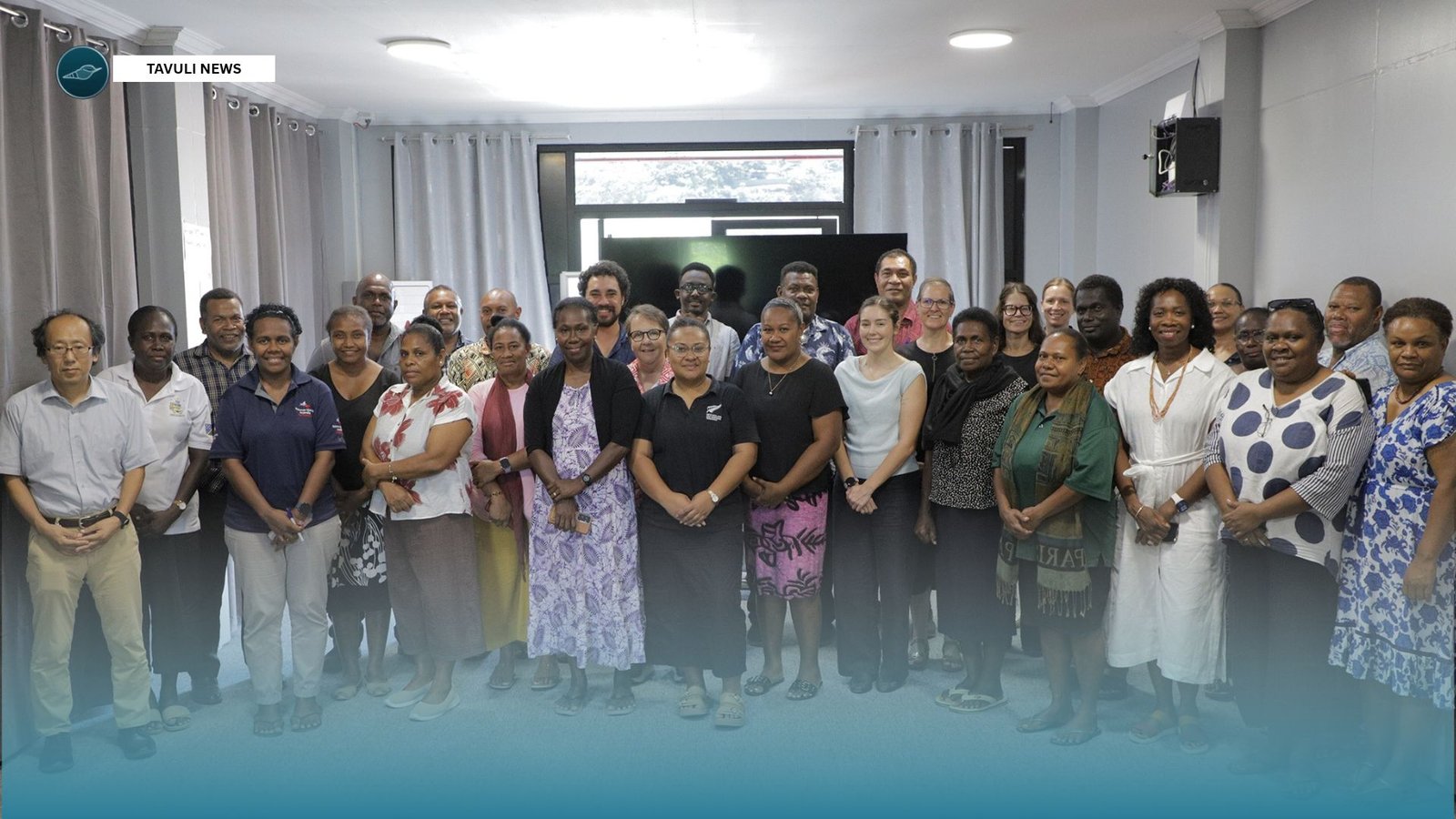
As part of the Honiara Consultation for the development of the National Education Action Plan (NEAP) 2027–2031, the Ministry of Education and Human Resource Development (MEHRD) on Wednesday 11 November 2026 hosted a one-day consultation workshop with development partners.
This conveys a powerful statement, that education in Solomon Islands is a shared endeavour, and that the next National Education Action Plan will be shaped together through collaboration between Government, provinces, communities, and partners, around one national vision.
The objective of the NEAP development partners consultation is to seek input on MEHRD’s proposed strategic priorities for the new NEAP 2027–2031; aligning development partner investment and programmed to the new NEAP; implementation challenges and risks under each priority area; phasing and prioritization of reforms over the five-year period; and strengthening coordination, monitoring and accountability arrangements for effective NEAP implementation.
With the Honiara Consultations, MEHRD also focuses on how can Government resources, partner investments and community efforts combine most effectively behind one education agenda, one set of national priorities, and coordinated implementation.
Speaking on behalf of MEHRD during the consultation workshop, Deputy Secretary for Corporate Services, Coldrine Kolae highlighted that the NEAP 2027–2031 is not simply a Ministry document.
“It is our national education plan, and our shared investment case. It must give clarity to Cabinet, to Parliament, to provinces, to schools — and to our partners — on what we will achieve together, why it matters, who is responsible, what it will cost, and how we will know we are making a difference for learners,” he said.
MEHRD encourages development partners to keep Learners (students) in all corners of the country at the centre of the education partnership with Solomon Islands.
“This learner-centred lens is where our mandates converge, whether your priority is human capital, gender equality, disability inclusion, climate resilience or economic growth. Quality, inclusive learning is the foundation for a more prosperous, resilient and sustainable Solomon Islands,” Deputy Secretary Kolae said.
Mr. Kolae said the Solomon Islands education system must work for all children , not only those easiest to reach.
“Remote and rural learners, girls and boys at risk of dropping out, children with disabilities and additional learning needs, and youth needing second-chance pathways must be visible in targets, budgets and accountability frameworks.
“Partnership must be more than funding. We encourage discussion on: joint planning and joint review; harmonized support to provinces and schools; shared data and evidence; coordinated technical assistance and capacity development within MEHRD systems; and clearer division of labour based on each partner’s strength, so that government resources, partner support and community efforts reinforce, rather than duplicate, each other,” he said.
MEHRD is committed to working with development partners to ensure education is delivered in villages, communities and schools across our archipelago, not in Honiara alone.
“The NEAP must provide clear national direction while allowing flexibility for provincial and local realities.
“For our partners, this means supporting decentralized capacity — provincial education offices, school leaders and school boards — and ensuring national programs are adaptable to urban, rural and remote island contexts. MEHRD encourages alignment around provincial support models, school grants, and monitoring that empowers provinces rather than overburdens them,” Deputy Secretary, Mr. Kolae, said.
The NEAP 2027–2031 will serve as the education sector’s principal five-year implementation plan.
It is grounded in a planning framework that links Sustainable Development Goal 4, the Pacific Regional Education Framework, the Solomon Islands National Development Strategy, the Education Strategic Framework 2015–2030, successive National Education Action Plans and MEHRD annual work plans.
- MEHRD Media Release