




Nearly 20 health workers complete ear care training to improve access to treatment for children across Solomon Islands.
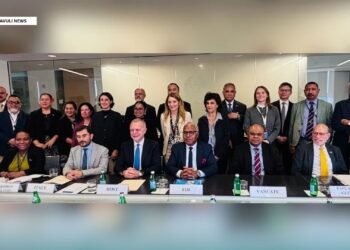
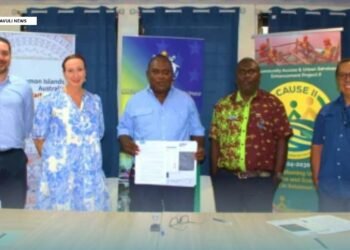
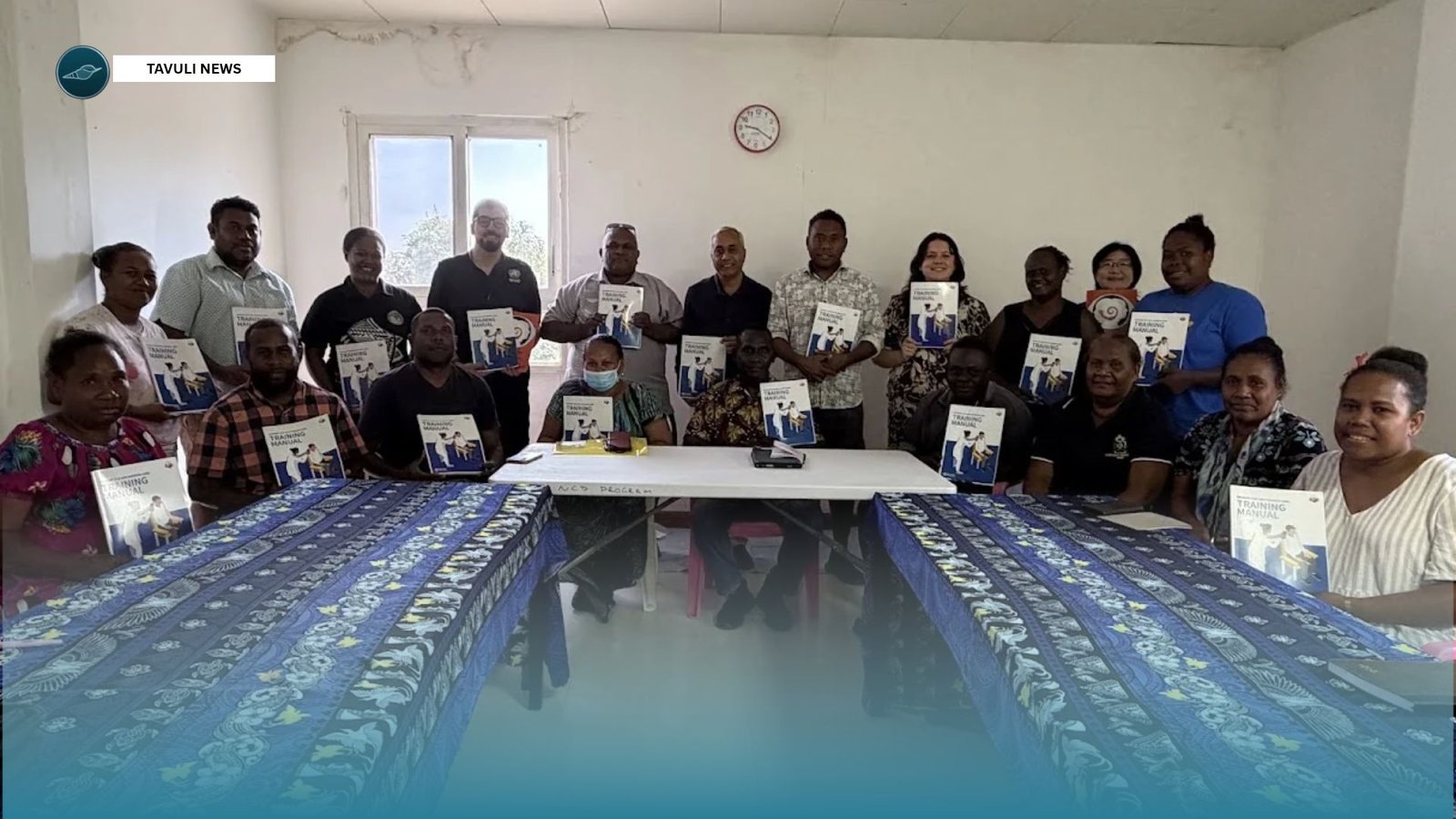
Children found to have ear conditions or hearing loss during school checks will be able to get care closer to home, after close to 20 doctors and nurses completed training in basic ear care on 21–22 October. The Ministry of Health and Medical Services (MHMS) led the training, with support from the Government of Australia, the World Health Organization (WHO), and the Fred Hollows Foundation Australia.
Many communities in Solomon Islands are far from a hospital, and getting care can mean a long trip to Honiara. Treating common ear problems at local clinics means fewer people need to make that journey. Children are a particular priority. Ear conditions and hearing loss can make it harder for them to communicate, learn and take part in class.
Using WHO’s basic ear and hearing care training manual, participants learned to spot common ear problems, treat them at the clinic, and recognize when a patient needs a specialist. They were also trained to teach their colleagues, so they can share these skills with more health workers at their clinics.
The training supports the ATscale Unlock Healthy Learning Programme, funded by the Australian Government. In seven Pacific Island and Southeast Asian countries, the programme checks school-aged children’s eyesight, hearing and ability to move around, and gives glasses, hearing aids and mobility aids to those who need them.
A 2018 study of 604 children from two primary schools in Honiara found that 342 children (56.6%) had ear conditions that required further assessment or intervention. This shows why finding ear problems early and treating them quickly can protect children’s hearing and, consequently, their future.
“Early detection alone is not enough. For school screening to make a lasting difference, it must lead to follow-up care close to where children live. Getting children the right care early can prevent avoidable complications and help them learn and stay healthy throughout their lives,” said Mr Elwin Taloimatakwa, Disability and Program Coordinator, Ministry of Health and Medical Services.
“A child who seems not to be listening in class may simply be unable to hear properly. If we catch it early, something can be done. With stronger frontline health workers, a child with hearing difficulty should not have to wait until the problem becomes severe before the health system responds,” said Dr Sakthivel Selvaraj, Health Systems Coordinator, WHO Solomon Islands.
“The training has strengthened my knowledge, skills and confidence in assessing and managing ear and hearing conditions,” said Mr Wilson Bala, head nurse of Lunga Rural Health Clinic. “As a frontline nurse, especially in a rural clinic, I am often the first point of contact for patients. This training has equipped me to better identify ear problems, provide appropriate care, and make informed referrals when needed. I am grateful to MHMS, the Government of Australia, WHO and The Fred Hollows Foundation for investing in the capacity of frontline health workers to better serve our communities.”
The course builds on earlier ear care training in Solomon Islands. After a similar course in July 2024, training expanded to Atoifi and Kiluʻufi in Malaita Province. MHMS plans to expand the training in 2027, subject to planning and available resources. The aim is to train health workers wherever school screening takes place, so children found having ear or hearing problems can be treated at a nearby clinic. WHO is also planning further expert support for hearing tests, including from its Fiji office.
To do this work, clinics will need ongoing support, working equipment and essential medicines. They will also need clear ways to refer patients to specialists, and regular check-ins to identify where health workers need refresher training or extra support.
While children are the focus, better ear care at local clinics can help people of all ages. The long-term goal is to make ear and hearing care a normal part of everyday health services.
Parents and caregivers: If your child has ear pain, fluid coming from the ear, does not respond when spoken to, or has delayed speech or language development, visit your nearest clinic for a check-up.
SOURCE// WHO PRESS RELEASE