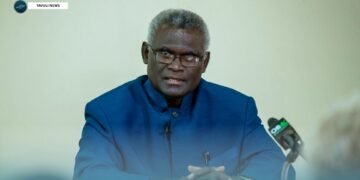
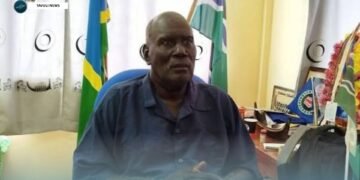

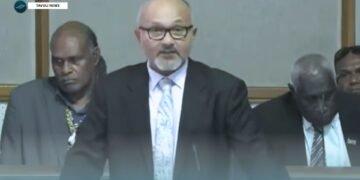
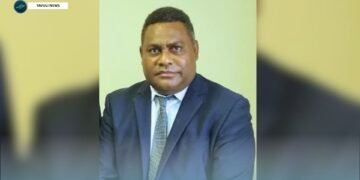


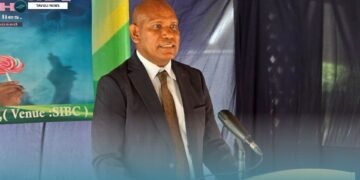

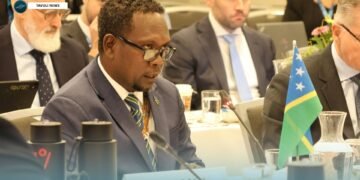













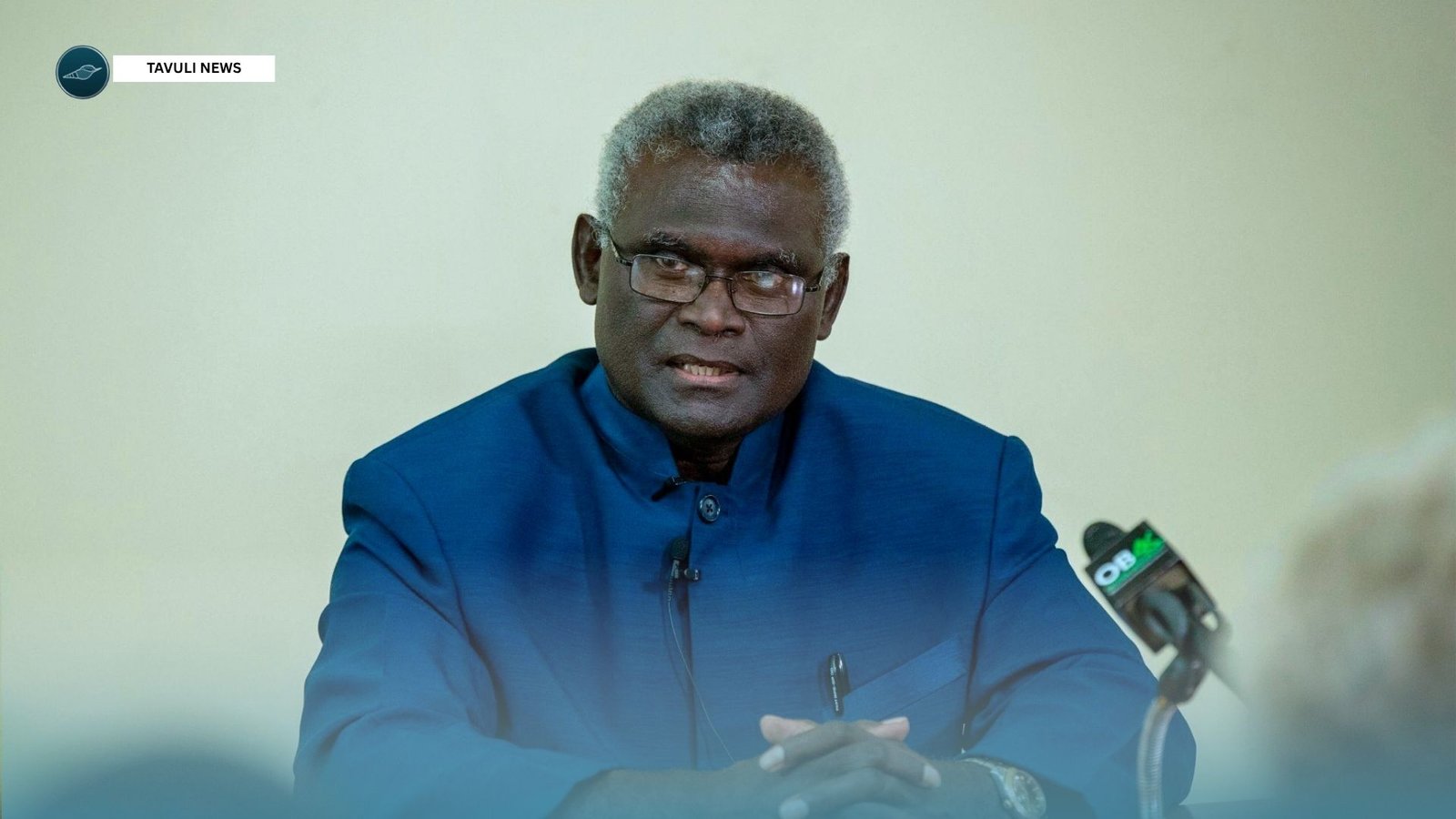
Opposition Leader Manasseh Sogavare says democracy in Solomon Islands must extend beyond elections and be grounded in accountability.
As we commemorate International Day of Democracy today, 15 September, it is appropriate that we reflect not only on democracy as a system of government, but on what democracy actually means to us as Solomon Islanders.
Our Constitution begins with a powerful declaration: all power in Solomon Islands belongs to its people.
That principle must remain at the heart of our democracy.
For too long, democracy can be discussed as though its ultimate expression is the holding of an election every four years. Elections are fundamental to our democratic system, but democracy cannot be reduced to the casting of a ballot.
Democracy is also about what happens between elections.
It is about whether citizens are properly informed. It is about whether people can question decisions made in their name. It is about whether Parliament can perform its constitutional responsibilities without unnecessary interference. It is about whether our institutions are respected, whether leaders submit themselves to accountability and whether the rule of law applies equally to everyone.
I have previously said that participation in democracy is not only a right, it is also a duty.
That duty belongs to all of us.
We cannot demand accountability from our leaders while excusing ourselves from responsibility as citizens. We cannot demand honesty in public office while tolerating dishonesty when it serves our own interests. We cannot demand respect from those in authority while refusing to respect the rights and views of those with whom we disagree.
The quality of our democracy will ultimately reflect the values we are prepared to practise and defend as a society.
Our traditional communities understood responsibility long before the word democracy entered our political vocabulary. Leadership carried obligations. Decisions affected the whole community. People belonged to one another, and authority came with responsibility.
The challenge for Solomon Islands is therefore not simply to copy democracy as it is practised elsewhere.
Our challenge is to make democracy meaningful within our own national experience, while protecting the fundamental principles upon which our constitutional democracy rests.
This includes accepting political differences.
Government and Opposition have different constitutional responsibilities. An Opposition that questions Government is not an enemy of Government. A Government that is subjected to scrutiny is not prevented from governing. These are necessary checks and balances in a functioning parliamentary democracy.
Where Government acts in the national interest, the Opposition should support it. Where questions must be asked, we must ask them. Where accountability is required, we must insist upon it.
But democracy must never become an excuse for disorder, intimidation or violence. Political grievances must be addressed through the democratic and constitutional processes available to us. The moment we abandon those processes because we do not like a particular political outcome, we weaken the very democracy we claim to defend.
As we approach 50 years of independence, we must therefore ask ourselves a more difficult question.
What kind of democracy are we building for the next generation of Solomon Islanders?
A democracy that exists only on election day will not be enough.
We must build one grounded in our Constitution, strengthened by our institutions, informed by our cultures and traditions, protected by the rule of law, and sustained by citizens and leaders who understand that rights always come with responsibilities.
Democracy belongs to the people.
We must therefore take responsibility for it together.
Manasseh Damukana Sogavare MP
Leader of the Official Opposition
National Parliament of Solomon Islands.
MEDIA STATEMENT