

























































USP graduates urged to use their education, knowledge and ambition to lead Pacific communities and drive regional action.

By: Steven Kamoa
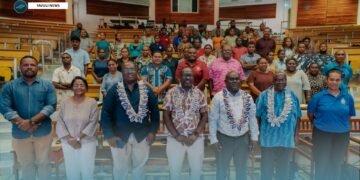
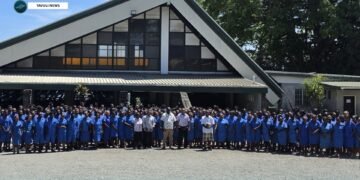
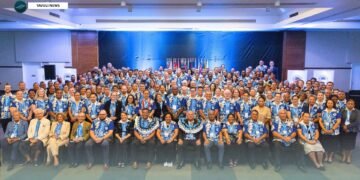
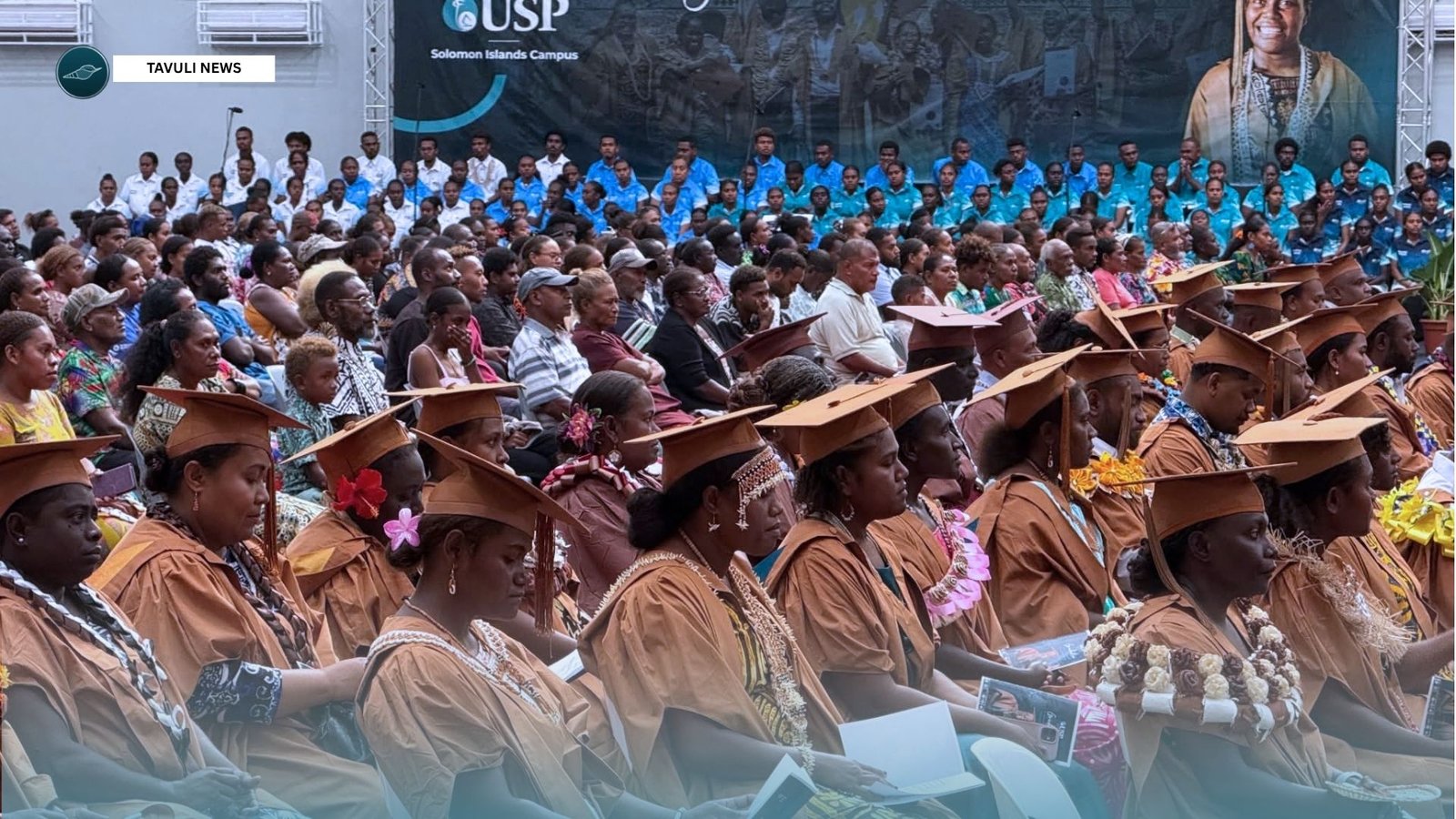
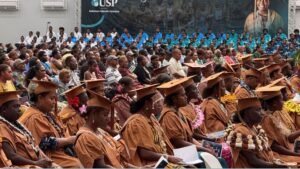
A total of 215 students graduating from the University of the South Pacific (USP) Solomon Islands Campus have been encouraged to apply their education to the challenges facing their communities and the wider Pacific region.
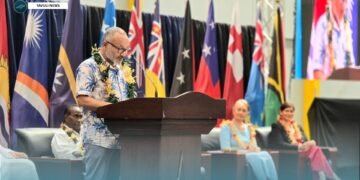
Speaking at the USP Solomon Islands Campus graduation ceremony, USP Pro Chancellor, Chair of Council and Interim Management Group, Right Honourable Siosiua Utoikamanu, told graduates that receiving their qualifications marked the beginning of a new responsibility rather than the end of their journey.
“You are not simply graduating from a regional university. You are the next expression of regionalism in action,” Utoikamanu said.
He said the graduates were joining a regional network of teachers, public servants, lawyers, scientists, business leaders, researchers and community leaders contributing to Pacific development.
Utoikamanu said USP’s contribution to Pacific regionalism ultimately rested on the people it had educated across the region.
“The most enduring infrastructure this University has built across the Pacific is human,” he said.
He encouraged the graduates to build on that legacy by applying their knowledge to practical challenges facing their communities and countries.
“Your degree tells us something about what you know. Your life will tell us what you did with it,” he said.
Utoikamanu also encouraged graduates to have confidence in Pacific knowledge and expertise, saying the region should play an active role in shaping its own future.
“The Pacific is not simply a place where the great changes of our age happen to us. We cannot be bystanders to our own history as it unfolds before our eyes,” he said.
His remarks come after Solomon Islands hosted the Fifth Pacific Climate Change Conference, where Prime Minister Matthew Wale called on Pacific countries to “turn Pacific knowledge into Pacific action.”
Utoikamanu said the principle also applied to the new graduates, with knowledge, research and ideas needing to be translated into practical action to create lasting change.
He also reflected on the establishment of USP nearly 60 years ago, when Pacific countries came together to establish a regional university despite geographical distances, different national interests and other practical challenges.
“Our founders had the idealism to imagine what was possible, and the determination to make it happen,” Utoikamanu said.
“Now it is your turn.”
He acknowledged that Pacific countries would not always agree on every issue, but said regional cooperation remained important in addressing challenges that individual countries may not be able to tackle as effectively on their own.
For the latest graduates, he said the task was to combine their education with ambition and practical action as they contribute to the communities and countries where they live and work.
Utoikamanu said the future of Pacific regionalism would depend not only on institutions and agreements, but also on people who could turn shared aspirations into practical results.
“Never underestimate what becomes possible when Pacific people decide to act together,” he said.