











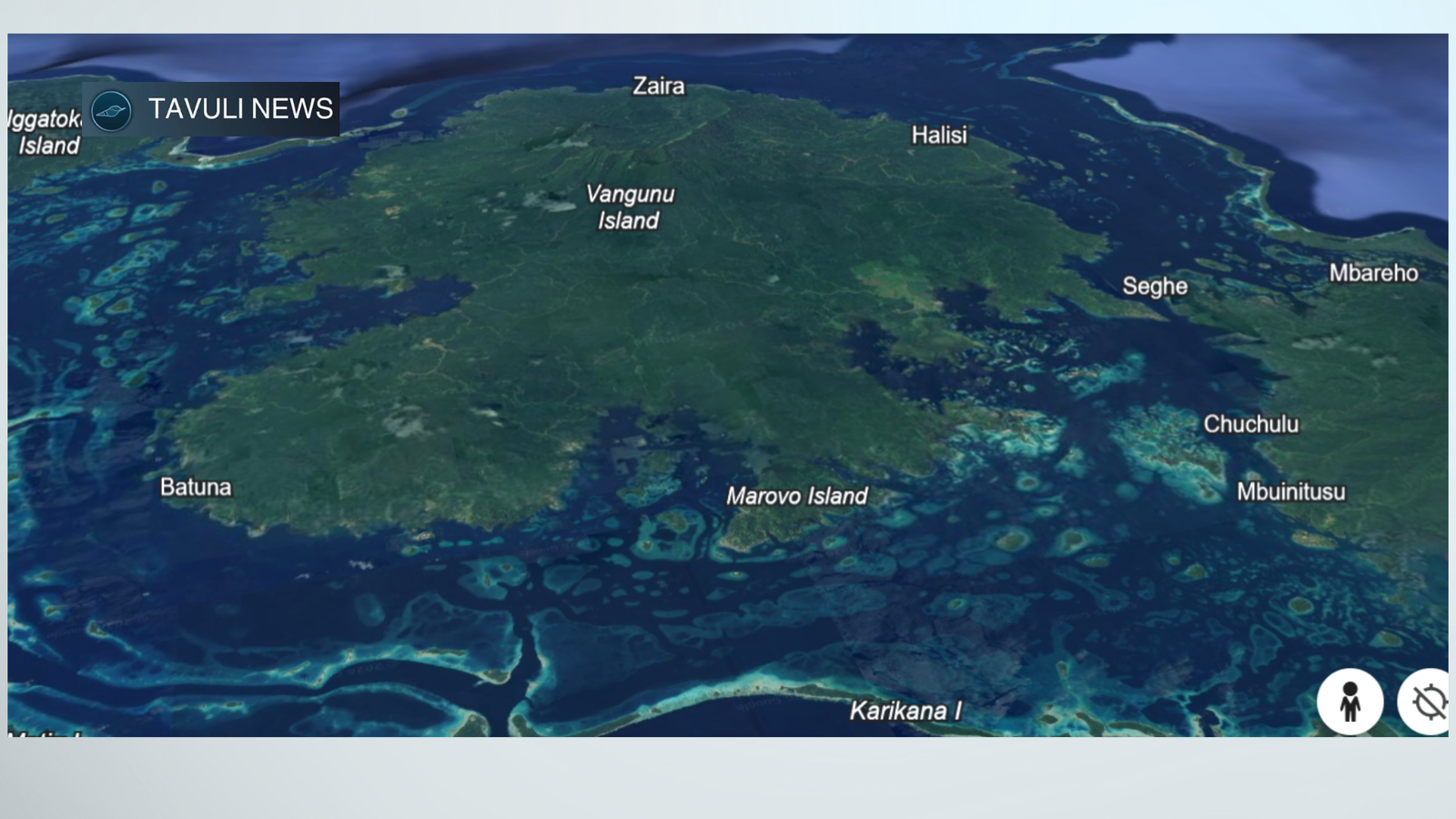
Marovo Lagoon in Western Province could face increased environmental risks as unusually low sea levels affect parts of Solomon Islands, according to the country’s meteorological service.
The lagoon, known for its extensive double-barrier reef system, is among the areas experiencing lower-than-normal sea levels associated with El Niño conditions.
In a statement issued on Friday, 16 October, the Solomon Islands Meteorological Service said satellite observations showed significantly below-average sea levels around Santa Isabel, New Georgia and Marovo.
Measurements from the Tarekukure Wharf tide gauge also recorded water levels about 30 centimetres below predicted tides.
The service said the conditions were consistent with patterns observed during previous El Niño events and could persist over the coming months.
Possible impacts on marine life
The meteorological service warned that lower sea levels could reduce the natural movement of water between enclosed lagoons and the open ocean.
In Marovo Lagoon, less water passing over surrounding reef barriers during tidal cycles could slow circulation and reduce the natural flushing of lagoon waters.
Satellite observations have also detected increased chlorophyll concentrations along parts of the coastline.
Chlorophyll is found in microscopic marine plants known as phytoplankton, which are a natural part of marine ecosystems.
However, unusually high concentrations may indicate conditions that encourage algal blooms.
When large amounts of organic material break down, the process can use up oxygen in the water, placing fish and other marine organisms under stress.
In severe cases, this may contribute to localised fish deaths.
The meteorological service referred to a recent fish mortality incident in Marovo but did not establish whether low sea levels or reduced oxygen caused the deaths.
It also reported that sea surface temperatures in the affected areas were near normal or slightly cooler than average, suggesting that a marine heatwave was not driving the observed changes.
Instead, reduced water circulation, changes in natural nutrient movement and other environmental processes may be contributing factors.
El Niño conditions
El Niño occurs when the trade winds that normally push warm surface waters towards the western Pacific weaken.
This allows ocean waters to shift towards the central and eastern Pacific, causing sea levels in parts of the western Pacific, including Solomon Islands, to fall.
The meteorological service said El Niño was well established and expected to strengthen towards the end of 2026 and into early 2027.
It warned that lower-than-normal sea levels could continue during this period, potentially affecting other enclosed reef and lagoon systems across the country.
Coastal communities and resource managers have been advised to remain alert to possible environmental impacts.
The service said continued monitoring of sea levels, water quality and marine ecosystems would be important to understanding and responding to changing conditions.
Source: MECCDM – Solomon Islands Meteorological Service, statement issued 16 October 2026.