














Solwata takes stories of climate displacement from Malaita communities to Venice, highlighting relocation and human rights.
A story rooted in three Malaita communities has travelled beyond Solomon Islands through Solwata, a 25-minute mixed-reality documentary about climate displacement, planned relocation and human rights.
Solwata made its world premiere in competition at Venice Immersive, the extended-reality section of the 83rd Venice International Film Festival, held in Italy from 2 to 12 September 2026.
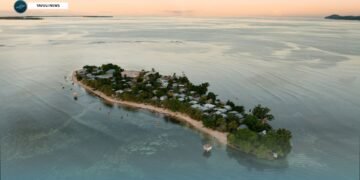
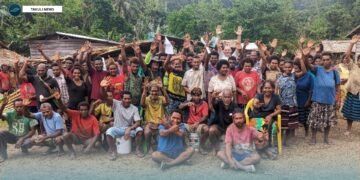
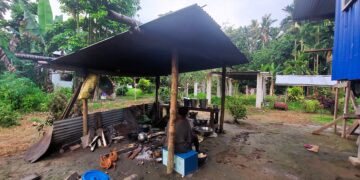
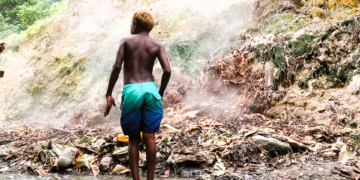
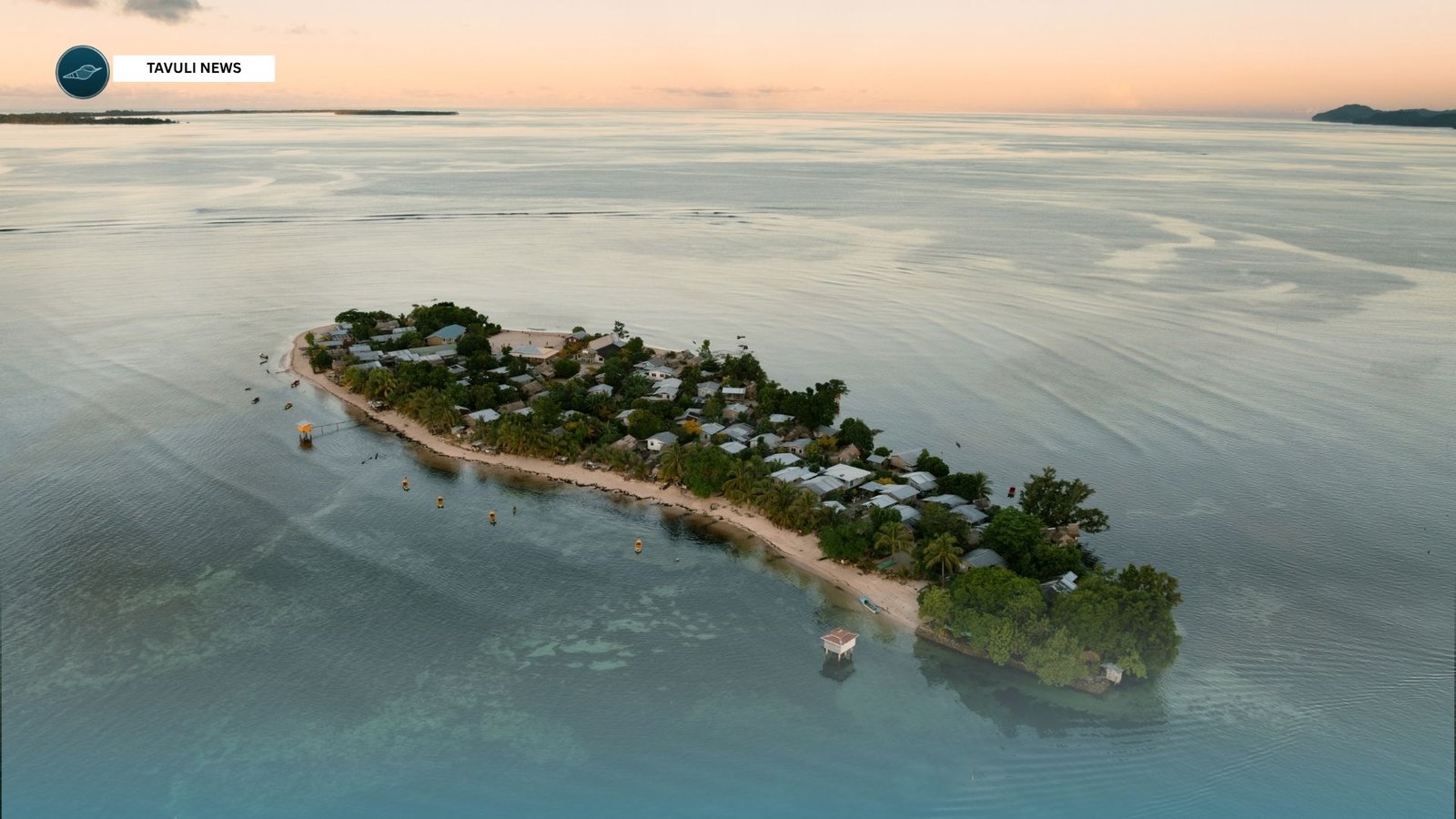
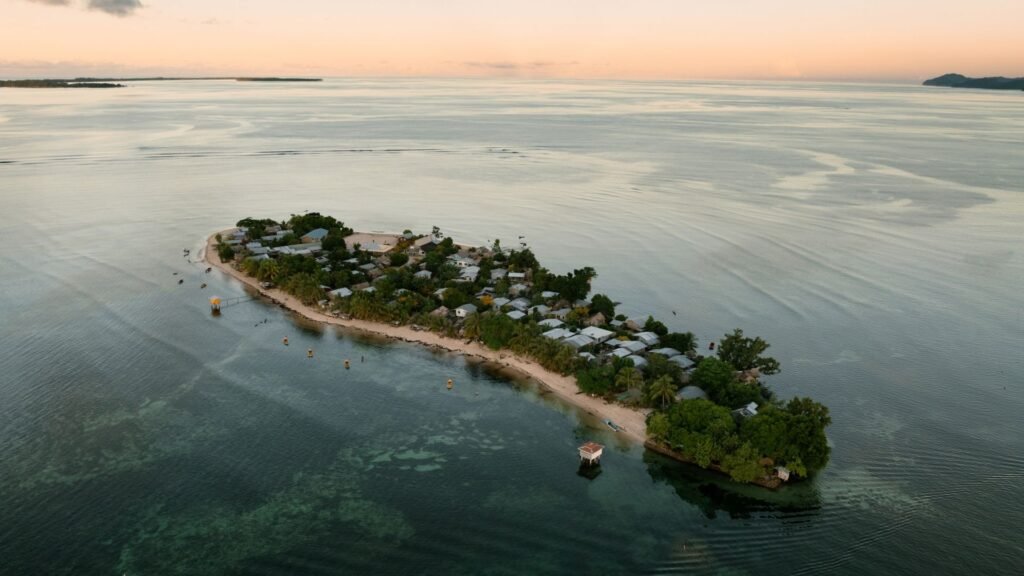
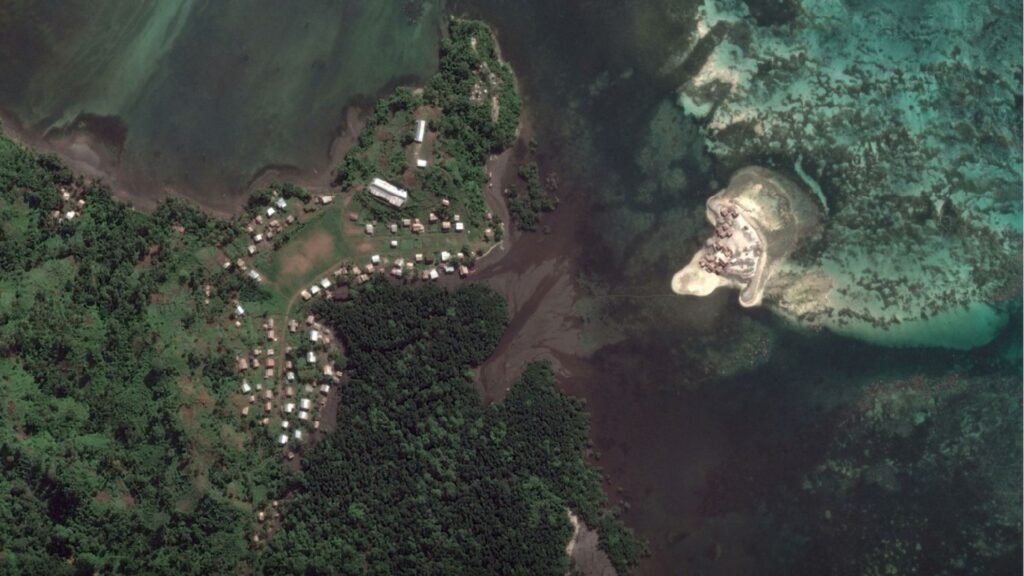
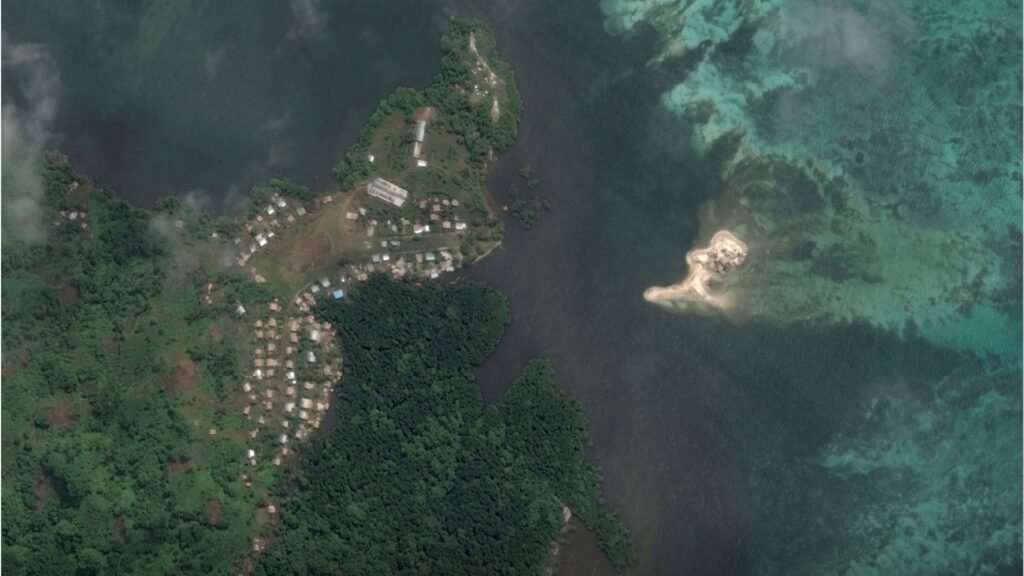
The communities at the centre of the project are Walande, Kwai and Ngongosila. Their circumstances are not identical: Human Rights Watch says Walande, a community of about 800 people, relocated from its small artificial island to mainland Malaita after repeated flooding and destructive king tides, and the former island is now completely submerged. Kwai and Ngongosila are among communities still confronting worsening climate impacts and questions about whether and how to relocate.
The experience combines virtual environments, spatial audio, physical interaction and documentary storytelling. It was created by NowHere Media’s Felix Gaedtke and Gayatri Parameswaran, co-produced by Human Rights Watch and Agog: The Immersive Media Institute, and narrated and executive produced by actor and climate advocate Mark Ruffalo.
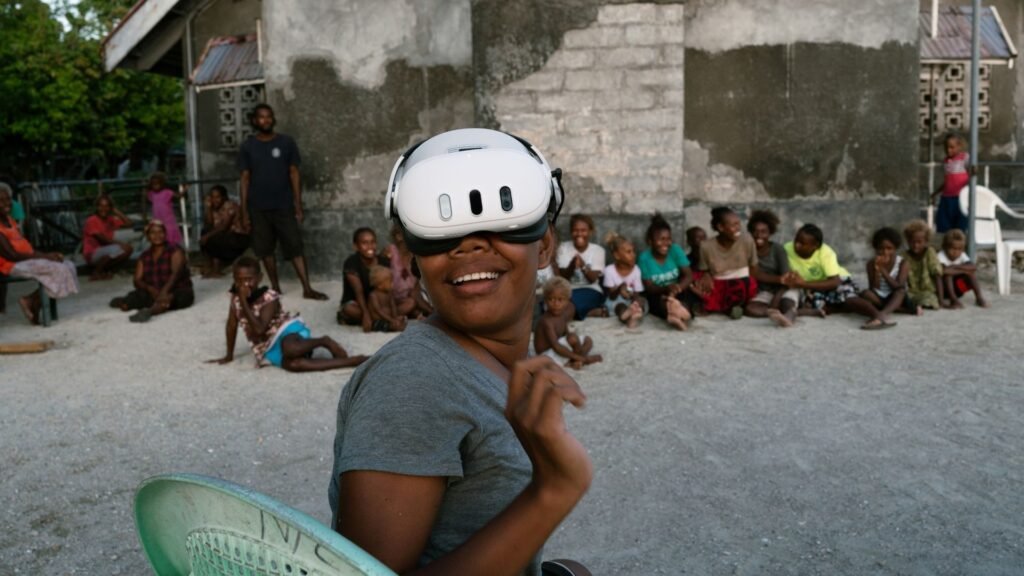
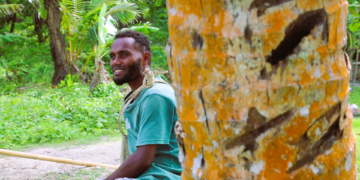
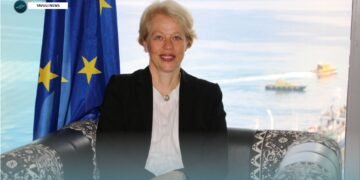
For Solomon Islands filmmaker and youth advocate Regina Lepping, who worked as a line producer on the project, the Venice premiere was an opportunity to help bring the communities’ experiences to a wider audience.
“It means a lot. It means our stories are worth telling. The resilience of our people is inspiring and powerful,” Regina said.
“It means we are not alone and the issue of climate change affects us and other frontline islands around the world who are also suffering from something we do not cause.”
Official project credits also list Regina as a Solomon Islands Pidgin narrator and translator, alongside her role as line producer.
But she is careful to distinguish her role from that of the communities whose experiences form the basis of the film.
“This story is Walande and Kwai/Ngongosila’s story. It is the story of their struggles and challenges they share with the world,” she said.
“I am just a Line Producer and my work is to work with these communities in ensuring that the story we tell comes from them authentically and to ensure they benefit from their story too.”
The project builds on Human Rights Watch’s 2025 report There’s Just No More Land, researched and written by Erica Bower and Charlotte Finegold. Solomon Islands research organisation Dignity Pasifik, including Ruth Maetala, Travis Maetala and Margaret Sandy, supported the fieldwork and provided feedback on earlier drafts.
Regina had heard about some of the challenges facing the communities before travelling there.
But she said seeing the situation first-hand changed her understanding of what people were experiencing.
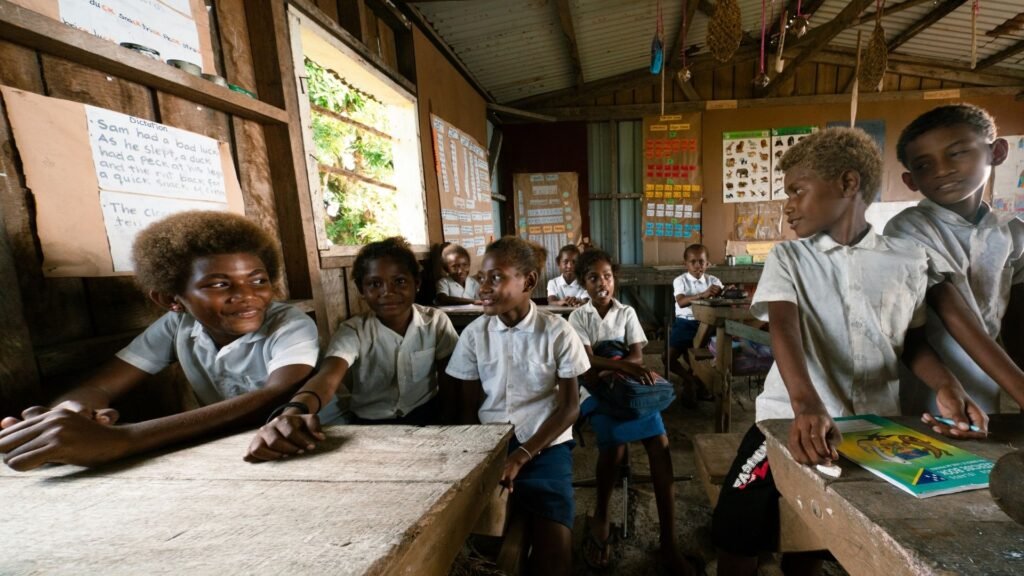
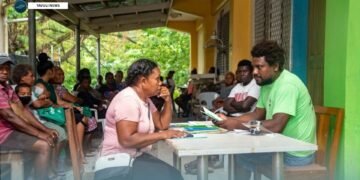
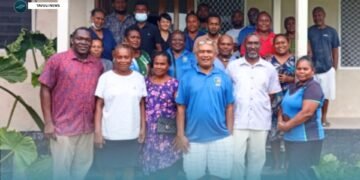
During the field work, Regina met children, elders and young people and heard their concerns about their communities and their future. HRW’s research says Walande’s community-led relocation was completed around 2015, but the mainland settlement continues to face coastal erosion, seawater intrusion, pressure on food sources and uncertainty over land.
“It was not until I got there myself that I felt the urgency of this issue,” she said.
“I not only hear about the climate change issue but seen it with my own eyes.”
Regina also comes from an island community in Solomon Islands and said she has observed changes linked to sea-level rise in her own village.
She said the experience reinforced for her the importance of ensuring communities affected by climate change are included in how their experiences are represented.
“These islands are on the frontline. They need the support and need to be heard,” she said.
Bringing the communities’ experiences into a mixed-reality project also presented practical challenges.
It was Regina’s first time working on an immersive mixed-reality project, while the team also had to explain the technology and the purpose of the production to people in the communities.
Limited access to internet and electricity presented additional challenges, along with technical problems involving the VR equipment.
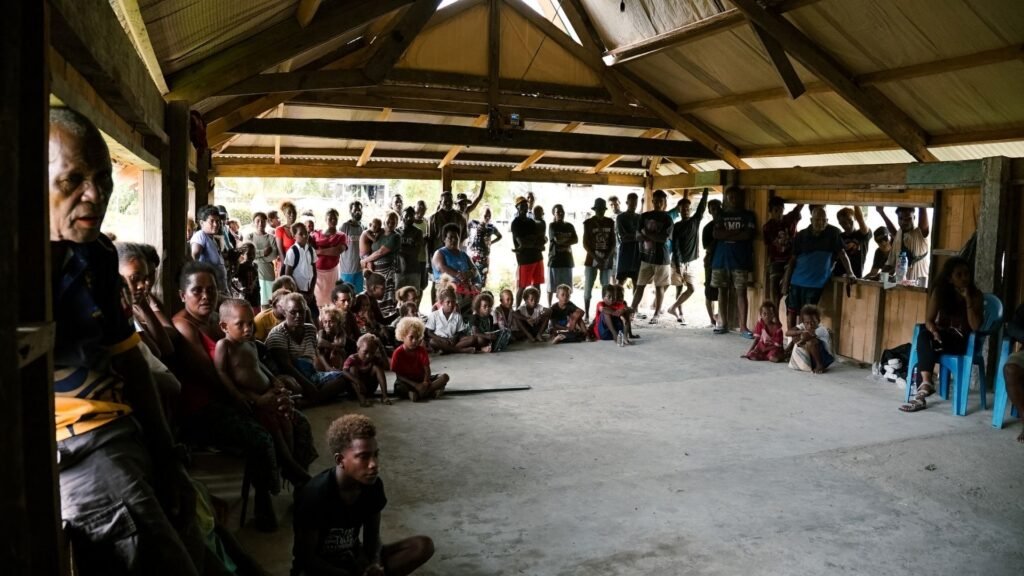
The team later returned to show the communities the draft experience.
For Regina, the process highlighted the importance of maintaining communication with communities throughout a project.
“Good and frequent communication with the right people and leaders in the villages are very important,” she said.
Building trust was also a key part of the process.
Regina said some people in the communities had previously encountered researchers who visited, collected information and later left, making some residents cautious about new projects.
“Walande has been taken advantage of by many previous researchers who just come and go, so it’s not easy for them to open up to such a project,” she said.
That experience reinforced Regina’s view that community ownership had to remain central to the production.
“This film belongs to the people of Walande and Kwai/Ngongosila.”
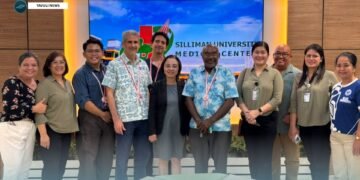
At the Venice screening, Regina said she also noticed that some audience members had limited knowledge of the many small island communities across the Pacific.
She said the immersive format provided an opportunity for audiences to encounter places they may never have visited themselves.
“For some of them, it has taken them to a place where they have never been before,” she said.
For Regina, however, the story extends beyond climate change.
She views the experiences documented in the project through a human rights lens, particularly where environmental changes affect access to basic needs.
“This is not just a climate change issue. It’s a Human Rights issue,” she said.
“People are losing their rights to shelter, rights to food, rights to water, and it goes on.”
That human-rights framing is also central to the project and to the HRW research, which examines how climate-related relocation can affect housing, food, water, land, culture and other basic rights.
Regina hopes the project will help audiences outside the Pacific better understand what communities such as Walande and Kwai/Ngongosila are experiencing.
She also sees the project as part of a wider conversation about how Pacific communities are represented.
“Our unique perspective is important. We are Pacific Islanders, we tell our Pacific stories. It is who we are,” she said.
While supporting collaboration with international organisations and filmmakers, Regina said communities should remain involved in decisions about how their stories are told.
“No one can tell your stories better than you can,” she said.
“We have to take ownership of our own stories.”
She also sees film as an important platform for young Pacific storytellers.
“Film is growing and evolving. We have to adapt to it also to ensure our stories are told in many different platforms that film offers,” she said.
For her, climate storytelling should also consider how environmental changes affect culture, traditions and livelihoods, as well as women, young people and people with disabilities.
“We must not look at it as one thing. We need to address it holistically,” she said.
Alongside the film’s release, the Walande community is fundraising towards seawall construction at its mainland settlement, where existing coastal protection has deteriorated.
Regina said the completed project will also be taken back to Walande, Kwai and Ngongosila later this year for community screenings.
After Venice, Solwata was also shown at the Toronto International Film Festival Innovation Hub from 10 to 16 September. It is scheduled for the BFI London Film Festival from 7 to 18 October and for COP31 in Antalya, Türkiye, from 9 to 20 November. Regina said a Honiara screening is also planned next year as part of the Native Lens Film Festival.
From Malaita to Venice and other international stages, Solwata has carried the communities’ experiences thousands of kilometres.
But for Regina, the distance the story travels is only part of what matters. The larger question is whether the communities remain central as their stories travel.
“A storyteller is a messenger. We are not bosses, we are messengers to tell the story and work with communities to ensure their voices are heard,” she said.