










Pacific climate experts warn of a potentially record-strength El Niño, with drought, marine heatwaves and cyclone risks into 2027.
The warning comes from the official Regional Statement of the 19th Pacific Islands Climate and Ocean Forum (PICOF-19), held in Port Moresby, Papua New Guinea, on 20 and 21 October 2026. The statement was produced by the World Meteorological Organisation (WMO) Pacific Regional Climate Centre Network (Pacific RCC Network) and issued on 23 October 2026.
The forum brought together national meteorological and hydrological services (NMHSs) from across the Pacific with regional and international partners, including SPREP, the Pacific Community, WMO, and humanitarian and food security agencies.
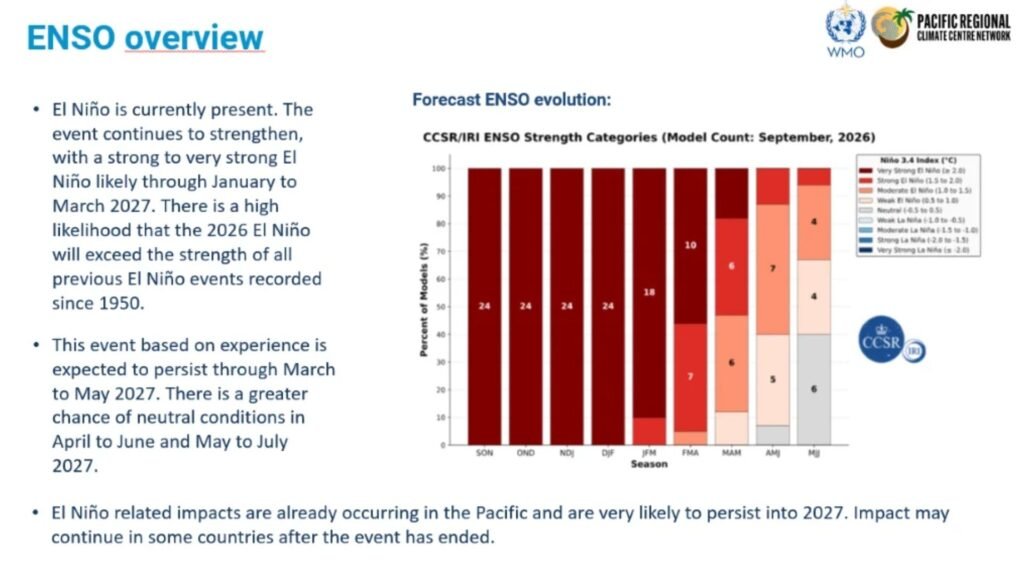
Pacific RCC Network Coordinator, Mr. Sunny Seuseu said “El Niño is already here and still getting stronger. A strong to very strong El Niño is likely from January to March 2027, and there is a high chance it will be the strongest since 1950. It is expected to continue into March to May 2027.”
“This El Niño is also happening in a much warmer world than the major events of 1982/1983 and 1997/ 1998. This means ocean and air temperatures are likely to be higher than in past El Niño events, and drought conditions may be made worse where rain is already low,” he explained.
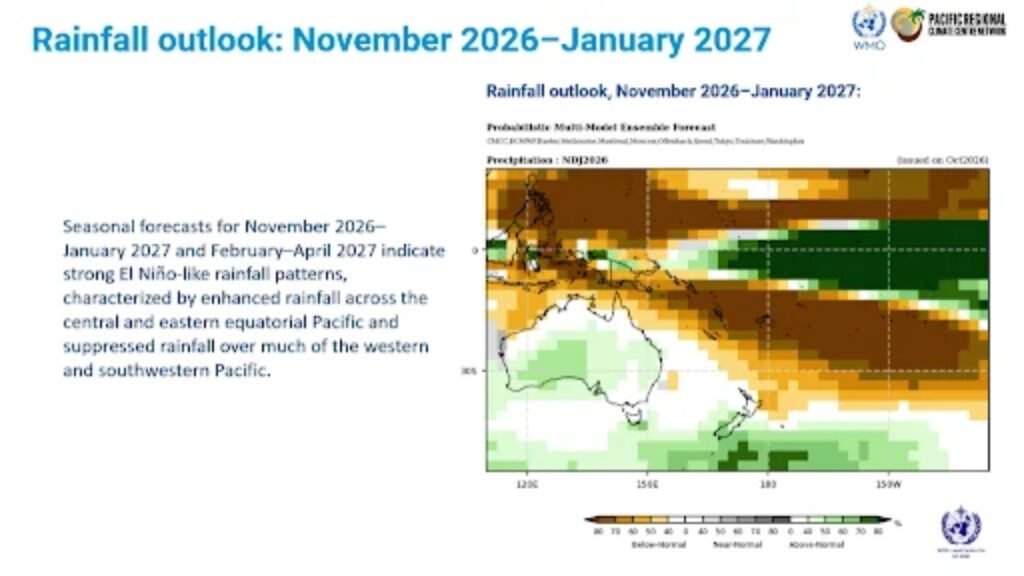
From November 2026 to January 2027, many Pacific countries are likely to be drier than normal. This includes much of the northwest Pacific from Palau to the Marshall Islands, and the southwest Pacific from Papua New Guinea southeast to southern French Polynesia. Wetter than normal conditions are likely from Nauru to eastern Kiribati including Tokelau, the northern Cook Islands and northern French Polynesia.
Warmer than normal air temperatures are likely across most of the western and central tropical Pacific and from Papua New Guinea to New Caledonia.
In the ocean, lower than normal sea levels are expected from Palau to the Marshall Islands and from Papua New Guinea to Solomon Islands, Tuvalu and Samoa, which can expose shallow reefs at low tide. Strong to extreme marine heatwaves are forecast around eastern Kiribati, with coral bleaching risk there through February 2027 and in parts of the southwest Pacific in January. Tuna fishing grounds have already shifted well to the east, and this is expected to continue into March 2027.
Normal to above-normal tropical cyclone (TC) activity is forecast in the southwest Pacific. The normal season is from November to April but in El Niño years an extended season is possible with early TC(s) in October and late TC(s) in May and/or June. The first TC has already occurred with TC Wati, forming in the Cook Islands in mid-October. The highest risk is near and east of the International Date Line. Activity may be normal or lower further west, but severe cyclones are still possible anywhere in the region. Pacific communities are reminded that it only takes one to cause severe damage.
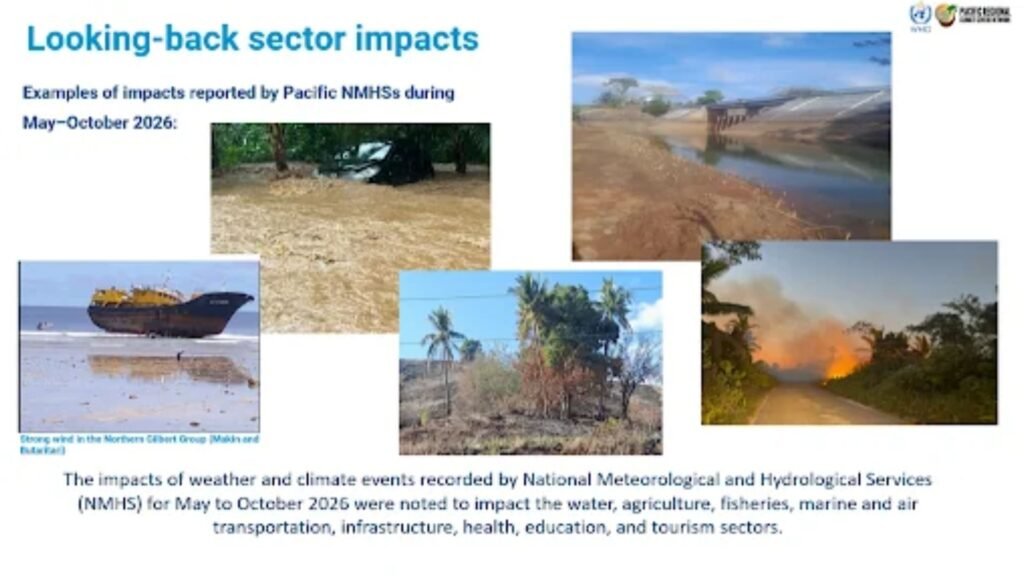
Between May and October 2026, NMHSs recorded impacts on water, agriculture, fisheries, transport, infrastructure, health, education and tourism.
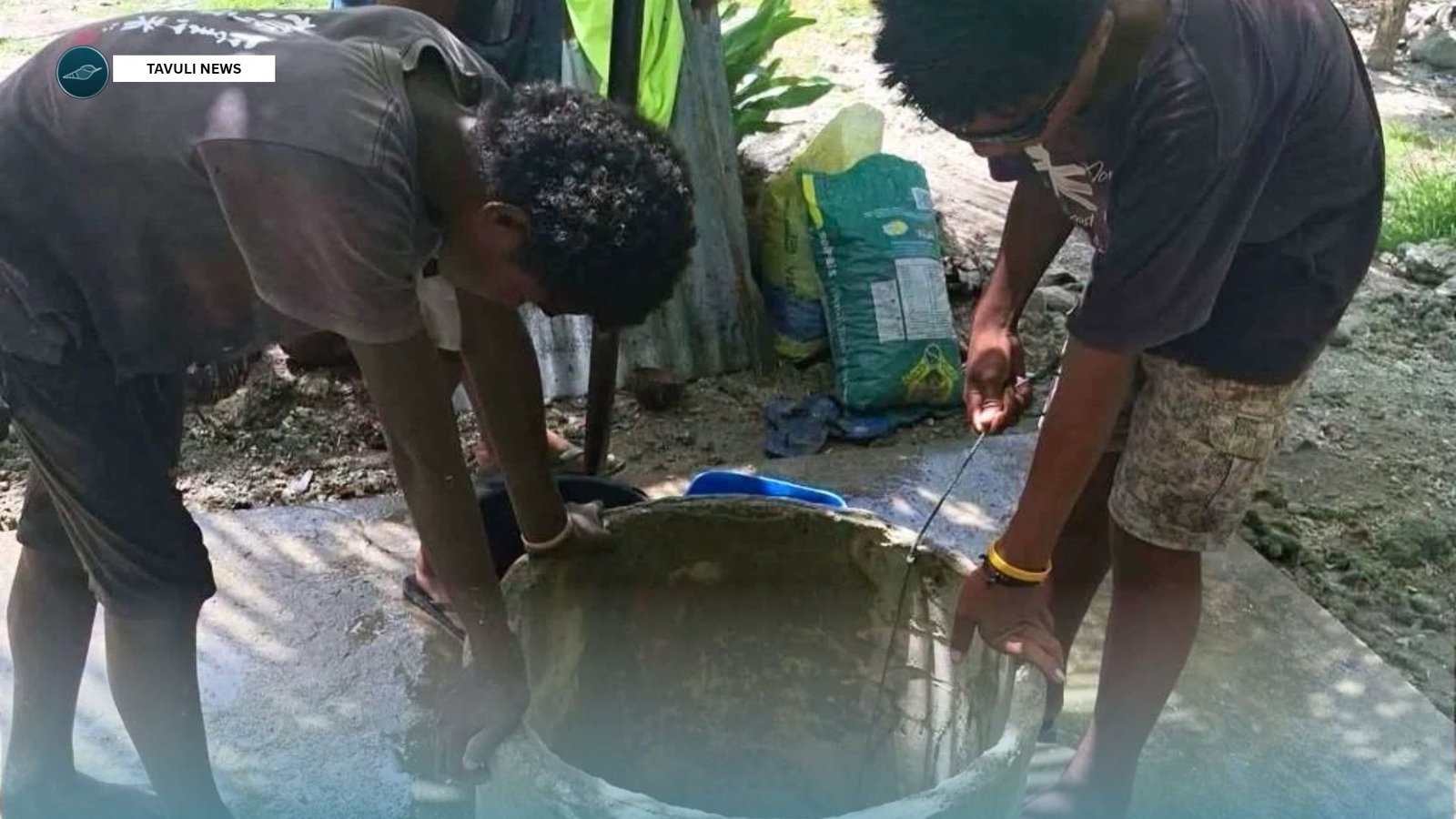
Water shortages were reported in Papua New Guinea, Solomon Islands, Vanuatu, Fiji and Tonga. More than 57 lives were lost in marine disasters in Papua New Guinea, Solomon Islands, Vanuatu and Fiji. TCs in the northern Pacific damaged homes and infrastructure, with nine deaths in Chuuk State, Federated States of Micronesia. Health services reported increases in dengue fever, diarrhoea, influenza and whooping cough in parts of the region, and fires were recorded across the Pacific.
“Safeguard our sectors, assets and water resources. Now is the time to do that. Don’t wait for the coming months and the situation to worsen before acting. This is the time to think about communal water sources and ways to protect them. We have come together to develop solutions for the forecasted impacts we are likely to experience during this El Niño,” said Ms. Litea Biukoto, Deputy Director Disaster and Water Resilience at the Pacific Community.
The PICOF-19 Regional Statement is a regional guide for NMHSs and Regional Organisations and is not an official outlook for any one country. Conditions differ from island to island.
Communities, farmers, fishers, water and health managers, disaster officials and businesses are encouraged to contact their NMHS for local forecasts and advice for their sector, including water, agriculture, fisheries, health and disaster preparedness. People should also follow official warnings from their NMHSs and disaster management offices throughout the TC season.
NMHSs will develop national outlooks and statements through their National Climate and Ocean Forums (NCOFs). Updates on El Niño and climate conditions will continue to be provided monthly through the Australian and New Zealand funded Climate and Oceans Support Program in the Pacific (COSPPac) Online Climate and Ocean Forum (OCOF).
The full PICOF-19 Regional Statement and regional climate information are available on the Pacific RCC Network website at www.pacificrcc.net.
PICOF-19 was hosted in Port Moresby from 20 – 21 October, followed by the El Niño Stakeholders Forum. It was funded by the European Union-funded Intra-Africa, Caribbean, Pacific Climate Services and Related Applications (ClimSA) programme with support from COSPPac.
SOURCE// PICOF PRESS RELEASE