




Solomon Islands delegates visit Fiji’s Drawa Forest Project to learn about Indigenous-led conservation and community carbon trading.
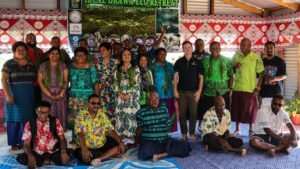
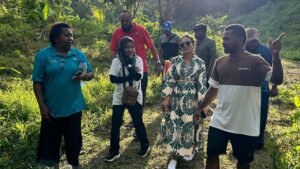
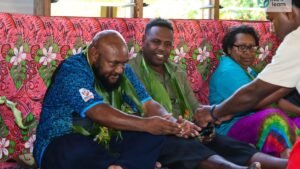
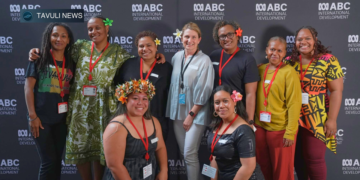
Solomon Island Government delegates from MECDM’s Climate Change Division and the Green Climate Fund spent a day visiting the well-known Drawa Forest Project on the island of Vanua Levu as part of the in-country gathering in Fiji earlier this month for pre-COP.
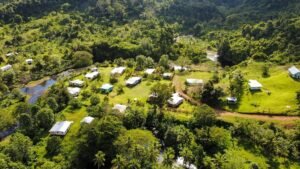
The Drawa project is leader in Indigenous-led conservation for the Pacific region, involving eight clans (known locally as mataqali) and sits on nearly 4,000 hectares of protected primary forest. It was Fiji’s first verified community-owned carbon project launched in 2011 when, instead of logging their forest, landowners decided to sell carbon credits to generate sustainable income through the Nakau approach.
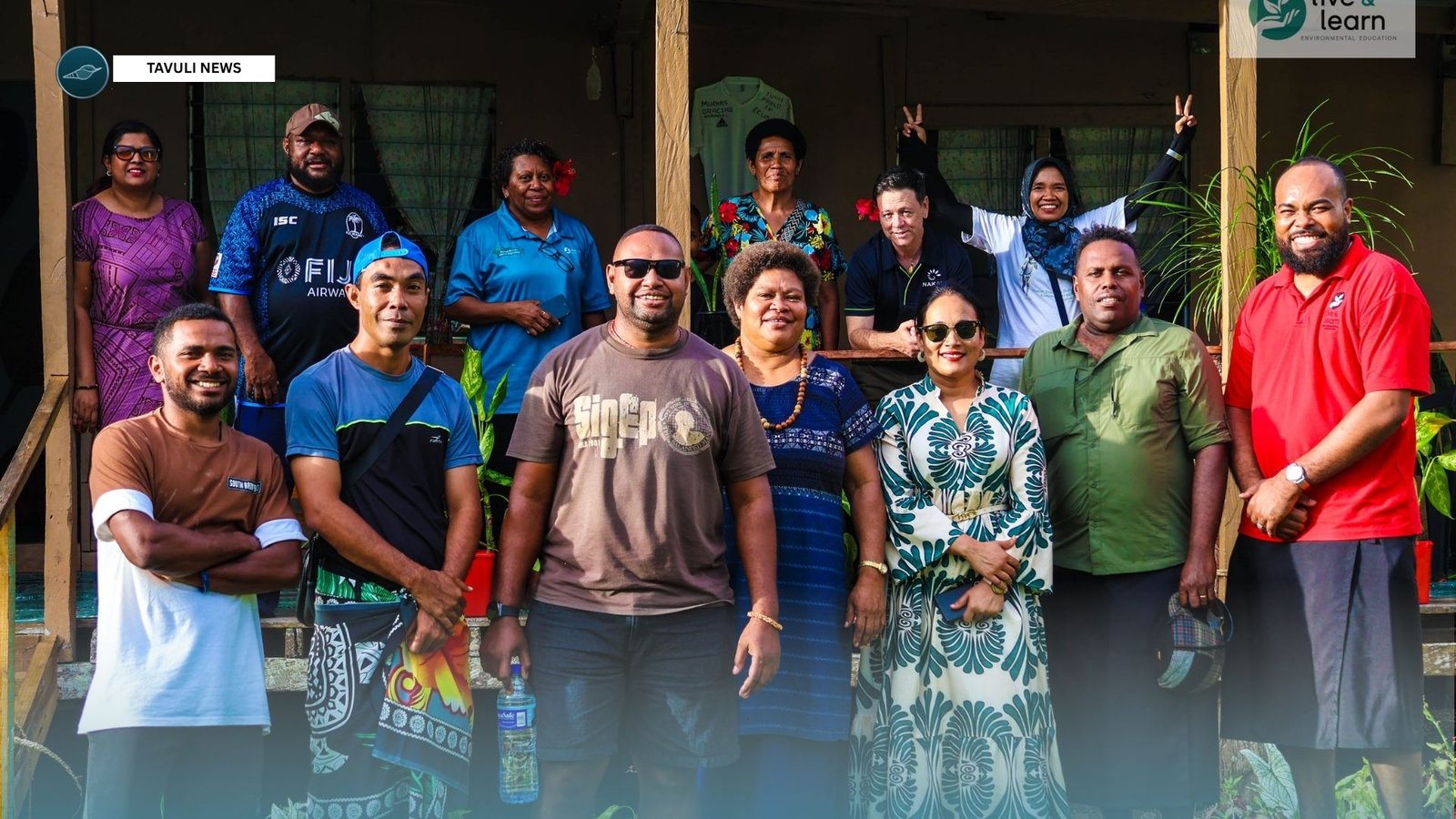
Sammy Airahui from Green Climate Fund (GCF) and David Tufi from Ministry of Environment and Climate Change, joined Bill Apuse from Live and others, including from Live and Learn PNG, Nakau and Indonesian Conservation Community (KKI WARSI). Also on the visit was Albert Milala, a Senior Adaptation Officer at the Climate Change and Development Authority (CCDA) in Papua New Guinea. Their Drawa visit was supported by the recently launched RISE (Rights, Integrity, Safeguards and Equity in Carbon Markets) project.
“I am truly grateful for the invitation extended to us, representing the Solomon Islands Government through the Ministry of Environment, Climate Change, Disaster Management and Meteorology (MECDM), to be part of this amazing team,” said Sammy Airahui, Green Climate Funds National Programmes Coordinator.
“It has been a privilege to share this journey, connect with wonderful people, learn from one another, and create lasting memories. Thank you for making us feel welcomed and part of the Drawa family. We will certainly cherish this experience and the friendships built along the way.”
The peer-to-peer exchange allowed for representatives from the eight landowning mataqali to be present along with members of the project’s core association, the Drawa Block Forest Communities Cooperative (DBFCC).
Waita Dikica, Business Manager and Committee Member for the DBFCC , told delegates it took years of sustained awareness and consultation to secure the free, prior and informed consent of Indigenous landowners before the project went ahead, saying “Live and Learn Fiji took seven years visiting the villages and landowners, raising awareness on carbon trading and the importance of preserving our forests …The project taught us a lot and empowered us to make decisions not only for us but our future generations.”
“From the carbon income received we have set up an education fund, opened three village canteens run by the women, invested in building community halls and footpaths within the village to allow for easier movement of our community members including the elderly and persons with a disability,” she explains.
The Drawa project also employs youth as trained forest rangers. Live and Learn Fiji’s Beato Dulunaqio who has been working with the project for six years, says the main motivator for success has been open dialogue.
“For any project to be successful, it needs to be community led and that is why we work closely with the whole community [ensuring] landowners were included from the start to make decisions on managing their resources such as their forests. This is why we have been able to reach this far,” he says.
David Tufi from MECDM’s Climate Change Division extended his gratitude for the experience, saying: “Thank you so much for inviting the Solomon Islands Government delegates to be part of the lived experiences of undertaking a carbon trading initiative in a Pacific context. I learnt a lot.
SOURCE// RISE PRESS RELEASE