









Government launches a 10-year biosecurity strategy to protect agriculture, food security, trade and the rural economy.
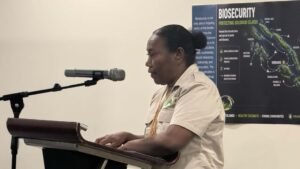
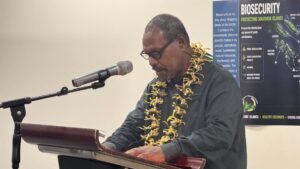

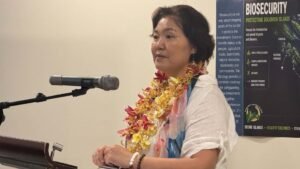
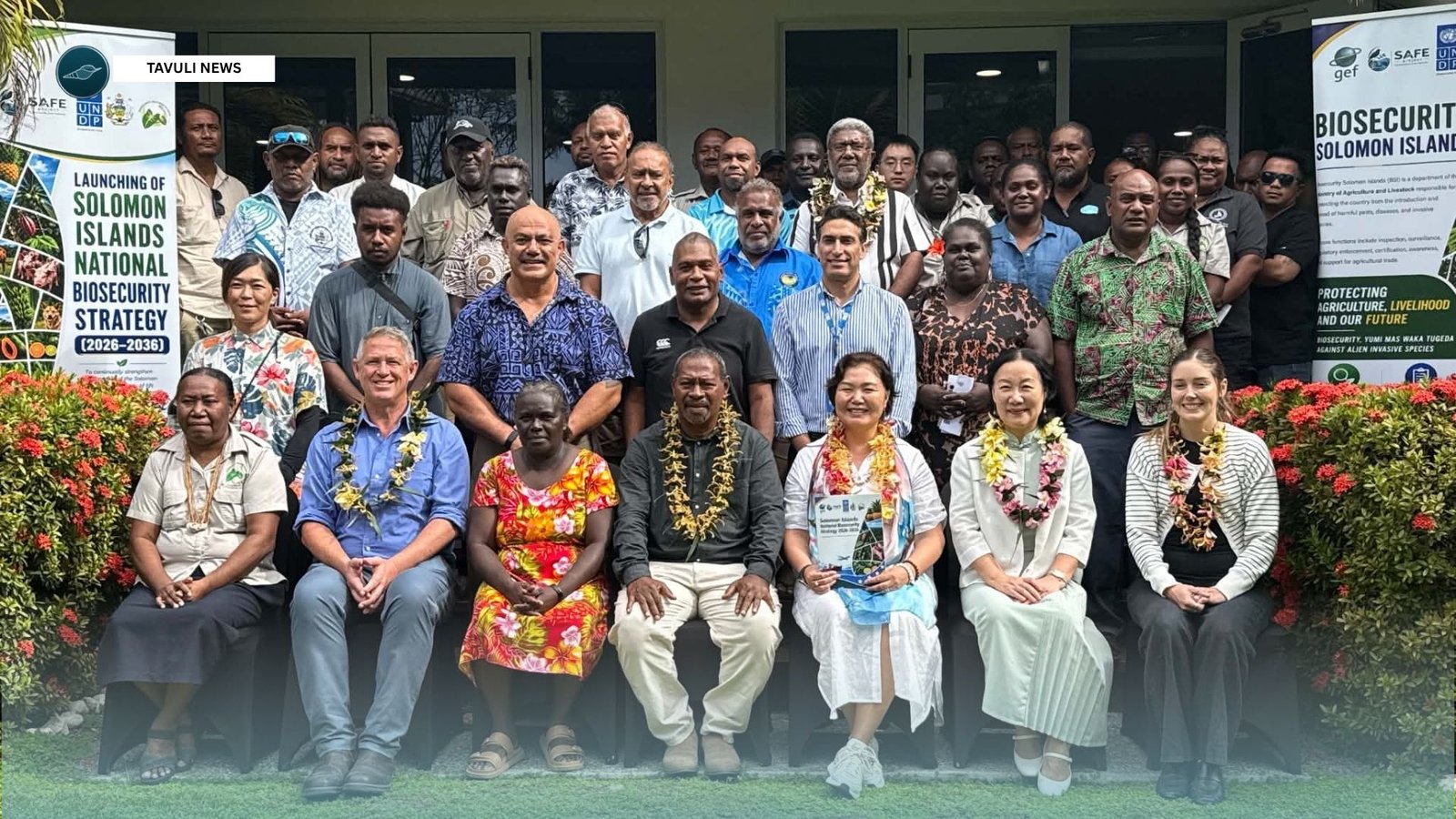
The Government through ministry of agriculture and livestock has launched the Solomon Islands National Biosecurity Strategy 2026–2036, a 10-year framework today aimed at strengthening the country’s capacity to prevent, detect and respond to biosecurity threats.
The strategy focuses on threats that could affect agriculture, food security, trade and the rural economy.
Speaking at the launch, Minister of Agriculture and Livestock Nestor Ghiro said agriculture remains an important source of food and income for people across Solomon Islands, particularly in rural communities.
He said agriculture supports household livelihoods and contributes to meeting expenses such as school fees and other community and family obligations.
Ghiro also acknowledged challenges facing the sector, including limited investment, infrastructure, market access, extension services and institutional capacity.
“If we truly believe that agriculture is the backbone of our country, then we must invest in a system that allows the backbone to carry our economy,” he said.
The Minister said strengthening biosecurity is important to protecting the agriculture sector and supporting economic development.

The strategy was developed with support from development and technical partners, including the United Nations Development Programme (UNDP) through the Joint Environment Fund-supported SAFE Project.
UNDP Pacific Office Resident Representative Munkhtuya Altangerel said UNDP supported the development of the strategy by facilitating access to international technical expertise.
“UNDP facilitated access to international technical expertise to support the BSI in developing the strategy and also strengthening its overall strategic framework,” she said.
Director of Biosecurity Solomon Islands Jean Eroa Manepora’a said partnerships would also be important in strengthening the country’s biosecurity system.
“The strength of partnership is not simply in what each of us brings, but in what we are able to achieve together,” Manepora’a said.
The National Biosecurity Strategy 2026–2036 is expected to guide the country’s biosecurity efforts over the next decade, including measures to protect agriculture, the environment, food security and economic interests from biosecurity threats.
By: Steven Kamoa, Tavuli News Online