











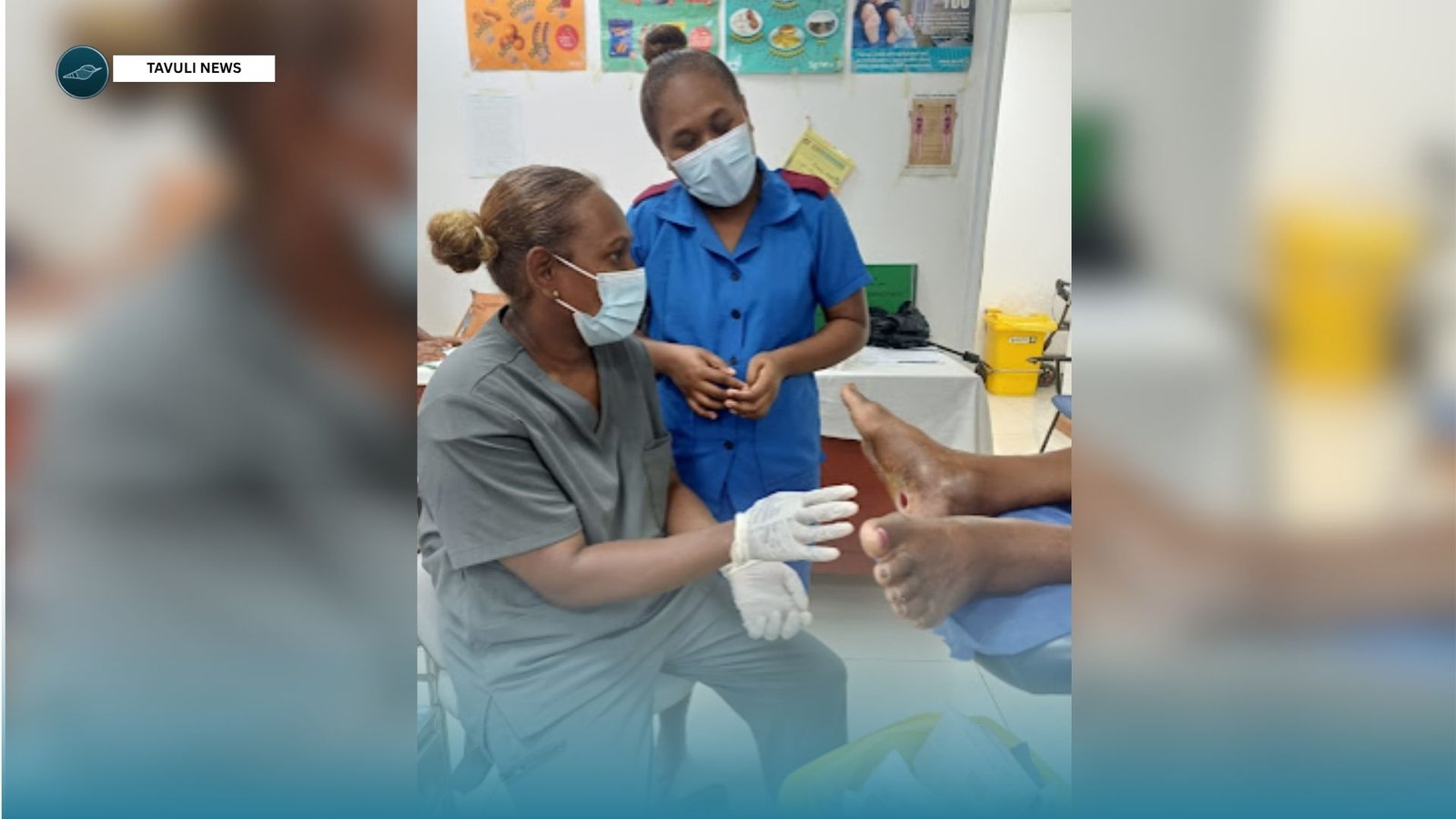
Solomon Islands health workers strengthen diabetic foot care skills to improve early treatment and help prevent amputations
How do you react to a small blister or a cut on your foot? You’ll probably ignore it or even see it as a minor inconvenience. But if you’re a person living with diabetes, that small blister or skin cut can quickly threaten your health, mobility, and quality of life if it’s not properly cared for.
In Solomon Islands, diabetic foot complications remain one of the leading reasons for hospital admissions and lower-limb amputations among people living with diabetes. This is why the Ministry of Health and Medical Services is strengthening the skills of frontline health workers by coaching them on wound assessment, debridement, and wound care to identify and treat diabetic foot wounds before these become life-threatening.
For nurse Mevilyn Catherine Manetei, the coaching helped not only professionally but, most importantly, the patients she serves. “This was completely new for us because we don’t have any podiatrists in Solomon Islands,” she said. “Before, many patients had to be referred to the diabetes center. But through this coaching, our clinic now has the potential to have the right setup, allowing us to provide proper wound assessment, debridement, and wound care ourselves.”
Only a small number of health workers in Solomon Islands have received specialized coaching in wound management, but Mevilyn believes expanding these skills across health facilities and bringing these closer to communities can dramatically reduce diabetes-related complications, as patients can receive treatment much earlier, reducing delays that give small wounds a chance to fester.
Ensuring wounds stay small and heal
Diabetic foot disease often begins with something as simple as thick skin (callus), a blister, a crack in the skin, or a small cut. Without prompt treatment, these wounds rapidly deteriorate due to pressure combined with reduced blood circulation and nerve damage caused by diabetes.
For Mevilyn, early intervention is one of the most powerful tools health workers have. “We educate patients not to wait for the wound to worsen,” she said. “When they come early, we can assess the wound quickly, provide treatment and avoid foot amputation.”
The coaching has also strengthened health workers’ ability to perform safe wound assessments, use sterile techniques and choose appropriate dressings based on the severity of each wound.
Seeing hope in healing
Seeing patients recover is Mevilyn’s greatest barometer of success. She recalls how patients responded positively after receiving care using modern wound management techniques that she and other health workers learned during the coaching.
“Patients are happy because they can see their wounds improving and in the way they are being treated,” she said. “Using the correct dressing techniques for different types of wounds also means they don’t always have to come back to the clinic often.” These improvements accelerate healing, reduce the burden on patients, families and health facilities, while helping people continue their daily lives.
A simple message that could save a limb
Mevilyn hopes more people understand the importance of checking their feet every day and seeking medical attention as soon as they notice any changes. Her advice is simple but urgent.
“Please come to the clinic immediately,” she urged. “Many people think it’s only a small problem and stay at home. But diabetic foot disease can progress very quickly. Early assessment and treatment can prevent severe complications and save your foot.”
Through strengthened clinical skills, earlier intervention, and patient education, frontline health workers like Mevilyn are helping transform diabetes care in the Solomon Islands by bringing timely, compassionate, evidence-based care closer to home and giving people the best chance to live healthier, productive lives.
Diabetic foot wound management is made possible with support from the World Health Organization, New Zealand Ministry of Foreign Affairs and Trade, and the Institute of Philanthropy.