









Temotu Premier Stanley Tehiahua welcomes consultation on federalism, calling for evidence-based reforms and provincial consideration
Honiara, 14 August 2026: The Premier of Temotu Province, Hon. Stanley Tehiahua, has welcomed the ongoing consultation on the Comparative Cost-Benefit Analysis [CBA] of the Solomon Islands’ current Unitary System of Government and a proposed Federal System.
He described the exercise as an important opportunity for provinces and communities to ensure their experiences and aspirations are reflected in the national debate on governance reform.
The Premier, however, cautioned against any rushed move to Federalism. He stressed that any decision on the future system of government must be based on sound evidence, adequate preparation, and a realistic assessment of the different circumstances facing Solomon Islands’ provinces.
Tehiahua emphasised that the analysis must properly consider the geographical isolation of provinces such as Temotu, as well as the asymmetrical nature of provinces across the country.
“Not all provinces are the same,” the Premier said. “Our provinces differ significantly in population, geography, economic potential, infrastructure, revenue capacity, access to services and the cost of delivering government services. These differences must be recognised when considering whether Federalism is appropriate for the Solomon Islands.”
He noted that the cost of delivering public services in a geographically isolated province like Temotu can be substantially higher than in provinces closer to the national capital.
For Temotu, therefore, governance reform cannot be considered only in terms of constitutional arrangements. It must also address whether the proposed system can deliver better services, greater economic opportunities, stronger infrastructure, and more equitable development outcomes for people in remote provinces.
The Premier was critical of the performance of the existing Unitary System in relation to Temotu Province.
“Temotu has been part of the Unitary System since independence, but the system has not delivered the level of development and services that our people deserve,” he said. “This is not about blaming individuals. It is about recognising that the system itself has not adequately responded to the circumstances and needs of provinces such as Temotu.”
Tehiahua said Temotu continues to face serious challenges, including inadequate infrastructure, high transportation costs, limited economic opportunities, and difficulties in accessing essential government services.
The Premier stressed that the Federalism debate should not be reduced to a choice between two constitutional models. It should be about determining which system can provide the most effective, equitable and sustainable way of delivering development and services to all Solomon Islanders.
He said if the country decides to retain the Unitary System, the Government must undertake tangible reforms to address the weaknesses provinces have experienced.
“Temotu does not want this consultation to simply result in another report sitting on a shelf,” he said. “If the Unitary System is to continue, then we expect to see concrete reforms that improve provincial autonomy, strengthen provincial financing, improve service delivery and give provinces greater responsibility and resources to address their own development priorities.”
The Premier said Temotu is open to Federalism and sees potential benefits in a system that provides provinces with greater authority, responsibility and resources. However, he stressed that Federalism should not be rushed.
“Federalism is a major constitutional and institutional reform. We should not move into it simply because we are dissatisfied with the current system. We must ensure that provinces are properly prepared to assume the responsibilities that would come with becoming states.”
He said Temotu would favour a phased transition to Federalism to allow time to prepare provinces and establish the necessary institutional, legislative, financial and administrative arrangements. This could include strengthening provincial institutions, improving financial management, developing human resources, building infrastructure, clarifying the division of powers, and establishing an equitable system of intergovernmental transfers.
The Premier also called for consideration of an asymmetrical approach.
“Federalism must recognise the reality of the Solomon Islands. Our provinces are not identical, and they will not enter Federalism with equal economic, institutional or administrative capacity,” he said.
An asymmetrical approach could allow different provinces to assume responsibilities progressively according to their capacity, while maintaining national standards and ensuring equitable access to essential services.
The Premier welcomed the opportunity for Temotu to contribute to the Comparative CBA and urged the national reform process to consider the actual costs and benefits of both systems carefully.
He said the assessment should include not only constitutional and administrative costs, but also the long-term economic, social, infrastructure and service-delivery implications for individual provinces.
“Ultimately, our people want better government, better services and better opportunities. The system of government should be judged by whether it can deliver these outcomes,” the Premier said.
“Temotu is ready to participate constructively in this national conversation. Our people deserve a system of government that recognises our circumstances, responds to our needs and provides a genuine pathway to sustainable development.”
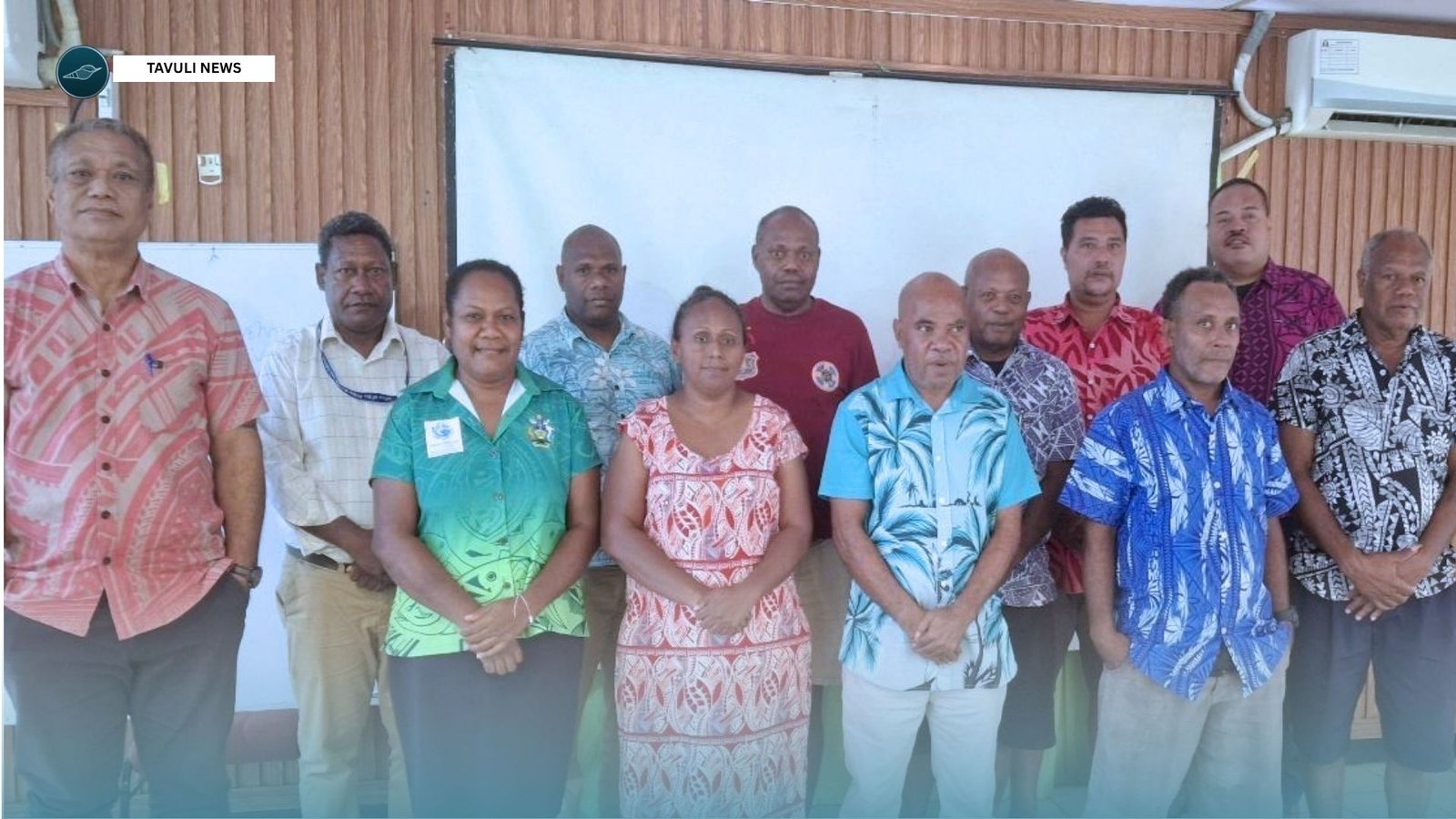
The Premier thanked the CBA team from OPMC for consulting with him and his Executive on the comparative analysis of the Unitary and Federal models.
GCU PRESS RELEASE