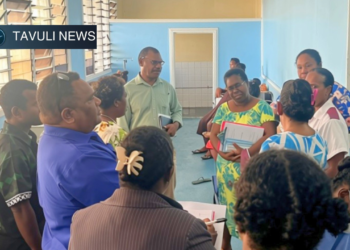












Pacific security report urges stronger regional cooperation, practical action and inclusive responses to emerging challenges.
28 August 2026 – Stronger regional cooperation will be critical as the Pacific shifts from decision-making to implementation to address the region’s security challenges, the Pacific Peace and Security Dialogue 2026 Report highlights.
Drawing on insights from the Pacific’s largest gathering of the security community, the report brings together perspectives from leaders, officials, experts, and civil society, church and community representatives on the security challenges facing the region and possible responses.
The Pacific Peace and Security Dialogue 2026, held in June, discussed priority security issues in the region, including economic security, the energy transition, transnational crime, and mobility.
One of the Dialogue organisers, Professor Dave Peebles, Director of the Pacific Security College, said the report was a valuable reflection of the insights of delegates from across the region, bringing together their individual experiences and perspectives.
“A recurring message throughout the Dialogue was that we are stronger together, and that regional unity and cooperation are critical to addressing security challenges, many of which are having significant impacts on Pacific communities, such as the drug crisis and climate change,” he said.
“One of the Dialogue’s greatest strengths is that it brings together a range of perspectives, including those that are not always part of security discussions.
“This report demonstrates the value of that diversity and offers holistic, integrated and forward-looking insights and recommendations for the region.”
The Dialogue included two days of panel discussions on different security issues and a futures exercise during which participants explored the potential futures for the Pacific in 2045 and 2060. The exercise also included the identification of priority actions to address security challenges, which are reflected in the report.
Pacific Security College Senior Fellow Joel Nilon said a key theme across the report was the need to improve implementation.
“At the Dialogue, there was recognition of the important work done to build the foundations of effective policy responses, such as the Boe Declaration on Regional Security and the Blue Pacific Ocean of Peace Declaration. Participants identified that the next step is to translate these commitments into practical action and effective implementation,” Mr Nilon said.
“The report reflects on the opportunities and challenges before the region and captures a range of ideas and actions that could contribute to a peaceful, resilient and secure Pacific.”
The Pacific Peace and Security Dialogue 2026 Report outlines key insights, observations and recommendations from the panel discussions and futures exercise, including:
Geopolitical competition: While dialogue participants recognised geopolitical competition as one of several pressures facing the region alongside climate change and transnational crime, they emphasised that the Pacific needs to continue to deal with geopolitical competition on its own terms, rather than allowing external strategic competition to determine the region’s security agenda.
Regionalism: Regional approaches and collective responses are important to a peaceful and secure Pacific. Delegates identified the need to develop stronger regional institutions, and to strengthen regional architecture through alignment, reciprocity and mutual recognition of national policies.
Security responses: The Dialogue heard that security must remain people-centred and regional responses must focus on the lived realities of Pacific Island Countries. Members of the region need to protect their sovereign ability to act in their own interests.
Climate action: Greater support and funding is needed for climate change resilience and adaptation, and the region needs to ensure the sustainable cultivation of natural resources.
Inclusive security: The Dialogue heard that human security underpinned prosperity in the Pacific and must include food and water security, health and support for ageing, disability and mental health. Participants encouraged regional approaches for achieving food and water security to reduce reliance on global supply chains.
Economic security: Greater investment in people, including women and youth, can support economic growth and resilience. More thinking outside the box is needed, focusing on diversification and innovation, including exploring opportunities to harness the digital economy.
Cyber safety for communities: Coordinated action supported by stronger regulation, digital literacy and public awareness is required to address risks including cyberbullying, online misogyny, gender-based violence, privacy breaches, harmful online content, and the targeting of vulnerable groups.
Fighting transnational crime: Regional intelligence sharing arrangements need to deliver real-time data and actionable intelligence. A regional approach to capability development, including shared centres of excellence in digital forensics and financial investigation, would strengthen collective effectiveness, as would further alignment of legal frameworks, mutual legal assistance and extradition processes.
Energy transition: The Dialogue heard that while the region has many of the policy, legislative and regulatory frameworks needed to support the energy transition, implementation remains a key challenge. The creation of a Pacific Regional Renewable Energy Commissioner would improve regional cohesion and guide the Pacific towards becoming a leader in the use of renewable energy.
Pacific mobility: Future mobility and adaptation practices should be approached in ways that draw upon Pacific values, customary systems and community leadership.
Inclusion of youth voices: Young people should have a permanent seat at the table in discussions related to regional peace and security processes, futures and foresight work, implementation and monitoring, and broader regional decision-making.
SOURCE//Pacific Peace and Security Dialogue 2026 Report released